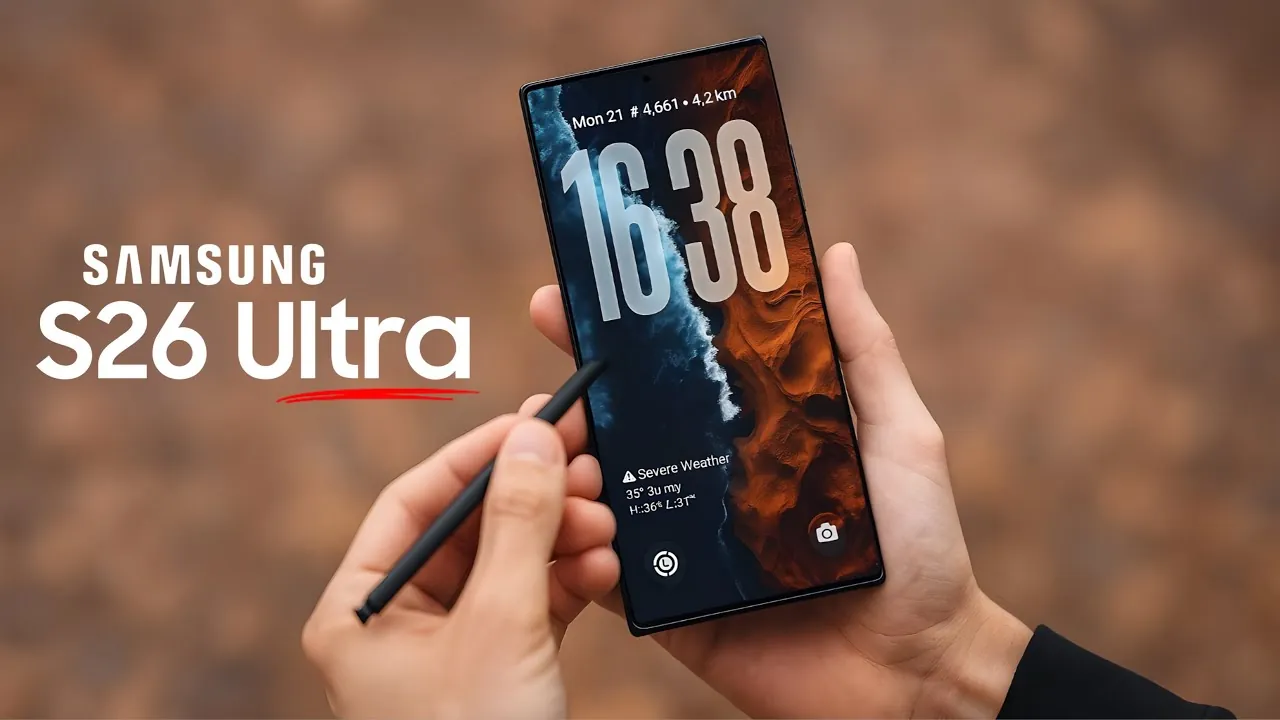
The Samsung Galaxy S26 Ultra is poised to elevate the standards of flagship smartphones, blending innovative technology with refined design. Powered by Qualcomm’s latest Snapdragon 8 Elite Gen 2 processor, it promises to deliver exceptional performance gains. However, questions surrounding battery efficiency and Samsung’s evolving Exynos chip strategy add layers of intrigue to this highly anticipated release. For tech enthusiasts and everyday users alike, the Galaxy S26 Ultra represents a significant milestone in mobile innovation.

Unmatched Processing Power
At the heart of the Galaxy S26 Ultra lies the Snapdragon 8 Elite Gen 2, Qualcomm’s most advanced processor to date. With a clock speed of 4.74 GHz, it surpasses its predecessor’s 4.61 GHz, offering faster processing and smoother multitasking. This enhanced performance is particularly evident in demanding applications such as gaming, video editing, and AI-driven tasks.
Early benchmark tests highlight substantial improvements in graphics rendering and machine learning capabilities. For users, this means seamless high-resolution gaming, faster app launches, and smoother transitions between tasks. The Galaxy S26 Ultra positions itself as a powerhouse device, catering to both casual users and tech enthusiasts who demand top-tier performance.
Beyond raw power, the Snapdragon 8 Elite Gen 2 also introduces advanced AI features, allowing smarter camera functions, voice recognition, and real-time language translation. These enhancements underscore the Galaxy S26 Ultra’s potential to redefine how users interact with their devices, making everyday tasks more intuitive and efficient.
Battery Life: A Balancing Act
While the Snapdragon 8 Elite Gen 2 delivers remarkable performance, it raises concerns about battery endurance. The Galaxy S26 Ultra retains a 5,000mAh battery, a standard capacity for flagship devices. However, the increased power demands of the enhanced processor could potentially strain battery life, particularly for users who engage in resource-intensive activities.
Samsung is likely to rely on software optimization to balance performance and power consumption. Features such as adaptive power management and AI-driven energy-saving modes may help mitigate battery drain. However, whether these measures will be sufficient for heavy users remains uncertain. For those who prioritize all-day battery life, this could be a critical consideration when evaluating the device.
Additionally, the Galaxy S26 Ultra supports fast charging and wireless charging, offering convenience for users who need to quickly recharge their devices. While these features are valuable, the overall battery performance will ultimately depend on how well Samsung integrates hardware and software to manage power consumption effectively.
Exynos Chips: A Shifting Strategy
Samsung’s in-house Exynos processors have historically been a key component of its flagship devices. However, recent years have seen a decline in their prominence due to performance gaps when compared to Qualcomm’s Snapdragon chips. The Exynos 2500, featured in the Galaxy Z Flip 7, marked a step forward, but the next-generation 2nm Exynos chip is reportedly not ready for the Galaxy S26 series.
This delay highlights the challenges Samsung faces in competing with Qualcomm’s innovative technology. For the Galaxy S26 Ultra, the absence of Exynos chips underscores a strategic shift toward a unified Snapdragon approach. While this decision ensures consistent performance across global markets, it also raises questions about Samsung’s long-term plans for its Exynos lineup.
Samsung continues to invest in Exynos development, aiming to close the performance gap and regain its competitive edge. However, the reliance on Qualcomm for the Galaxy S26 Ultra suggests that the company is prioritizing user experience and market competitiveness over maintaining its dual-processor strategy. This shift could have significant implications for Samsung’s future product roadmap and its position in the global smartphone market.
Unified Snapdragon Approach: Implications for the Market
In previous Galaxy S models, Samsung employed a dual-processor strategy, offering Snapdragon chips in some regions and Exynos chips in others. For the Galaxy S26 Ultra, this approach appears to have been abandoned in favor of a unified Snapdragon lineup. This decision simplifies production and ensures consistent performance across all markets, providing users with a more predictable experience regardless of their location.
However, this reliance on Qualcomm introduces new considerations. A unified Snapdragon approach could influence pricing, availability, and supply chain dynamics, potentially affecting Samsung’s ability to differentiate its devices in an increasingly competitive market. For consumers, the shift to a single processor lineup eliminates regional disparities in performance, offering a more uniform user experience.
From a strategic perspective, Samsung’s partnership with Qualcomm strengthens its position in the premium smartphone segment. However, it also underscores the challenges of maintaining innovation and differentiation in a market dominated by a few key players. As Samsung navigates these complexities, its ability to balance performance, cost, and innovation will be critical to its success.
Chip Naming and Consumer Perception
Adding to the intrigue surrounding the Galaxy S26 Ultra is speculation about the Snapdragon chip’s official name. Reports suggest that Qualcomm may rebrand it as Snapdragon 8 Elite Gen 5, deviating from its established naming conventions. This potential rebranding could reflect a strategic effort to emphasize the chip’s elite status and differentiate it from previous iterations.
For consumers, clear and consistent branding is essential to understanding a processor’s capabilities and how it compares to competitors. Confusion over naming could make it more challenging for users to evaluate the Galaxy S26 Ultra’s performance and value. As Qualcomm refines its marketing strategy, maintaining clarity and transparency will be key to building consumer trust and confidence.
The Galaxy S26 Ultra’s reliance on the Snapdragon 8 Elite Gen 2—or potentially the Snapdragon 8 Elite Gen 5—highlights the importance of effective communication in the tech industry. By providing clear information about its hardware and features, Samsung can ensure that users fully understand the benefits of its flagship device.
A Bold Step Forward in Smartphone Technology
The Samsung Galaxy S26 Ultra represents a significant leap in smartphone performance and innovation. With the Snapdragon 8 Elite Gen 2 at its core, it delivers innovative capabilities that cater to a wide range of users, from casual consumers to tech enthusiasts. Its advanced processor, enhanced AI features, and unified Snapdragon approach set a new standard for flagship devices.
However, challenges such as battery endurance and the delayed progress of Exynos chips highlight the complexities of advancing mobile technology. As Samsung continues to refine its strategy, the Galaxy S26 Ultra offers a glimpse into the future of smartphones—where performance, efficiency, and innovation converge to redefine the mobile experience. For users, it is a device that promises both power and practicality, paving the way for the next generation of mobile technology.
Stay informed about the latest in Samsung Galaxy S26 Ultra by exploring our other resources and articles.
- Samsung Galaxy S26 Ultra: Features, Specs, and Release Date
- Samsung Galaxy S26 Ultra: Specs, Features, and Performance
- Samsung Galaxy S26 Ultra 5G: Features, Specs, and More
- Samsung Galaxy S26 Ultra: 6 Key Updates Revealed
- Samsung Galaxy S26 Ultra: Specs, Features, and Innovations
Source & Image Credit: Demon’s Tech
Disclosure: Some of our articles include affiliate links. If you buy something through one of these links, Geeky Gadgets may earn an affiliate commission. Learn about our Disclosure Policy.
