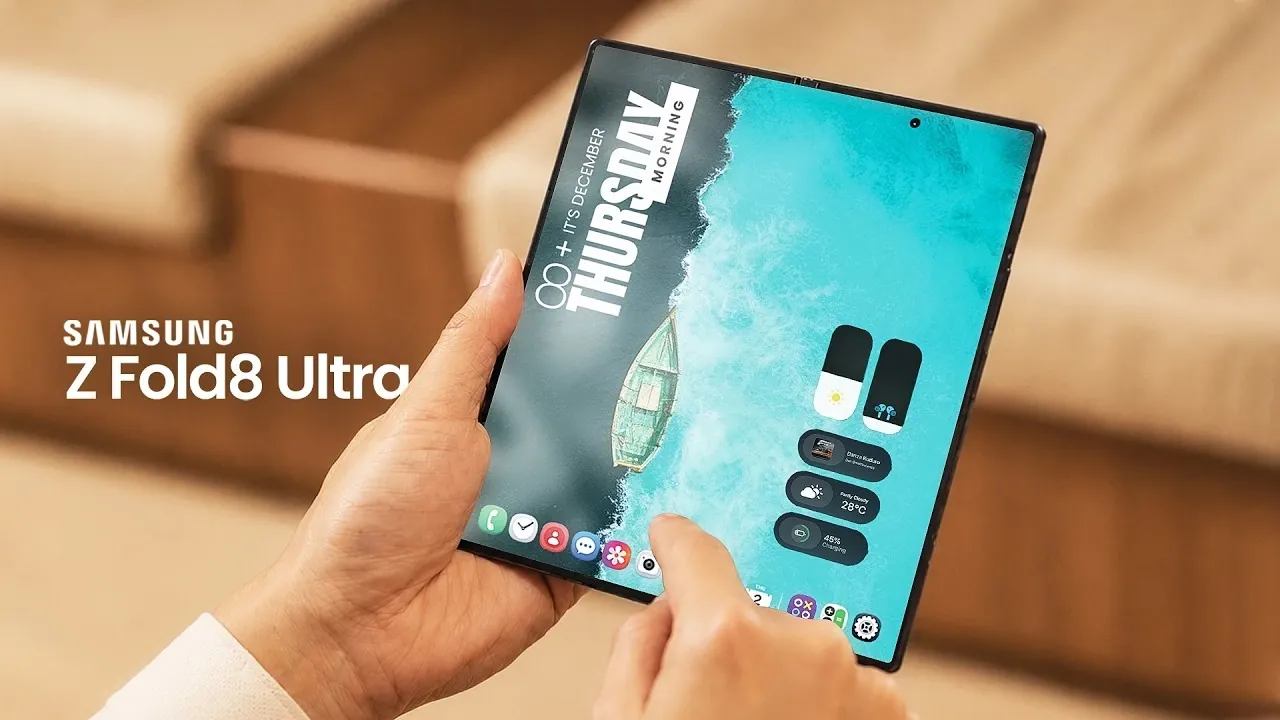
The Samsung Galaxy Z Fold 8 Ultra enters the foldable smartphone market with a mix of strengths and shortcomings. While it introduces notable advancements, particularly in display brightness, it struggles to justify the “Ultra” branding that suggests a premium, innovative experience. The device reflects a shift in Samsung’s strategy, prioritizing profit margins and cost efficiency over delivering new innovation. This approach results in a product that, while impressive in some areas, falls short of the high expectations associated with its name.
Samsung Galaxy Z Fold 8 Ultra – It Beat The S26 Ultra… And Still Lost

Display Brightness: A Step Forward, Yet Not a Leap
One of the standout features of the Galaxy Z Fold 8 Ultra is its peak brightness of 3,600 nits on the inner screen, a significant improvement over its predecessors. This enhancement ensures better visibility in bright environments, such as direct sunlight, making it a practical upgrade for users who rely on their devices outdoors. Samsung has optimized its existing display technology to achieve this milestone, showcasing its ability to refine and enhance performance within existing constraints.
However, the device still relies on the older M13 display panel, which limits the full potential of this improvement. In comparison, competitors like the Honor Magic V6 and Motorola Razr Fold have pushed the boundaries further, achieving peak brightness levels of 5,000 nits and 6,000 nits, respectively. These advancements highlight the gap between Samsung’s incremental improvements and the bold strides made by its rivals. While the Fold 8 Ultra’s display is undeniably bright, it lacks the innovation that could have set it apart in a fiercely competitive market.
Camera Technology: Missing the Mark on “Ultra”
The camera system of the Galaxy Z Fold 8 Ultra is another area where expectations fall short. Despite being branded as an “Ultra” device, it retains the same 3x zoom lens introduced in 2022, missing the opportunity to incorporate a more advanced 5x zoom upgrade. This omission is particularly noticeable in a market where competitors are redefining mobile photography with innovative features and hardware.
While the camera performs adequately for everyday use, it fails to deliver the level of excellence expected from a flagship device. The lack of meaningful upgrades reflects a broader trend of incremental updates rather than bold advancements. For users who prioritize photography, the Fold 8 Ultra’s camera system feels like a missed opportunity to elevate the device to true “Ultra” status. In a landscape where smartphone cameras are increasingly a key differentiator, this shortfall undermines the device’s appeal.
Cost-Cutting Measures: Balancing Accessibility and Premium Experience
Samsung’s focus on cost optimization is evident throughout the Galaxy Z Fold 8 Ultra. The company has adopted strategies such as sourcing components from cheaper camera suppliers and reallocating budgets due to rising memory prices. While these measures help maintain profit margins and potentially make the device more accessible to a broader audience, they come at the expense of the premium experience expected from an “Ultra” product.
These compromises are most evident in areas like the camera system and display technology, where the device falls short of its competitors. While cost-cutting may make the Fold 8 Ultra more appealing to budget-conscious consumers, it dilutes the flagship experience that the “Ultra” branding promises. The result is a device that feels more like a compromise than a true innovation, leaving some users questioning whether it justifies its premium price tag.
Chip Technology: Regional Variants and Performance Gaps
The Galaxy Z Fold 8 Ultra employs a dual-chip strategy, with Snapdragon 8 Elite Gen 5 powering U.S. models and Exynos 2600 used in other regions. While this approach helps Samsung manage production costs, it creates inconsistencies in performance across different markets. The Snapdragon variant delivers top-tier performance, offering smooth multitasking and gaming experiences, while the Exynos version lags slightly behind in benchmarks and real-world usage.
This fragmented approach highlights the challenges of balancing cost efficiency with delivering a uniform user experience. For consumers in regions where the Exynos chipset is used, the Fold 8 Ultra may feel like a less compelling option compared to its Snapdragon-powered counterpart. These regional disparities further underscore the device’s struggle to live up to its “Ultra” branding, as users in some markets may feel they are receiving a less premium product.
Overall Impression: A Device That Shines, But Not Brightly Enough
The Samsung Galaxy Z Fold 8 Ultra is a device that excels in certain areas, such as display brightness, but ultimately falls short of the high expectations associated with its “Ultra” label. The reliance on older technology, limited camera upgrades, and cost-cutting measures dilute its overall value, making it feel more like an incremental update than a new innovation.
For users seeking a foldable smartphone with a balanced combination of features and affordability, the regular Z Fold 8 may be a more practical choice. In a rapidly evolving market where competitors are pushing the boundaries of what foldable devices can achieve, the Fold 8 Ultra’s incremental improvements leave it struggling to keep pace. While it shines in some aspects, it ultimately fails to deliver the comprehensive premium experience that its branding promises.
Key Takeaways
- The Galaxy Z Fold 8 Ultra’s display brightness is a notable improvement, but is overshadowed by competitors with superior technology.
- The camera system lacks meaningful upgrades, falling short of flagship expectations and missing opportunities for innovation.
- Cost-cutting measures, such as sourcing cheaper components, compromise the premium experience associated with the “Ultra” branding.
- Regional chipset variations create inconsistent performance, with the Exynos version lagging behind the Snapdragon variant.
- While the Fold 8 Ultra has its strengths, it struggles to justify its “Ultra” label in a competitive and rapidly advancing market.
Unlock more potential in the Samsung Galaxy Z Fold 8 Ultra by reading the previous articles we have written.
- Samsung Galaxy Z Fold 8 Ultra: The Foldable We’ve Been Waiting For
- Why the Samsung Galaxy Z Fold 8 Ultra is Breaking the Internet
- Samsung Galaxy Z Fold 8 Ultra: All the Upgrades That Make It a True ‘Ultra’
- Samsung’s Foldable Masterpiece: Galaxy Z Fold 8 Ultra Leaks
- Samsung Galaxy Z Fold 8 Wide: The Fix For Every Foldable Complaint So Far
Source & Image Credit: Techtics
Disclosure: Some of our articles include affiliate links. If you buy something through one of these links, Geeky Gadgets may earn an affiliate commission. Learn about our Disclosure Policy.
