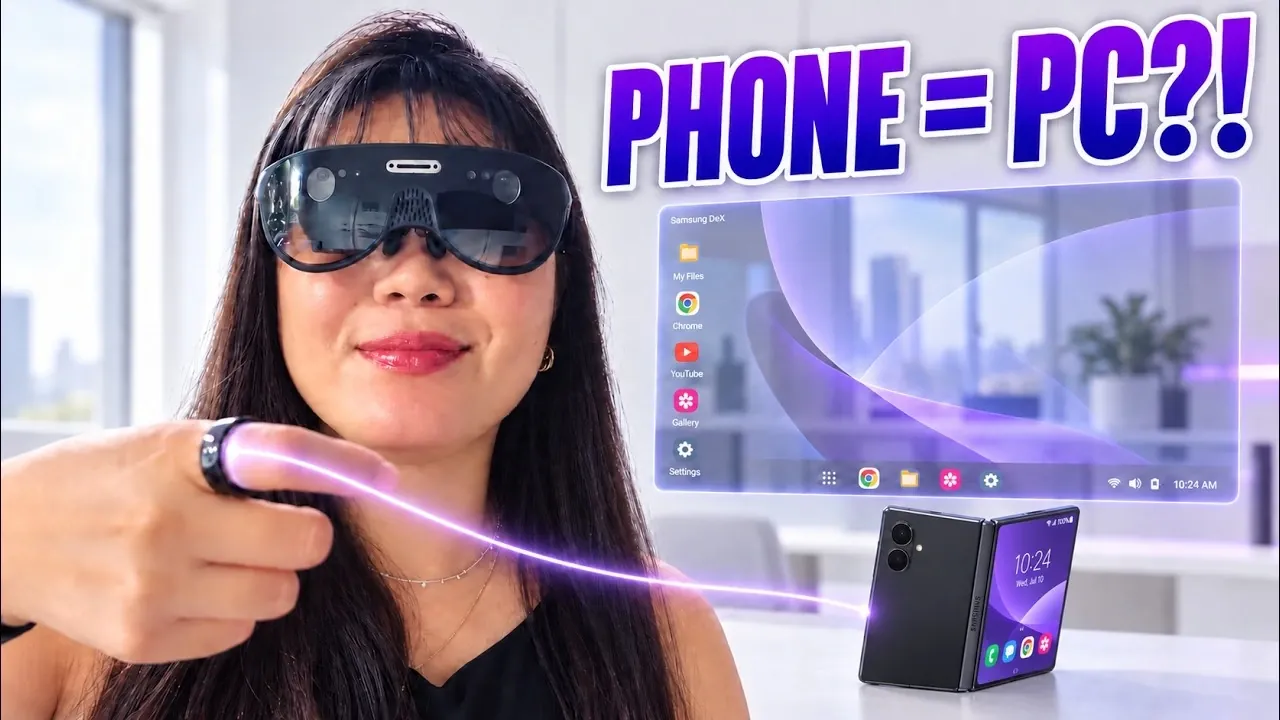
Samsung DeX, when paired with the URXR1 smart glasses and KiWear ring, offers a unique approach to portable computing by combining a smartphone-powered desktop interface with augmented reality and gesture-based controls. In her overview, Jasmine Uniza explores how this system works, highlighting the URXR1 glasses’ ability to project a private, virtual workspace and the KiWear ring’s role in allowing hands-free navigation. For example, the ring functions as a 3D mouse, allowing users to scroll, click and interact with apps through simple hand gestures, creating a compact yet functional alternative to traditional setups.
Dive into this breakdown to understand how these devices work together to create a cohesive hands-free ecosystem. You’ll gain insight into the practical advantages of using AR displays for privacy and focus, the KiWear ring’s gesture-based control capabilities and the current limitations of this prototype system, such as reliance on cables and external power. This overview offers a detailed look at the potential and challenges of integrating these technologies into everyday workflows.
Samsung DeX: A Smartphone-Powered Desktop Experience
TL;DR Key Takeaways :
- The integration of Samsung DeX, URXR1 smart glasses and the KiWear ring introduces a portable computing system combining smartphone-powered desktop interfaces, augmented reality (AR) displays and gesture-based controls.
- Samsung DeX transforms a smartphone into a desktop-like interface, eliminating the need for bulky hardware and allowing efficient, mobile computing for professionals.
- The URXR1 smart glasses provide an immersive AR display, simulating a virtual desktop monitor, but currently require a cable connection and external power, limiting portability.
- The KiWear ring functions as a Bluetooth-enabled 3D mouse, allowing intuitive gesture-based control of the Samsung DeX interface, enhancing hands-free interaction.
- While the system shows promise, challenges such as reliance on cables, external power and limited gesture accuracy need to be addressed for broader adoption and improved usability.
Samsung DeX transforms your smartphone into a desktop-like interface, eliminating the need for bulky hardware. By connecting your phone to a monitor, keyboard and mouse, you can perform tasks typically reserved for a full computer. Your smartphone acts as both the processing unit and storage device, making it an efficient and portable solution for professionals on the move.
The integration of URXR1 smart glasses and the KiWear ring takes this concept to the next level by removing the need for external monitors and physical input devices. This evolution aims to make computing even more accessible, mobile and adaptable to various environments.
URXR1 Smart Glasses: Augmented Reality as a Virtual Workspace
The URXR1 smart glasses provide an augmented reality display, offering a private, large-scale virtual screen that connects directly to your smartphone. This feature allows you to view the Samsung DeX interface in an immersive AR environment, simulating the experience of using a traditional desktop monitor. The glasses deliver a high-resolution, personal display, making them ideal for tasks requiring focus and privacy.
However, the current prototype has limitations. The glasses require a physical cable connection to your phone and an external power source, which reduces their portability. Despite these drawbacks, the URXR1 glasses represent a significant advancement in AR technology, paving the way for more seamless and immersive computing experiences.

Here are more guides from our previous articles and guides related to smart rings that you may find helpful.
- Why the Latest Apple Smart Ring Leak Could Shake Up the Wearables Market
- Is the Apple Ring Finally Coming? Here’s What the Latest Leaks Reveal
- Apple Ring Development Returns with Advanced Gesture Features
- Indonesian Certification Reveals Garmin CIRQA Smart Ring
- Why Apple’s Upcoming Smart Ring Might Make You Ditch Your Apple Watch
- Everything You Need to Know About the RingConn Gen 3 Smart Ring
- The Galaxy Ring 2 is Coming: Here’s When to Expect It
- $249 KiWear Ring Adds Gesture Controls to Everything
- Galaxy Ring 2 Leaks: How Samsung Made It Thinner With a Bigger Battery
- FCC Filings Suggest Garmin CIRQA May Launch Around July 19th 2026
KiWear Ring: Gesture-Based Control at Your Fingertips
The KiWear ring is a Bluetooth-enabled device designed to function as a 3D mouse, allowing you to control the Samsung DeX interface with intuitive hand gestures. With this ring, you can perform tasks such as scrolling through documents, adjusting volume and navigating apps. It also features a “mouse mode” for precise clicking, making it a versatile tool for hands-free interaction.
Although there may be a slight learning curve, the ring’s intuitive design ensures that most users can quickly adapt. Its gesture-based control adds a layer of convenience, particularly when paired with the URXR1 glasses, allowing for a more fluid and interactive computing experience.
Creating a Hands-Free Ecosystem
When used together, the URXR1 glasses and KiWear ring create a cohesive, hands-free navigation system. The glasses provide the visual interface, while the ring enables you to interact with the system without relying on traditional input devices like a mouse or keyboard. This combination offers a glimpse into a future where computing is not only portable but also more intuitive and immersive.
However, the system is not without its challenges. Typing, for instance, still requires the use of your smartphone’s on-screen keyboard, which can interrupt the otherwise seamless workflow. Despite this limitation, the integration of these devices demonstrates the potential for a more efficient and portable computing solution.
Challenges and Opportunities for Improvement
As prototypes, both the URXR1 glasses and the KiWear ring have areas that require refinement. Key challenges include:
- The URXR1 glasses rely on cables and external power sources, which limit their portability and ease of use.
- The KiWear ring’s gesture recognition could benefit from enhanced accuracy and responsiveness for a smoother user experience.
Addressing these issues in future iterations could significantly improve the usability and appeal of these devices. Enhanced wireless capabilities for the glasses and more precise gesture controls for the ring would make the system more practical for everyday use, bringing it closer to widespread adoption.
The Future of Portable Computing
The integration of Samsung DeX with URXR1 smart glasses and the KiWear ring offers a forward-looking vision of portable computing. By combining a smartphone-powered desktop interface with augmented reality displays and gesture-based controls, this system has the potential to redefine how you interact with technology in both professional and personal settings.
While there are hurdles to overcome, the progress made by these prototypes underscores the growing demand for innovative, hands-free solutions in an increasingly mobile world. As these technologies evolve, they could transform not only how you work but also how you engage with digital environments, offering a more flexible and immersive approach to computing.
Media Credit: Jasmine Uniza ☕️
Disclosure: Some of our articles include affiliate links. If you buy something through one of these links, Geeky Gadgets may earn an affiliate commission. Learn about our Disclosure Policy.
