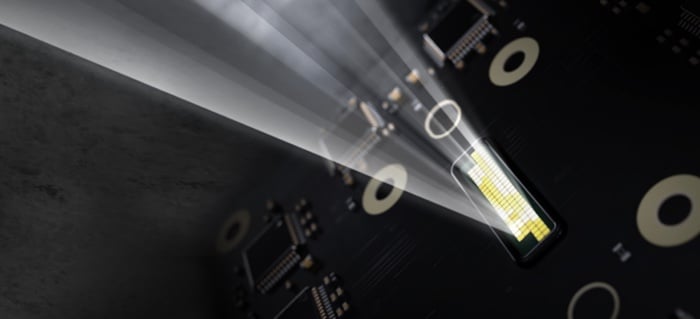
Samsung has introduced PixelCell LED, a groundbreaking automotive LED module designed specifically for car headlights. This innovative solution is tailored for intelligent headlights equipped with adaptive driving beam (ADB) systems, promising to enhance both visibility and safety on the road.
Enhanced Visibility and Safety
This new solution is designed for intelligent headlights with adaptive driving beam (ADB) systems. Samsung has stated that it will provide improved visibility and safety, which are crucial for modern driving conditions. The PixCell LED technology is not just a simple automotive lighting source; it represents a significant advancement in lighting technology aimed at improving road safety and driving convenience.
“Much more than a simple automotive lighting source, Samsung’s PixCell LED is based on new lighting technology designed to improve road safety and driving convenience,” said Un Soo Kim, senior vice president of the LED Business Team at Samsung Electronics. “Beginning with PixCell LED, we will introduce tailored lighting solutions well-suited for future automobiles, including electric and autonomous vehicles.”
Adaptive Driving Beam (ADB) Technology
ADB is an advanced driver assistance technology designed to help secure maximum driving visibility. In order to prevent glare to other drivers, ADB automatically adjusts headlight beam patterns when it detects any object near a moving vehicle, thereby preventing any unnecessary glare. This is particularly beneficial during night driving or in low-light conditions, where traditional headlights might cause glare and reduce visibility for other drivers.
Recent developments in future automotive technologies, such as autonomous and connected driving, have been raising the bar for vehicle safety standards and ultimately boosting demand for ADB systems. The PixCell LED is designed to meet these heightened safety standards, making it an ideal choice for next-generation vehicles.
ADB is an advanced driver assistance technology designed to help secure maximum driving visibility. In order to prevent glare to other drivers, ADB automatically adjusts headlight beam patterns when it detects any object near a moving vehicle, thereby preventing any unnecessary glare. Recent developments in future automotive technologies, such as autonomous and connected driving, have been raising the bar for vehicle safety standards and ultimately boosting demand for ADB systems.
Future-Proofing Automotive Lighting
Samsung’s introduction of the PixCell LED is a step towards future-proofing automotive lighting solutions. As electric and autonomous vehicles become more prevalent, the need for advanced lighting systems that can adapt to various driving conditions and enhance safety becomes more critical. The PixCell LED is designed to be versatile and adaptable, making it suitable for a wide range of vehicle types and driving scenarios.
For example, in autonomous vehicles, where human intervention is minimal, the need for reliable and intelligent lighting systems is paramount. The PixCell LED can provide the necessary illumination and adaptability to ensure that these vehicles can navigate safely and efficiently. Similarly, in electric vehicles, where energy efficiency is crucial, the PixCell LED offers a solution that balances high performance with low energy consumption.
In conclusion, Samsung’s PixCell LED represents a significant advancement in automotive lighting technology. By enhancing visibility and safety through intelligent design and adaptive capabilities, it sets a new standard for what automotive lighting can achieve. As the automotive industry continues to evolve, innovations like the PixCell LED will play a crucial role in shaping the future of driving.
You can find out more details about the new Samsung PixCell LED solutions for automotive headlights at the link below.
Source Samsung
Disclosure: Some of our articles include affiliate links. If you buy something through one of these links, Geeky Gadgets may earn an affiliate commission. Learn about our Disclosure Policy.
