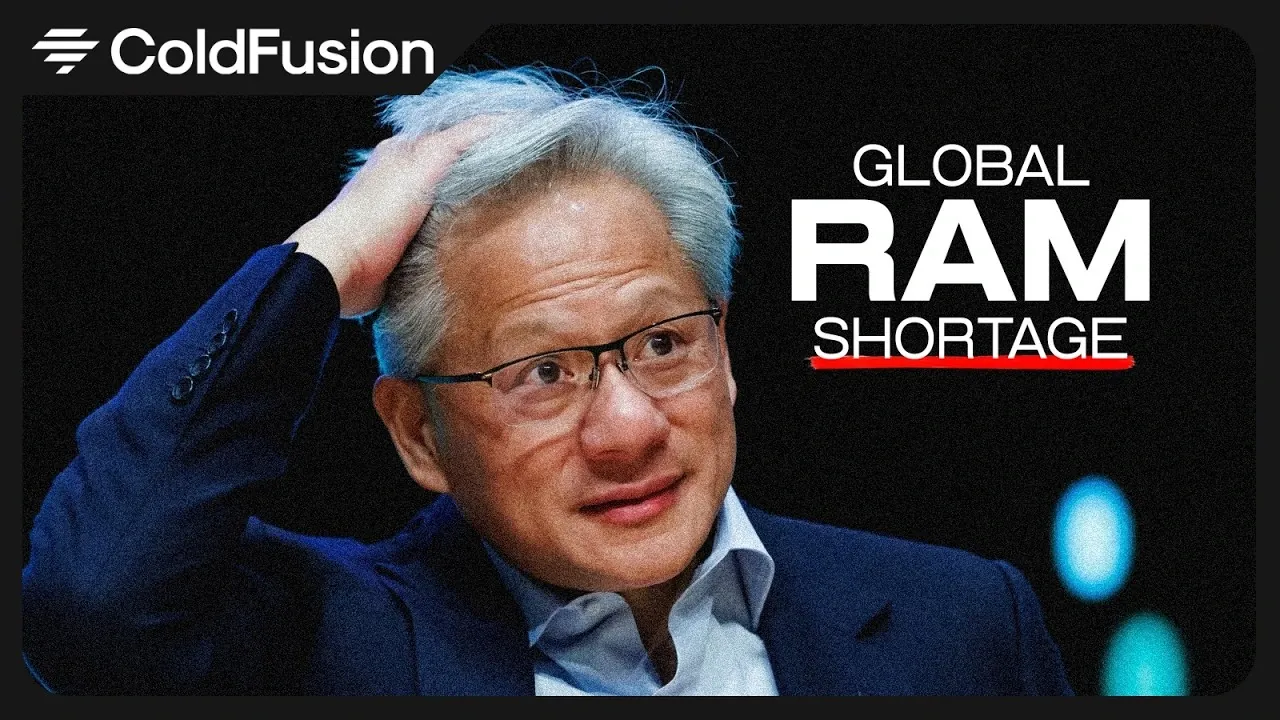
The global RAM shortage is creating ripple effects across the tech industry, with high-bandwidth memory (HBM) at the center of the crisis. As ColdFusion explains, the surging demand for AI data centers, driven by their reliance on HBM to train and operate advanced machine learning models, has left other sectors scrambling to secure adequate supply. Companies like OpenAI have claimed significant portions of the global memory market, forcing manufacturers to prioritize enterprise-grade products over consumer-focused alternatives. This shift has led to rising costs, delayed product launches and growing tension between the needs of AI-driven industries and the broader tech ecosystem.
In this investigation, we’ll explore how the RAM shortage is reshaping market dynamics and what it means for consumers and businesses alike. Learn about the challenges facing manufacturers as they attempt to balance AI-specific demand with production constraints and discover how supply chain bottlenecks are influencing the availability of consumer electronics. Additionally, gain insight into the economic consequences of this crisis, from price hikes in gaming hardware to the potential long-term impact on innovation and competition. These developments highlight the complexity of addressing a shortage that continues to reshape the global technology landscape.
Global RAM Shortage Crisis
TL;DR Key Takeaways :
- The global RAM shortage, particularly high-bandwidth memory (HBM), is driven by surging demand from AI data centers, impacting consumer electronics, gaming and enterprise markets.
- AI data centers prioritize HBM for machine learning models, causing manufacturers to focus on enterprise-grade memory, exacerbating shortages in consumer markets.
- The RAM market is dominated by Samsung, SK Hynix and Micron Technology, with limited flexibility to expand production due to high costs and long lead times.
- Consumer electronics, including laptops, smartphones and gaming hardware, face rising costs, delays and reduced availability due to the prioritization of AI-driven applications.
- The crisis highlights vulnerabilities in the global tech supply chain, emphasizing the need for diversification, sustainable practices and long-term planning to address future challenges.
AI Data Centers: The Core of the Demand Surge
AI data centers are at the heart of the current RAM shortage. These facilities require vast amounts of HBM to train and operate large-scale machine learning models, which are integral to advancements in artificial intelligence. Companies like OpenAI and other leading AI developers have secured substantial portions of the global RAM supply, leaving other sectors scrambling to meet their own needs.
HBM is uniquely suited to AI applications due to its ability to handle the immense data processing demands of these systems. As a result, manufacturers are prioritizing the production of enterprise-grade memory over consumer-grade alternatives. While this ensures that AI systems can continue to operate efficiently, it exacerbates shortages in other markets, creating a cascading effect that disrupts the broader tech industry.
Supply Chain Bottlenecks and Market Dynamics
The global RAM market is dominated by three major manufacturers: Samsung, SK Hynix and Micron Technology. Together, these companies account for 93% of global production. In response to the surge in AI-driven demand, they are shifting their focus toward producing AI-specific memory products. This strategic pivot has left significant gaps in the consumer electronics market, where demand for devices like laptops and gaming consoles remains high.
Expanding production capacity to address the shortage is not a straightforward solution. Building new manufacturing facilities requires substantial investment and years of development. Manufacturers are hesitant to make such commitments due to concerns about potential overproduction and market saturation once the current demand surge subsides. This cautious approach has left the supply chain vulnerable, with limited flexibility to respond to sudden spikes in demand.
Why RAM Prices Are Rising in 2026

Browse through more resources below from our in-depth content covering more areas on AI business.
- How to use Gemini AI for business using Google Workspace
- OpenAI’s Growing Pains: Legal Scrutiny, Rivals, and Public Trust
- OpenAI’s $1.4 Trillion Bet: Can It Survive the AI Race?
- Perplexity vs Google AI Search: Why It Stayed a Niche Tool
- Best AI Tools for Work, from Gemini to OpenAI & More
- AI Runs a Business (Fully Automated) : From Chaos to Calm
- ChatGPT 5 One-Person Billion-Dollar Companies by 2028 : Sam Altman
Impact on Consumer Electronics
The consumer electronics market is experiencing significant challenges as a result of the RAM shortage. Rising RAM prices have led to increased costs for devices such as laptops, smartphones and gaming consoles. Major companies like Apple, Lenovo and HP are struggling to secure sufficient memory supplies, forcing them to either delay product launches or pass higher costs onto consumers.
Gaming hardware is particularly affected. Next-generation gaming consoles, such as the anticipated PlayStation 6 and Xbox, may face delays or price hikes due to limited RAM availability. Similarly, gaming GPUs, which are essential for high-performance computing and gaming, are being deprioritized as manufacturers focus on meeting the demands of AI-driven applications. This shift underscores the growing tension between consumer and enterprise markets, with consumers bearing much of the burden.
Economic and Industry-Wide Consequences
The economic impact of the RAM shortage is far-reaching. The PC and smartphone markets, already weakened by declining consumer demand, are expected to contract further as higher prices and limited supply deter potential buyers. Some manufacturers may be forced to scale back production or exit the market entirely, reducing competition and potentially slowing innovation.
Even industry leaders like Nvidia are adjusting their strategies in response to the shortage. The company has shifted its focus toward data center products, deprioritizing consumer GPUs to meet the needs of AI workloads. This reallocation of resources highlights a broader industry trend, as manufacturers prioritize AI growth at the expense of other sectors. The long-term implications of this shift could reshape the technology landscape, with significant consequences for innovation and market dynamics.
China’s Growing Role in the RAM Market
China is emerging as a potential player in the global RAM market, with manufacturers like ChangXin Memory Technologies (CXMT) working to develop DDR5 memory. However, these efforts are still in their early stages and it will take years for Chinese companies to scale production to levels that can significantly impact global supply.
In the short term, existing production commitments and long-term contracts with major players like Samsung and SK Hynix limit the potential for immediate relief. This underscores the challenges of diversifying the supply chain and reducing reliance on a small number of dominant manufacturers. While China’s entry into the market could eventually provide greater stability, it is unlikely to address the current crisis in the near future.
Broader Implications for the Tech Industry
The ongoing RAM shortage has exposed critical vulnerabilities in the global tech supply chain. Over-reliance on a few key manufacturers has created bottlenecks, while geopolitical tensions and trade restrictions add further uncertainty. The insatiable demand for AI hardware raises questions about the sustainability of current growth trends and the industry’s ability to adapt to future challenges.
Expanding manufacturing capacity to meet demand presents significant environmental and logistical challenges. RAM production is resource-intensive, requiring finite raw materials and energy-heavy processes. These factors complicate efforts to scale production sustainably, highlighting the need for long-term planning and investment in more resilient and diversified supply chains.
The shortage also serves as a reminder of the interconnectedness of the global technology ecosystem. As AI continues to drive innovation, its demand for high-bandwidth memory is reshaping priorities across the industry. Addressing these challenges will require strategic planning, sustainable practices and a commitment to supply chain diversification. The lessons learned from this crisis will play a crucial role in shaping the future trajectory of the tech industry, making sure its stability and continued growth in an increasingly complex global economy.
Media Credit: ColdFusion
Disclosure: Some of our articles include affiliate links. If you buy something through one of these links, Geeky Gadgets may earn an affiliate commission. Learn about our Disclosure Policy.
