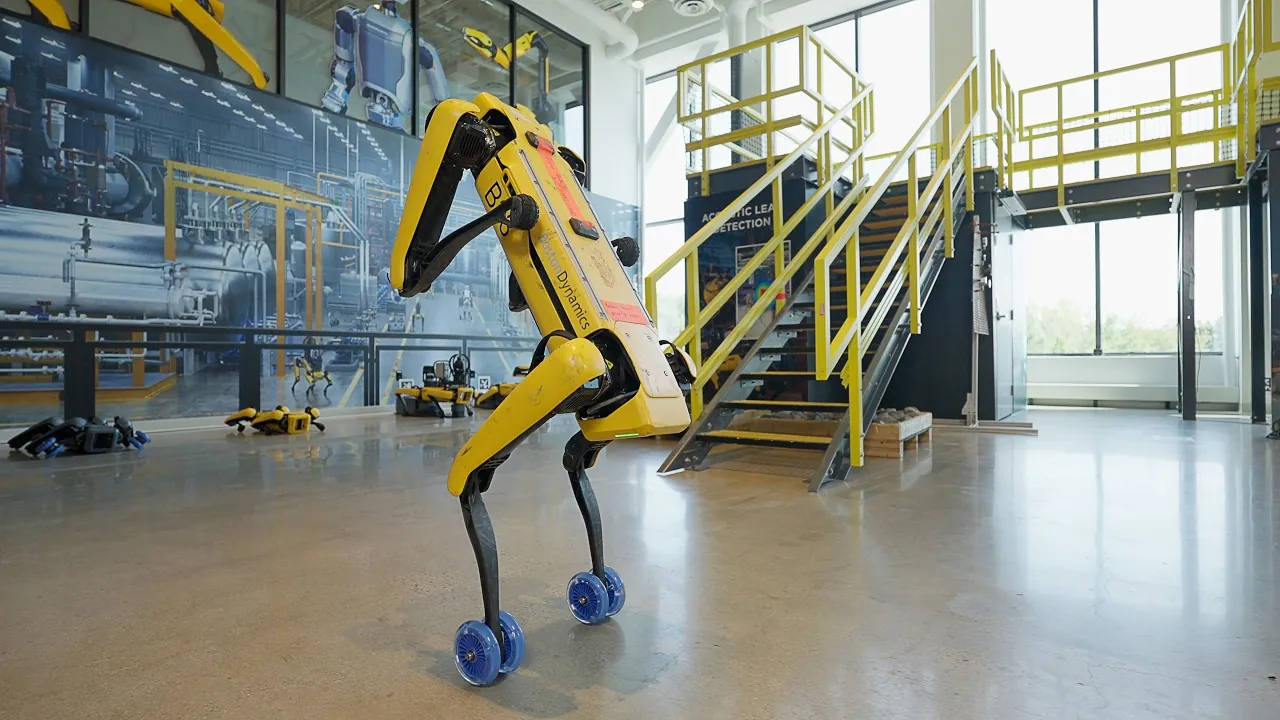
What if robots could learn to adapt to their surroundings as effortlessly as humans do? The rise of quadruped robots, like Boston Dynamics’ Spot, is turning this vision into reality. By integrating reinforcement learning (RL)—a innovative machine learning technique, these robots are not only mastering practical tasks like industrial inspections but also pushing the boundaries of agility and resilience. Imagine a robot navigating a hazardous construction site, climbing uneven stairs, or recovering gracefully after a slip, all without human intervention. This isn’t science fiction; it’s the result of advanced programming and iterative development that’s redefining what robotics can achieve in real-world applications.
Boston Dynamics provide more insights into the fantastic role of RL in enhancing the behavior and performance of quadruped robots. From the meticulous programming that balances practicality with high-performance maneuvers to the use of simulation environments for perfecting their adaptability, we’ll uncover how Spot is evolving into a versatile tool for industries and beyond. You’ll discover how hardware optimization, robustness testing, and iterative debugging contribute to Spot’s reliability in unpredictable conditions. By the end, you’ll see how these advancements are not just improving robotics but reshaping the future of automation itself, one step, leap, or backflip at a time.
Reinforcement Learning in Robotics
TL;DR Key Takeaways :
- Reinforcement learning (RL) is transforming quadruped robots like Boston Dynamics’ Spot, allowing them to perform intricate tasks with precision and adaptability in both practical and high-performance scenarios.
- Spot is designed for dual objectives: executing practical tasks such as industrial inspections and extreme maneuvers like backflips, making sure reliability in routine operations and resilience in demanding environments.
- Simulation training and hardware optimization are key to Spot’s development, allowing it to navigate complex terrains, handle unforeseen obstacles, and maintain peak performance through fine-tuned components.
- Rigorous iterative debugging and robustness testing ensure Spot’s reliability, allowing it to operate effectively in harsh conditions and adapt to diverse industrial applications.
- Spot’s versatility and adaptability make it a valuable tool across industries, capable of improving safety, productivity, and efficiency while paving the way for future advancements in quadruped robotics.
Programming Spot: Balancing Practicality and Performance
Spot’s programming is carefully designed to address two primary objectives: executing practical tasks for real-world applications and performing extreme maneuvers that push its operational boundaries.
- Practical Tasks: Spot is engineered to handle routine yet critical challenges, such as climbing stairs, opening doors, and conducting industrial inspections. These tasks are programmed with precision to ensure consistent reliability. For instance, Spot can autonomously navigate industrial facilities, capturing high-resolution images or transporting essential payloads to assist human operators. Its ability to perform these tasks reduces human risk in hazardous environments while improving operational efficiency.
- Extreme Maneuvers: Beyond practical applications, Spot is programmed to execute high-stress maneuvers, such as performing backflips or recovering seamlessly from slips. These maneuvers are not just demonstrations of agility but also critical tests of its hardware durability and software resilience. By mastering such challenges, Spot is better equipped to operate effectively in unpredictable and demanding environments, such as disaster zones or rugged terrains.
This dual focus ensures that Spot is both a reliable tool for everyday tasks and a robust performer in extreme conditions.
Simulation and Hardware Optimization: Perfecting Performance
The development of Spot relies heavily on simulation modeling and hardware optimization, which together create a smarter and more efficient robot.
- Simulation Training: Virtual environments play a crucial role in refining Spot’s behavior. Researchers simulate real-world conditions to train the robot, allowing it to navigate complex terrains or handle unforeseen obstacles. For example, Spot’s ability to traverse uneven surfaces is perfected in simulations before being tested in the field. This approach not only accelerates development but also minimizes risks during real-world deployment.
- Hardware Optimization: Spot’s physical components, including its motors, sensors, and power systems, are carefully fine-tuned to ensure peak performance. Challenges such as managing heat dissipation during high-intensity tasks or maintaining efficiency under heavy payloads are addressed to balance reliability with energy consumption. This optimization ensures that Spot can perform demanding tasks without compromising durability or functionality.
By combining advanced simulation techniques with precise hardware refinement, Spot achieves seamless integration between its software intelligence and physical capabilities.
Boston Dynamics Air Spot Quadruped Robot Agility Demonstration

Explore further guides and articles from our vast library that you may find relevant to your interests in humanoid robots.
- 10 AI Humanoid Robots Set to Change Our Lives
- Humanoid Robots a $24 Trillion market potential
- Humanoid robots tested at BMW Group Plant Spartanburg
- Mercedes-Benz AI and Humanoid Robots Revolutionize Berlin
- BMW Testing Humanoid Robots In Car Production
- $1,000 Kscale Labs Humanoid Robot : The Future of Affordable
- Top 10 Humanoid Robots Transforming the Future in 2025
- OpenAI’s Strategic Investments in Humanoid Robotics Explained
- NVIDIA’s Breakthrough in Humanoid Robotics Explained
- China’s AI Humanoid Robots: The Future of Work and Home Life
Iterative Development: Making sure Reliability and Resilience
Spot’s reliability is the result of a rigorous development process that emphasizes iterative debugging and comprehensive robustness testing.
- Iterative Debugging: The development team continuously tests and refines Spot’s behaviors. If the robot encounters difficulties with a specific task, adjustments are made to its programming or hardware until the issue is resolved. This iterative approach ensures that Spot’s performance improves over time, addressing potential weaknesses before deployment.
- Robustness Testing: Spot undergoes extensive testing in harsh conditions, such as extreme temperatures, uneven terrains, and high-impact scenarios. These tests are designed to evaluate its resilience and ensure it can operate reliably in challenging environments. The insights gained from these tests are used to further enhance its design and functionality.
This meticulous process guarantees that Spot is prepared to handle the diverse demands of real-world applications, making it a dependable asset in various industries.
Expanding Industrial Applications and Adaptive Potential
Spot’s versatility and adaptability make it a valuable resource across a wide range of industrial sectors, where precision and reliability are paramount.
- Industrial Use Cases: Spot is particularly effective in environments that are hazardous or difficult for humans to navigate. It can inspect dangerous areas, transport heavy payloads, and capture detailed data in industries such as construction, energy, and manufacturing. Its ability to follow pre-programmed paths or adapt to unique projects, such as live performances or research expeditions, highlights its flexibility and broad applicability.
- Adaptive Performance: Spot’s programming is continuously refined to meet evolving demands. Whether adjusting to different payloads, navigating complex environments, or responding to unexpected challenges, its adaptability ensures consistent performance. This capability allows it to transition seamlessly between routine tasks and specialized operations, making it an indispensable tool for industries requiring dynamic solutions.
Spot’s ability to adapt to diverse scenarios underscores its potential to transform workflows, improve safety, and enhance productivity across multiple domains.
Advancing the Future of Quadruped Robotics
The ongoing advancements in reinforcement learning and hardware engineering are paving the way for a new era in quadruped robotics. As these technologies continue to evolve, robots like Spot are expected to become even more capable, addressing challenges that were once considered insurmountable. From conducting industrial inspections to participating in creative and innovative projects, the potential applications for quadruped robots are vast and varied.
By combining innovative machine learning techniques with robust engineering, quadruped robots are poised to play a fantastic role across industries. Their ability to perform complex tasks with precision, adapt to changing conditions, and operate in challenging environments positions them as key contributors to the future of automation and innovation. As these machines become more advanced, they will redefine what is possible in both practical and creative domains, ushering in a new era of technological progress.
Media Credit: Boston Dynamics
Disclosure: Some of our articles include affiliate links. If you buy something through one of these links, Geeky Gadgets may earn an affiliate commission. Learn about our Disclosure Policy.
