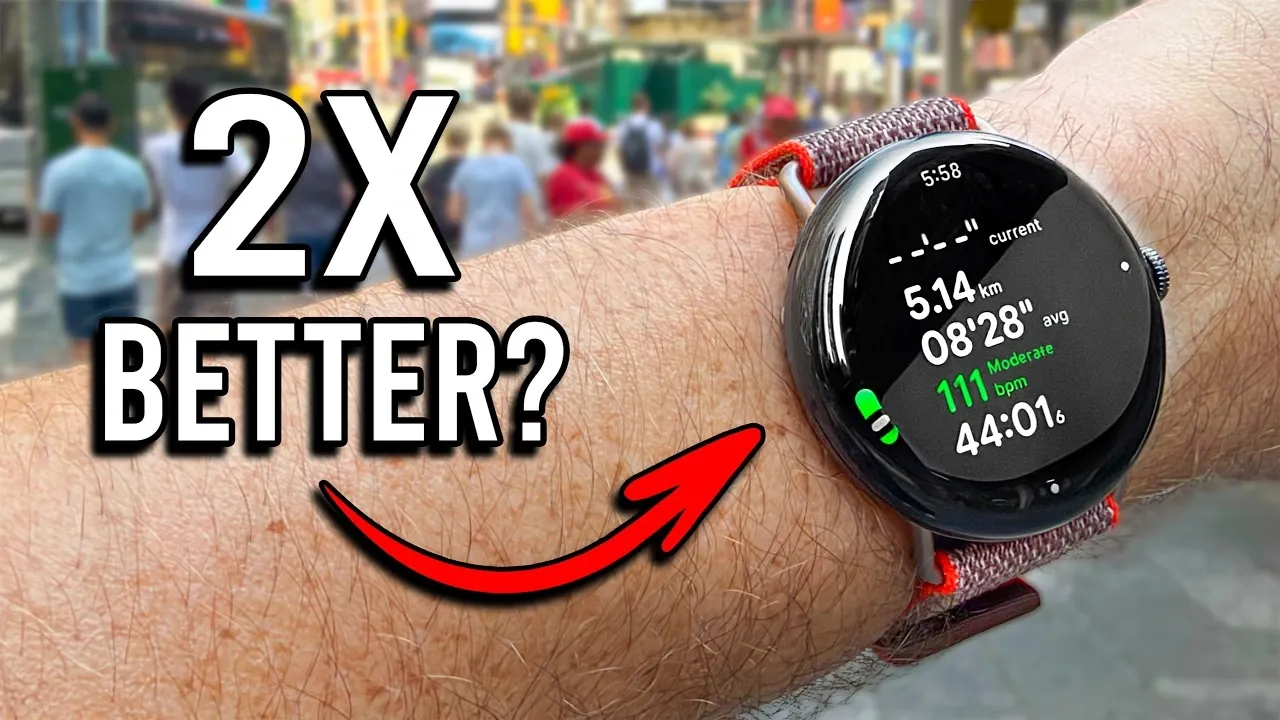
The Google Pixel Watch 5 features an advanced GPS system designed to address the challenges of navigating dense urban areas. By incorporating Google Maps’ 3D building and terrain data, the watch adjusts for signal interference caused by tall buildings and reflective surfaces. Chase the Summit evaluates this functionality by comparing the Pixel Watch 5’s GPS accuracy to the Garmin Fenix 8 Pro and Apple Watch Ultra 3, highlighting how the Pixel Watch 5 uses smartphone-assisted post-processing to enhance precision for activities like running and walking.
Discover how the Pixel Watch 5 handles urban navigation, including its ability to reduce common GPS errors. Learn about its performance across specific activities, such as running and its limitations, like the lack of swim tracking. The breakdown also compares its capabilities to those of competing devices, offering a detailed look at its strengths and areas for improvement.
Innovative GPS Algorithm: What Sets It Apart?
TL;DR Key Takeaways :
- The Google Pixel Watch 5 introduces an advanced GPS algorithm that uses 3D building and terrain data, weather integration and post-processing via a paired smartphone to improve navigation accuracy, especially in urban environments.
- Compared to competitors like the Garmin Fenix 8 Pro and Apple Watch Ultra 3, the Pixel Watch 5 demonstrates superior GPS precision in cities, effectively addressing challenges like signal disruptions caused by tall buildings and reflective surfaces.
- Post-processing enhances GPS accuracy for activities like running and cycling, though it relies on a paired smartphone, which may limit real-time usability for some users.
- The watch supports key activity modes such as walking, running, hiking and cycling but lacks options for activities like swimming or skiing, with potential updates hinted at for future expansion.
- Currently, the advanced GPS features are exclusive to the Pixel Watch 5, raising concerns about compatibility with earlier models and influencing purchasing decisions for users seeking innovative navigation technology.
The GPS algorithm in the Pixel Watch 5 represents a significant advancement in wearable technology. By incorporating Google Maps’ 3D building and terrain data, the watch compensates for signal disruptions caused by tall buildings, reflective surfaces and other urban obstacles. This feature is particularly beneficial in cities where traditional GPS systems often struggle to maintain accuracy.
Additionally, the integration of weather data allows the algorithm to account for atmospheric conditions that can interfere with GPS signals, such as heavy rain or cloud cover. However, the GPS data is not processed directly on the watch. Instead, it relies on a paired smartphone and Google Health for post-processing. While this approach enhances accuracy, it introduces a potential limitation for users who require real-time data during activities like running or cycling.
Urban Navigation: A New Benchmark for Accuracy
Urban environments, notorious for their GPS challenges, served as a critical testing ground for the Pixel Watch 5. In cities like New York, where skyscrapers and reflective surfaces frequently distort GPS signals, the watch demonstrated remarkable precision.
When compared to competitors like the Garmin Fenix 8 Pro and Apple Watch Ultra 3, the Pixel Watch 5 consistently delivered more accurate tracking for activities such as walking and running. This improvement can be attributed to its integration of 3D mapping and post-processing capabilities, which effectively mitigate common urban GPS issues. The watch’s ability to navigate these environments with precision positions it as a strong contender in the wearable market.

Advance your skills in Google Pixel Watch 5 by reading more of our detailed content.
- Google’s Pixel Watch 5 Teaser Confirms a Big Upgrade Coming August 12
- Leaked Pixel Watch 5 Stephen Curry Edition May Launch August 12 2026
- Google Pixel Watch 5 Doubles Storage to 64GB for Offline Music
- Pixel Watch 5 Reportedly Focuses on AI Over Fixing Battery Life
- Google Pixel Watch 5 Specs Have Reportedly Leaked Online
- Breaking: Google Pixel Watch 5 Design Just Leaked
- Advanced Scheduling Tools Arrive on Google Pixel Watch 5
- Google Pixel Watch 5 Launches August 12 with 3 GB of RAM?
- Google Pixel Watch 5 Leak Points to a $399 Starting Price
- Face-Off: Samsung Galaxy Watch Ultra 2 vs Watch Ultra 1
Activity Tracking: Strengths and Limitations
The Pixel Watch 5 supports a variety of activity modes, including walking, hiking, running and cycling, making it suitable for a wide range of users. However, its versatility is somewhat limited by the absence of additional activity modes such as swimming, skiing, or strength training.
Google has hinted at the possibility of expanding the range of activity options in future updates, but no specific timeline has been provided. For now, users who require a broader selection of tracking modes may find the current offering restrictive. Despite this limitation, the watch excels in the modes it does support, delivering accurate and reliable performance for everyday fitness tracking.
Post-Processing: Enhancing GPS Accuracy
One of the standout features of the Pixel Watch 5 is its ability to refine GPS tracks through post-processing. While the on-watch distance measurements may occasionally differ from the corrected data displayed in Google Health or third-party apps like Strava, the final tracks generally exhibit improved accuracy.
This post-processing capability is particularly valuable for users who prioritize precise data for activities like running or cycling. However, some minor inaccuracies, often referred to as “drift,” still occur, indicating that there is room for further refinement in the algorithm. Despite these minor issues, the Pixel Watch 5’s post-processing feature represents a significant step forward in wearable GPS technology.
Comparing Performance: Pixel Watch 5 vs Competitors
In head-to-head comparisons with the Garmin Fenix 8 Pro and Apple Watch Ultra 3, the Pixel Watch 5 demonstrated notable advantages in GPS accuracy, particularly in urban settings.
- Apple Watch Ultra 3: While smooth and user-friendly, it struggled to reflect real-world movements with precision, especially in areas with tall buildings or dense infrastructure.
- Garmin Fenix 8 Pro: Known for its reliability, the Garmin faced challenges in urban environments, often producing less accurate tracks compared to the Pixel Watch 5.
The Pixel Watch 5’s ability to address these common GPS challenges underscores its potential as a leader in wearable GPS technology. Its innovative approach to navigation sets it apart from competitors and highlights its suitability for users navigating complex urban landscapes.
Exploring New Frontiers: Beyond Urban Environments
While the Pixel Watch 5 has excelled in urban environments, its performance in non-urban settings, such as mountainous regions, forests, or canyons, remains to be fully tested. The watch’s integration of terrain data could prove invaluable in these scenarios, but further testing is needed to determine its effectiveness in diverse environments.
Additionally, the impact of weather data on GPS performance warrants closer examination. Understanding how the watch performs under extreme weather conditions, such as heavy snowfall or intense heat, will provide a more comprehensive evaluation of its capabilities. These tests will help establish whether the Pixel Watch 5’s innovative features can deliver consistent accuracy across a wide range of environments.
Exclusivity and Compatibility: A Limited Offering
Currently, the advanced GPS features are exclusive to the Pixel Watch 5, raising questions about compatibility with earlier models like the Pixel Watch 4. While there is speculation that Google may extend support to older devices, no official confirmation has been provided. This exclusivity could influence purchasing decisions, particularly for users who are hesitant to upgrade to the latest model solely for improved GPS functionality.
For those seeking the most advanced GPS technology available in a wearable, the Pixel Watch 5 offers a compelling option. However, its limited compatibility may deter some users from making the switch.
Looking Ahead: The Future of Wearable GPS Technology
The Google Pixel Watch 5 represents a significant advancement in GPS accuracy for wearables, particularly in challenging urban environments. Its innovative algorithm, powered by 3D building and terrain data, weather integration and post-processing, places it ahead of competitors like the Garmin Fenix 8 Pro and Apple Watch Ultra 3.
However, its full potential has yet to be realized. Further testing in diverse environments, combined with the addition of more activity modes, will be crucial in solidifying its position as a leader in wearable GPS technology. For now, the Pixel Watch 5 offers a glimpse into the future of navigation, setting a new benchmark for accuracy and innovation in the wearable market.
Media Credit: Chase the Summit
Disclosure: Some of our articles include affiliate links. If you buy something through one of these links, Geeky Gadgets may earn an affiliate commission. Learn about our Disclosure Policy.
