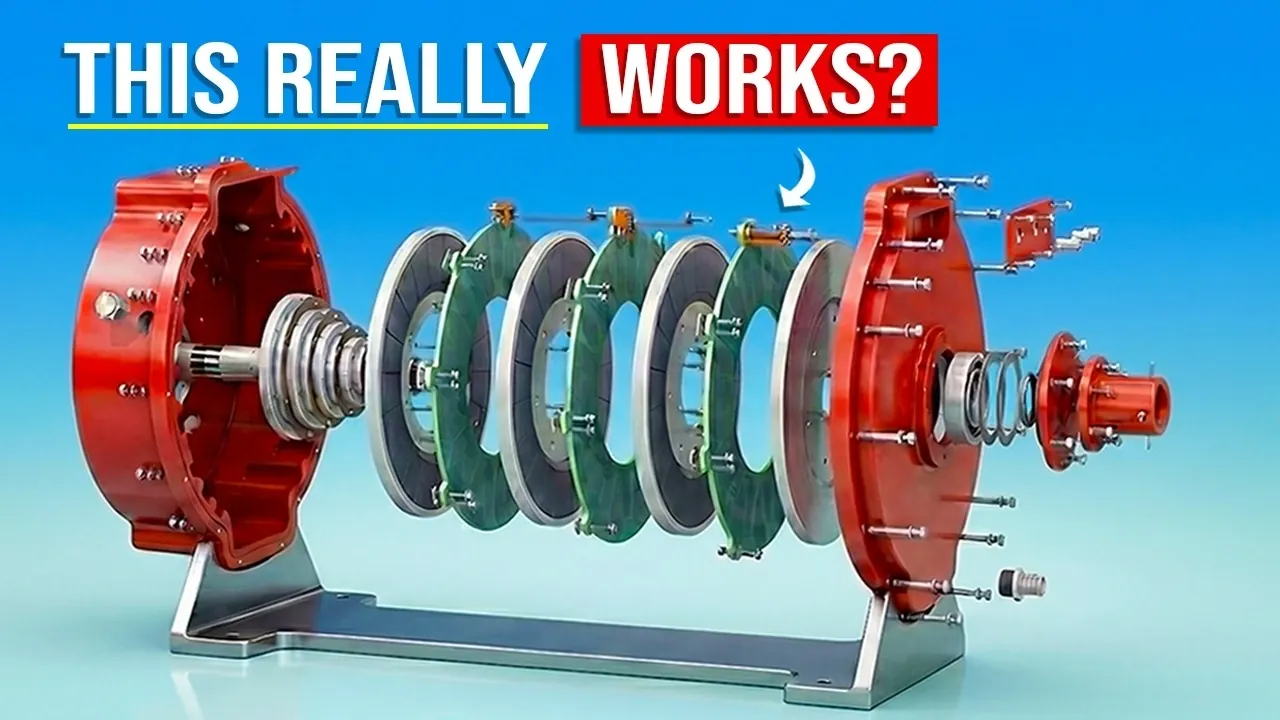
What if the future of electric motors didn’t rely on bulky copper windings or heavy steel components? Ziroth outlines how Printed Circuit Board (PCB) motors are flipping the script on traditional motor design by replacing these conventional elements with sleek, copper-plated circuit boards. This radical shift not only makes PCB motors more compact but also significantly boosts their efficiency, achieving smoother operation and up to 7% better energy utilization compared to their traditional counterparts. Imagine a motor that’s not only lighter and quieter but also capable of delivering higher torque in a smaller package. It’s a fantastic option for industries where space, reliability, and energy savings are paramount.
In this feature, we’ll explore what makes PCB motors so uniquely efficient and how their axial flux design is redefining performance in applications like HVAC systems and industrial fans. You’ll discover how these motors eliminate common inefficiencies, like torque ripple and iron losses, while simplifying manufacturing processes to reduce costs. But it’s not all smooth sailing, PCB motors face challenges, particularly in high-power scenarios, that could limit their broader adoption. Whether you’re an engineer, a sustainability advocate, or just curious about innovative technology, this breakdown will challenge the way you think about electric motors and their role in a more energy-conscious future.
What Makes PCB Motors Unique?
TL;DR Key Takeaways :
- PCB motors replace traditional copper wire windings with copper-plated circuit boards, offering enhanced efficiency, compact design, and improved reliability.
- The axial flux configuration in PCB motors provides higher torque and power density, making them ideal for space-constrained applications.
- These motors achieve exceptional energy efficiency by reducing electrical resistance, eliminating iron losses, and maintaining consistent performance across variable speeds.
- PCB motors simplify manufacturing by using existing circuit board production techniques, reducing costs, and enhancing durability through thermal compatibility.
- Despite their advantages, PCB motors face challenges in heat dissipation and limited power density, restricting their use in high-power applications like electric vehicles.
PCB motors distinguish themselves through a design that replaces the bulky copper wire windings of conventional motors with a flat, copper-plated circuit board. This design uses an axial flux configuration, where the magnetic flux runs parallel to the motor’s axis. Axial flux motors are renowned for delivering higher torque and power density compared to radial flux motors of similar size. The flat and compact nature of the PCB stator makes these motors particularly advantageous in applications where space is limited.
The use of printed circuit boards also allows for precise customization of the motor’s design. Engineers can optimize the copper coil layout to meet specific performance requirements, making PCB motors highly adaptable to a range of applications. This adaptability, combined with their compact form, positions PCB motors as a promising solution for industries seeking to maximize performance in constrained spaces.
Efficiency Through Advanced Design
PCB motors achieve exceptional efficiency by optimizing the copper coil layouts on the circuit board. These designs reduce electrical resistance and improve magnetic flux distribution, leading to better energy utilization. Additionally, the air core design, where steel is removed from the stator, eliminates inefficiencies such as:
- Cogging
- Torque ripple
- Iron losses
This results in smoother, quieter operation and an approximate 7% improvement in efficiency compared to traditional motors. The absence of steel in the stator also reduces weight, further enhancing the motor’s performance.
Another key advantage is the motor’s ability to maintain consistent performance across a wide range of speeds. This versatility makes PCB motors suitable for applications requiring variable speed operation, such as industrial fans and HVAC systems. Their smooth operation and energy efficiency contribute to reduced operational costs, aligning with the growing demand for sustainable technologies.
How Printed Circuit Board Motors Are Insanely Efficient

Find more information on Printed Circuit Boards by browsing our extensive range of articles, guides and tutorials.
- DiyouPCB Open Source Printed Circuit Board Printer Built By Brothers
- Tux Penguin ATX motherboard printed PCB artwork
- Awesome 3D Printed PCB Workstation Created By Italian Police
- $999 Formaker 4-in-1 Desktop Manufacturing System Includes CNC
- Stickvise PCB Holder And Stickvise High Temp PTFE Jaws Now
- How to Make PCBs at Home with an SLA 3D Printer
- The PCB Business Card
- White Radeon RX 7900 XT Hellhound graphics card
- DIY handheld hackintosh running macOS Big Sur
- A Modular Battery Design : Solving the Smart Home Battery Problem
Streamlined Manufacturing and Reliability
One of the most significant advantages of PCB motors lies in their compatibility with existing circuit board manufacturing techniques. This compatibility simplifies production, reduces assembly complexity, and lowers manufacturing costs. By using well-established manufacturing processes, PCB motors can be produced at scale without requiring significant investment in new infrastructure.
Reliability is another critical strength. The materials used in PCB motors expand at similar rates when exposed to heat, minimizing wear caused by thermal expansion. This thermal compatibility extends the motor’s lifespan and reduces maintenance requirements, particularly in demanding industrial environments. Additionally, the simplified design of PCB motors eliminates many of the mechanical components found in traditional motors, further enhancing durability and reducing the likelihood of mechanical failure.
Overcoming Cooling Challenges
Despite their many advantages, PCB motors face challenges related to heat management. Circuit board materials generally have lower thermal conductivity than traditional motor components, making heat dissipation more difficult. To address this issue, developers have introduced innovative cooling methods. For example, companies like Infinitum have implemented direct cooling systems that use non-conductive fluids sprayed directly onto the stator. This approach effectively manages heat while maintaining electrical safety.
However, these cooling solutions add complexity to the motor’s design and operation. The integration of cooling systems requires careful engineering to ensure that the motor remains efficient and reliable under varying operating conditions. As research continues, further advancements in cooling technologies will be essential to unlocking the full potential of PCB motors, particularly in high-power applications.
Applications and Limitations
PCB motors excel in industrial applications where efficiency, reliability, and low maintenance are critical. Common use cases include:
- Industrial fans
- HVAC systems
- Energy-efficient machinery
Their smooth operation and energy-saving capabilities make them an attractive choice for industries aiming to reduce operational costs and environmental impact. Additionally, their compact design and lightweight construction make them ideal for applications where space and weight are significant constraints.
However, PCB motors have limitations that restrict their use in high-power scenarios. Their relatively low power density, approximately 0.2 kW/kg, and limited current capacity make them unsuitable for applications such as electric vehicles and other high-demand systems. These limitations highlight the need for ongoing research and development to improve the performance and scalability of PCB motors.
Economic and Environmental Impact
While the initial costs of PCB motors are still being evaluated, their long-term economic benefits are evident. Improved energy efficiency significantly reduces operational expenses, which often account for the majority of costs in industrial motor applications. By focusing on lifetime cost savings, PCB motors offer a compelling value proposition for businesses prioritizing sustainability and cost-effectiveness.
From an environmental perspective, the energy efficiency of PCB motors contributes to reduced carbon emissions. As industries worldwide strive to meet stricter environmental regulations, adopting energy-efficient technologies like PCB motors can play a crucial role in achieving sustainability goals. Furthermore, the simplified manufacturing process reduces material waste, aligning with the principles of sustainable production.
The Future of PCB Motors
PCB motors represent a significant advancement in electric motor technology, offering unmatched efficiency, simplified manufacturing, and enhanced reliability. Their innovative design makes them ideal for specific industrial applications, particularly those requiring compact, energy-efficient solutions. However, challenges such as heat dissipation and limited power density must be addressed to enable broader adoption.
As research and development efforts continue, PCB motors have the potential to transform the electric motor industry. By overcoming current limitations and expanding their capabilities, these motors could play a pivotal role in shaping the future of energy-efficient technologies across a wide range of applications.
Media Credit: Ziroth
Disclosure: Some of our articles include affiliate links. If you buy something through one of these links, Geeky Gadgets may earn an affiliate commission. Learn about our Disclosure Policy.
