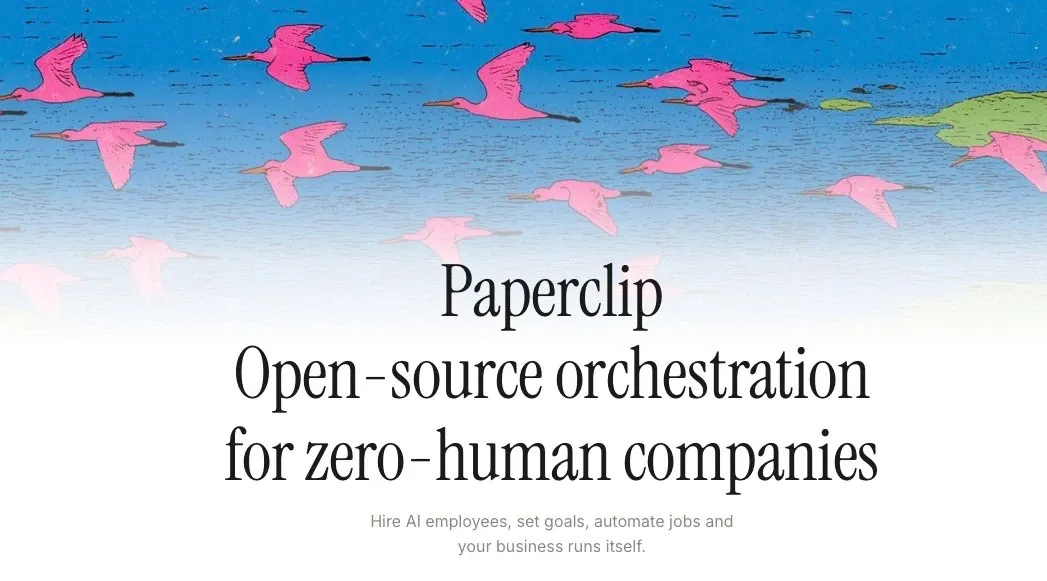
Running a company entirely without human intervention might sound like science fiction, but David Ondrej’s video below explores how this concept becomes feasible with Paperclip, an open source platform for managing autonomous AI agents. Paperclip allows users to assign AI agents specific roles, such as CEO or operations manager, within a simulated corporate hierarchy. These agents collaborate to execute tasks, track goals and make decisions, all while operating on virtual private servers (VPS) for uninterrupted performance. By addressing challenges like inefficiencies in multi-agent systems and the need for manual oversight, Paperclip offers a structured approach to creating fully autonomous organizations.
In this guide, you’ll discover how to deploy and configure AI agents for different roles, making sure they work cohesively to meet organizational objectives. Learn how Paperclip integrates with leading AI models like OpenAI and Gemini, offering flexibility in tailoring the system to your needs. You’ll also gain insight into overcoming potential hurdles, such as the technical expertise required for setup and the early-stage limitations of the platform. Whether you’re exploring automation for scalability or experimenting with AI-driven workflows, this breakdown provides practical steps to navigate the future of zero-human companies.
What Paperclip Does
TL;DR Key Takeaways :
- Paperclip is an open source platform allowing fully autonomous organizations by managing AI agents to handle tasks, make decisions and track goals without human intervention.
- The platform functions as a centralized dashboard, allowing deployment of AI agents in roles like CEO or operational managers, simulating a corporate hierarchy for efficient collaboration.
- It integrates with leading AI models (e.g., Claude, OpenAI, Gemini) and offers flexibility, transparency and customizability, making it a scalable solution for businesses aiming to reduce costs and improve efficiency.
- Challenges include a basic user interface, the need for technical expertise and early-stage development issues, which may limit adoption for non-technical users or complex organizations.
- Paperclip envisions a future of AI-driven autonomous organizations, with applications in industries like logistics, cybersecurity and R&D, transforming workflows and allowing new business models.
At its core, Paperclip functions as a centralized dashboard for managing multiple AI agents. It allows you to deploy agents on virtual private servers (VPS), making sure uninterrupted operation and secure data handling. These agents can be assigned specific roles, such as CEO, CTO, or operational managers, mimicking the structure of a traditional organization. By simulating a corporate hierarchy, Paperclip enables AI agents to collaborate effectively, making sure tasks are completed efficiently and goals are met.
The platform integrates seamlessly with leading AI models, including Claude, OpenAI and Gemini, offering flexibility in selecting the tools that align with your organizational needs. Paperclip’s orchestration capabilities empower agents to work autonomously around the clock, handling tasks, tracking goals and executing workflows without requiring constant human intervention. This makes it an attractive solution for businesses aiming to scale operations while reducing overhead costs and improving efficiency.
Key Advantages of Paperclip
Paperclip offers several distinct benefits that set it apart from traditional task management tools:
- Streamlined Operations: By eliminating the need for manual oversight of multiple AI agents, Paperclip simplifies workflows and reduces the time spent on routine management tasks.
- Transparency: The platform’s dashboard provides a comprehensive view of tasks, decisions and associated costs, making sure you remain informed about your organization’s performance at all times.
- Customizability: As an open source tool, Paperclip is highly adaptable, allowing you to modify and tailor it to meet your specific requirements and organizational goals.
- Flexibility: Its compatibility with various AI models ensures you are not locked into a single vendor, granting you the freedom to experiment with and adopt different technologies as needed.
These advantages make Paperclip a valuable tool for businesses seeking to optimize their operations and embrace the potential of AI-driven automation.

Expand your understanding of AI automation with additional resources from our extensive library of articles.
- AI Vision in Home Assistant : The Future of Smart Home Automation
- How to Build Custom AI Agents to Automate Your Workflow
- How to use Claude 3 AI to automate daily tasks and workflows
- How to Use Claude AI to Automate Your Life and Boost Productivity
- Top AI Automation Agency Insights & Strategies for Success in 2025
- Automate boring tasks using the Lindy AI automation platform
- Chrome AI Automation by Gemini: Behind Logins, Forms, and Emails
- Manus 1.6 Brings Faster, Reliable AI Workflow Automation
- How to Build an AI Agent Network with n8n and Claude
- Use Nano Banana to Create Pro Visuals of Products at Scale
How to Set Up and Use Paperclip
To begin using Paperclip, deploy the platform on a VPS to ensure continuous operation and robust data security. Start by creating and configuring AI agents for specific roles and tasks. These roles can range from managing recurring routines to tracking long-term goals or automating complex workflows. The platform’s task management features allow you to assign responsibilities, monitor progress in real-time and make adjustments as needed.
While Paperclip is designed to be user-friendly, effectively using the platform requires some technical knowledge. Experimentation is essential to optimize agent performance and ensure seamless integration with your existing systems. For instance, you may need to test different AI models or refine workflows to achieve the desired outcomes. Keep in mind that, as an early-stage tool, Paperclip may occasionally present bugs or inefficiencies, which could require troubleshooting.
Challenges and Limitations
Despite its potential, Paperclip is not without its challenges. Understanding these limitations is crucial for setting realistic expectations:
- Interface Design: While functional, the user interface has been compared to tools like Slack and Jira, lacking significant innovation or visual appeal. This may impact user experience, particularly for those accustomed to more polished platforms.
- Technical Expertise Required: Setting up and managing agents effectively demands a solid understanding of AI systems and workflows. This requirement could pose a barrier for non-technical users or small businesses without dedicated IT resources.
- Early-Stage Development: As a relatively new platform, Paperclip faces challenges related to stability and scalability. These issues may limit its adoption in larger organizations or industries with complex operational needs.
While these challenges are notable, they also highlight areas where the platform can evolve and improve over time.
The Future of Work with Paperclip
Paperclip envisions a future where humans delegate goals to AI agents, which then execute tasks autonomously. This shift has the potential to redefine organizational operations, with managers focusing on strategic oversight rather than day-to-day tasks. By automating repetitive processes and streamlining workflows, Paperclip enables businesses to achieve greater efficiency and scalability.
The platform also demonstrates the feasibility of managing hundreds of AI agents within a single organization. This capability could transform industries such as logistics, finance and research, where large-scale coordination is essential. To support this transition, adaptive and proactive user interfaces will be critical, making sure seamless interaction between humans and AI agents.
Real-World Applications
Paperclip’s versatility makes it suitable for a wide range of applications across various industries:
- Research and Development: Automating data analysis, simulations and project tracking to accelerate innovation and improve outcomes.
- Cybersecurity: Monitoring systems, identifying vulnerabilities and responding to threats in real-time, enhancing organizational security.
- Operational Tasks: Managing logistics, scheduling and other routine processes to improve efficiency and reduce human error.
For entrepreneurs, Paperclip also presents an opportunity to offer setup and management services, helping other organizations adopt and scale AI-driven solutions. This could create new business models centered around AI consultancy and support.
Broader Implications of Paperclip
Paperclip offers a compelling vision of the future of autonomous organizations, where AI agents handle the majority of operational tasks. By embracing tools like Paperclip, businesses can stay ahead of the curve and adapt to the rapid advancements in AI technology. While challenges remain, the platform’s potential to transform business operations is undeniable. For forward-thinking organizations, Paperclip represents not just a tool but a strategic investment in the future of work.
Media Credit: David Ondrej
Disclosure: Some of our articles include affiliate links. If you buy something through one of these links, Geeky Gadgets may earn an affiliate commission. Learn about our Disclosure Policy.
