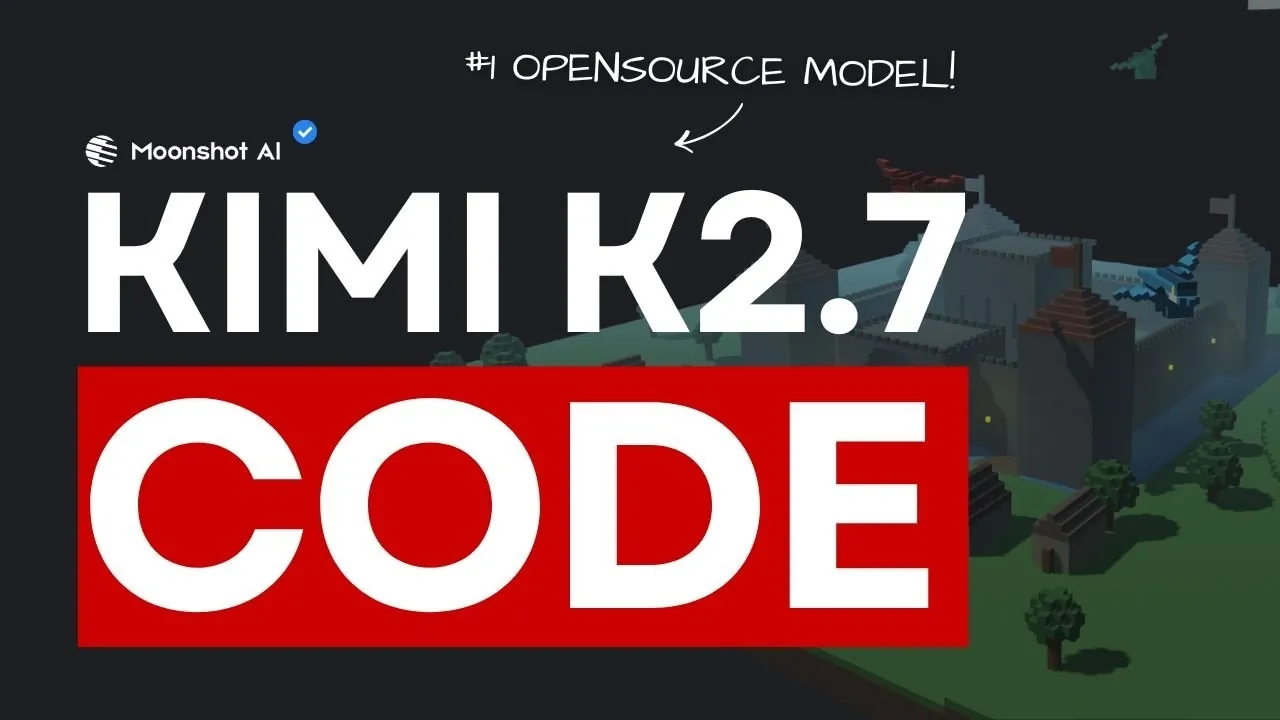
Kimi K 2.7, created by Moonshot AI, offers a cost-effective alternative to models like Opus 4.8 while maintaining strong performance capabilities. With a trillion parameters and a 256k context window, it supports tasks that demand detailed analysis and extended input handling. According to Universe of AI, its open source release under a modified MIT license enables tailored deployments, appealing to users focused on local implementation and budget-conscious solutions.
Explore how Kimi K 2.7 handles coding workflows, voxel art generation and instruction-based tasks with precision. Gain insight into its token optimization methods, which help lower operational expenses without compromising output quality. This deep dive also examines its performance metrics and versatility across different applications, offering a clear understanding of its strengths and practical use cases.
What Makes Kimi K 2.7 Stand Out?
TL;DR Key Takeaways :
- Kimi K 2.7 is an open source AI model offering a cost-effective and practical alternative for coding, creative tasks and general-purpose applications, with a focus on affordability and local deployment.
- Key features include a 256k context window for handling extensive inputs, a “thinking mode” for enhanced reasoning and open source availability under a modified MIT license.
- Performance improvements include 30% fewer tokens required for reasoning tasks, with benchmark scores approaching those of leading models like GPT-5.5 and Opus 4.8.
- Kimi K 2.7 excels in coding, voxel art generation, instruction-following and agent task management, making it versatile across various domains, though it has limitations with highly complex tasks.
- Ideal for small to medium-sized enterprises, independent developers and educational institutions, it balances performance, efficiency and affordability, making it a reliable and adaptable AI solution.
Kimi K 2.7 builds on the foundation of its predecessor, Kimiko 2.6, by introducing several architectural enhancements that improve both efficiency and functionality. The model operates with a trillion total parameters, of which 32 billion are active at any given time, making sure a balance between computational efficiency and performance. Key features include:
- A 256k context window, allowing the processing of extensive inputs in a single session, which is ideal for complex tasks requiring detailed analysis.
- A unique “thinking mode” that simulates pre-response deliberation, enhancing reasoning and decision-making capabilities.
- Open source availability under a modified MIT license, hosted on Hugging Face, allowing users to customize and deploy the model locally.
These features position Kimi K 2.7 as a versatile and accessible tool for a wide range of applications, from software development to creative content generation.
Performance Enhancements
Kimi K 2.7 introduces significant improvements in reasoning and token efficiency compared to its predecessor. By requiring 30% fewer tokens for reasoning tasks, it reduces computational demands while maintaining output quality. Benchmark results underscore these advancements:
- Kimiko Bench: Improved from 51 to 62, reflecting enhanced reasoning capabilities.
- MLS Bench Light: Increased from 26 to 35, showcasing better performance in lightweight tasks.
- MCP Atlas: Scored 76, approaching the performance levels of GPT-5.5 and Opus 4.8.
Although it doesn’t surpass the leading models, these improvements make Kimi K 2.7 a strong contender in its category, particularly for users seeking efficiency and affordability without sacrificing functionality.

Below are more guides on Kimi from our extensive range of articles.
- Why Developers Are Switching to Kimi K2.6 Over Gemini 3.1 Pro
- Kimi K2.6 Breakdown: the Open-Source AI That Beats GPT-5.4 at Coding
- Cursor Faces Backlash over Missing Attribution for Kimi K2.5 Model
- Deepseek V4 : Why Its 1.6 Trillion Parameters Aren’t Quite Enough
- Kimi K2 AI Model by Moonshot Review : The Affordable AI That’s Shaking Up the Industry
- Kimi K2 : Open-Weight AI Model That’s Breaking Barriers
- Kimi K2.5 Agents Overview : Cut Run Time, Parallel Agents & Tool Calls
- Kimi K2.5 Agent Swarm : Spread Complex Jobs Across 100 Agents, Attack Tasks in Packs
Cost Efficiency: A Key Advantage
One of Kimi K 2.7’s most compelling attributes is its cost-effectiveness. By optimizing token usage, it reduces operational expenses for both API-based and local deployments. For coding tasks, it delivers comparable or even superior results using fewer tokens, which translates to lower computational costs. This makes it an attractive option for developers and organizations aiming to maximize value while adhering to budget constraints. Its affordability, combined with its robust performance, ensures that users can achieve high-quality results without incurring excessive expenses.
Capabilities Across Domains
Kimi K 2.7 demonstrates remarkable versatility, excelling in a variety of domains and tasks. Its ability to adapt to different applications makes it a valuable tool for diverse user needs. Key areas of strength include:
- Coding: Generates efficient and accurate code for a wide range of programming languages and frameworks, streamlining development workflows.
- Voxel Art Generation: Produces detailed voxel-based environments and interactive simulations, catering to creative industries and game development.
- Instruction-Following: Delivers coherent, contextually accurate outputs for guided tasks, enhancing productivity in structured workflows.
- Agent Task Management: Efficiently handles day-to-day operations, making it a reliable assistant for organizational tasks.
While it excels in these areas, it does exhibit some limitations when addressing highly complex or nuanced challenges, where frontier models like GPT-5.5 or Opus 4.8 maintain a distinct advantage.
Who Should Use Kimi K 2.7?
Kimi K 2.7 is particularly well-suited for users who prioritize local deployment, open source customization and cost-effective solutions. Its balanced performance and affordability make it an excellent choice for a variety of users, including:
- Small to medium-sized enterprises: Businesses seeking reliable AI tools without the high costs associated with premium models.
- Independent developers: Individuals looking for a budget-friendly yet powerful solution for coding and creative projects.
- Educational institutions: Schools and universities exploring AI for research, teaching, or experimental purposes.
Whether you’re working on software development, creative endeavors, or general-purpose AI tasks, Kimi K 2.7 offers a practical and reliable solution tailored to diverse needs.
Limitations to Consider
Despite its many strengths, Kimi K 2.7 has some limitations that users should be aware of:
- It doesn’t match the benchmark performance of top-tier models like GPT-5.5 or Opus 4.8, particularly in handling highly complex or nuanced tasks.
- Occasional UI glitches in generated outputs may require manual adjustments, which could affect workflow efficiency in certain scenarios.
However, these drawbacks are mitigated by its cost advantages, open source flexibility and overall reliability, making it a viable option for many users who prioritize affordability and adaptability.
Kimi K 2.7: A Balanced and Affordable AI Solution
Kimi K 2.7 strikes a thoughtful balance between performance, efficiency and affordability. While it may not rival the innovative capabilities of GPT-5.5 or Opus 4.8, it offers a robust alternative for users who value cost-effectiveness and open source adaptability. For developers, organizations and educators seeking a reliable AI model for local deployment, creative applications, or general-purpose tasks, Kimi K 2.7 stands out as a practical and versatile choice. Its combination of affordability, efficiency and functionality ensures that it remains a competitive option in the ever-evolving AI landscape.
Media Credit: Universe of AI
Disclosure: Some of our articles include affiliate links. If you buy something through one of these links, Geeky Gadgets may earn an affiliate commission. Learn about our Disclosure Policy.
