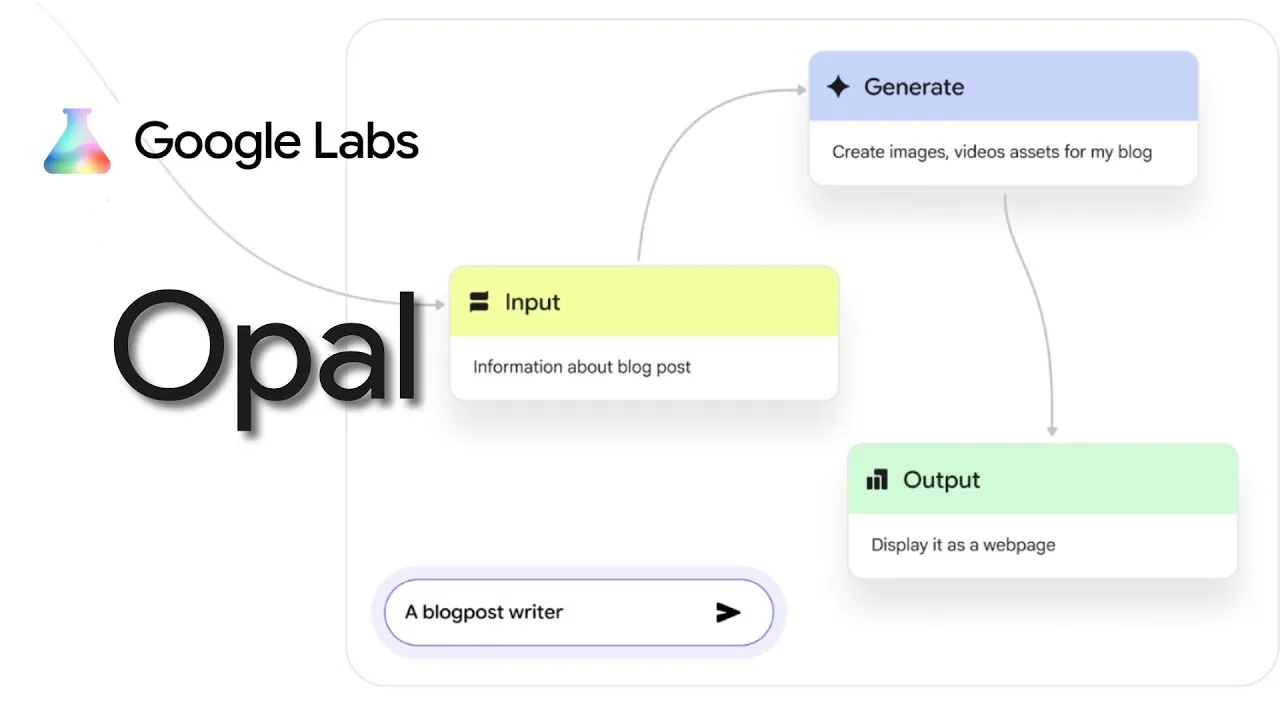
What if creating AI-powered workflows was as easy as sketching out your ideas on a napkin? Enter Opal, Google Labs’ latest innovation, which promises to make that vision a reality. Designed to simplify the often complex world of large language model (LLM) automation, Opal combines innovative AI with an intuitive interface, empowering users of all skill levels to build and customize workflows with minimal coding. Whether you’re a seasoned developer or someone just dipping their toes into AI, Opal positions itself as a fantastic option, offering tools that don’t just automate tasks but unlock entirely new possibilities. With its seamless integration into Google’s ecosystem and a focus on user-friendly design, Opal is poised to redefine how we think about productivity and creativity in the AI era.
But what makes Opal truly stand out? This overview by Sam Witteveen explores how its features, such as pre-built templates and prompt chaining—can transform everything from content creation to research and prototyping. You’ll discover how Opal’s adaptability allows you to craft workflows tailored to your unique needs, whether you’re generating blog posts, summarizing complex data, or designing niche tools for specialized industries. And while competitors exist, Opal’s deep integration with Google’s advanced AI capabilities gives it a distinct edge. As we unpack its potential, you might find yourself rethinking how automation fits into your daily life—and wondering just how far this technology can take you.
Google Opal Overview
TL;DR Key Takeaways :
- Opal is a workflow automation platform by Google Labs that uses large language models (LLMs) to simplify and optimize tasks, making AI-driven application development accessible to users with minimal coding expertise.
- Key features include pre-built templates, Google tools integration, prompt chaining, user-defined inputs, and persona-based customization, allowing versatile and efficient workflow creation.
- Opal emphasizes customization and prototyping, allowing users to refine workflows and adapt them for various applications, such as content creation, research, and customer support automation.
- It stands out from competitors with seamless integration into Google’s ecosystem, offering unique capabilities like advanced image generation and Google search integration for enhanced functionality.
- Currently in public preview in the U.S., Opal is expected to expand with new features and templates, making sure its adaptability to evolving user needs and technological advancements.
Opal is a workflow automation platform that uses the power of LLMs to streamline and optimize tasks. Whether you are a novice or an experienced developer, Opal provides an intuitive interface to design workflows that chain prompts, integrate tools, and automate repetitive processes. Its primary objective is to make LLM-based application development more accessible, allowing you to focus on creativity and functionality rather than technical complexities. By reducing the barriers to entry, Opal opens the door for a wide range of users to explore the possibilities of AI-driven solutions.
Core Features and Capabilities
Opal offers a comprehensive suite of features designed to enhance productivity, flexibility, and ease of use. These include:
- Pre-built Templates: Get started quickly with templates tailored for tasks such as content creation, research, and image generation. These templates provide a foundation that can be customized to suit your specific needs.
- Google Tools Integration: Seamlessly connect with Google’s ecosystem, including search, Gemini models, and advanced image generation tools, to enhance your workflows with powerful capabilities.
- Prompt Chaining: Create dynamic workflows by linking multiple prompts to achieve complex, multi-step outcomes, allowing you to tackle intricate tasks with ease.
- User-defined Inputs: Customize workflows with specific inputs to ensure they align with your unique requirements and objectives.
- Persona-based Customization: Tailor workflows to align with specific user personas or target audiences, making sure relevance and effectiveness.
These features make Opal a versatile tool for automating tasks across industries, from content creation and marketing to data analysis and beyond.
Opal by Google Labs : Sketch, Automate and Create

Dive deeper into Large Language Models (LLMs) with other articles and guides we have written below.
- Diffusion LLMs Arrive : Is This the End of Transformer Large
- How to use Reinforcement Learning with Large Language Models
- How to install any AI model large language model (LLM) locally
- Understanding the Advanced Capabilities of Large Language
- The Future of Web Scraping with AI Large Language Models
- How to Run Large Language Models Locally with Ollama for Free
- How to Fine-Tune Large Language Models (LLMs) with Unsloth
- Learn how AI large language models work
- ChatHub AI lets you run large language models (LLMs) side-by-side
- Securing Large Language Models: Strategies to Prevent
Customization and Prototyping
A key strength of Opal lies in its emphasis on customization and prototyping. The platform allows you to modify workflows, adjust prompts, and add new nodes to refine your applications. This flexibility enables you to create proof-of-concept solutions that can evolve into fully functional tools. For instance, you could prototype a workflow for generating blog posts and later adapt it for creating social media content, conducting academic research, or even automating customer support responses. This adaptability ensures that Opal can grow alongside your needs, making it a valuable resource for both individuals and organizations.
How Opal Stacks Up Against Competitors
While other workflow automation tools like N8N and Lindy offer similar functionalities, Opal distinguishes itself through its seamless integration with Google’s ecosystem. Features such as advanced image generation and Google search integration provide unique advantages that competitors may lack. Furthermore, Opal’s focus on LLM-driven workflows makes it particularly effective for tasks requiring natural language understanding and generation. This specialization positions Opal as a leading solution in the rapidly evolving field of AI-powered automation, offering capabilities that are both robust and user-friendly.
Practical Applications of Opal
Opal’s versatility enables it to address a wide range of use cases, making it a valuable tool for professionals across various industries. Here are some practical applications:
- Content Creation: Automate the generation of blog posts, social media updates, or podcast scripts, significantly reducing the time and effort required for manual content production.
- Research and Summarization: Conduct literature reviews, summarize lengthy articles, or extract key insights from large datasets, streamlining the research process.
- Image Generation: Create custom visuals for presentations, marketing campaigns, or creative projects, using Google’s advanced image generation tools.
- Prototyping Specialized Tools: Develop niche applications, such as tools for educators, healthcare professionals, or workflows tailored to specific industries, allowing for targeted solutions.
These examples highlight how Opal can transform both routine and complex tasks, allowing you to achieve greater efficiency and effectiveness in your work.
Availability and Future Developments
Opal is currently in public preview and available exclusively in the U.S., with access for users outside the region possible via VPN. As the platform evolves, Google plans to introduce additional features and enhancements to further expand its capabilities. These updates are expected to include improved integrations, advanced customization options, and new templates to address emerging user needs. With Google’s commitment to innovation, Opal is poised to remain a valuable tool for years to come, adapting to the changing demands of its users and the broader technological landscape.
Media Credit: Sam Witteveen
Disclosure: Some of our articles include affiliate links. If you buy something through one of these links, Geeky Gadgets may earn an affiliate commission. Learn about our Disclosure Policy.
