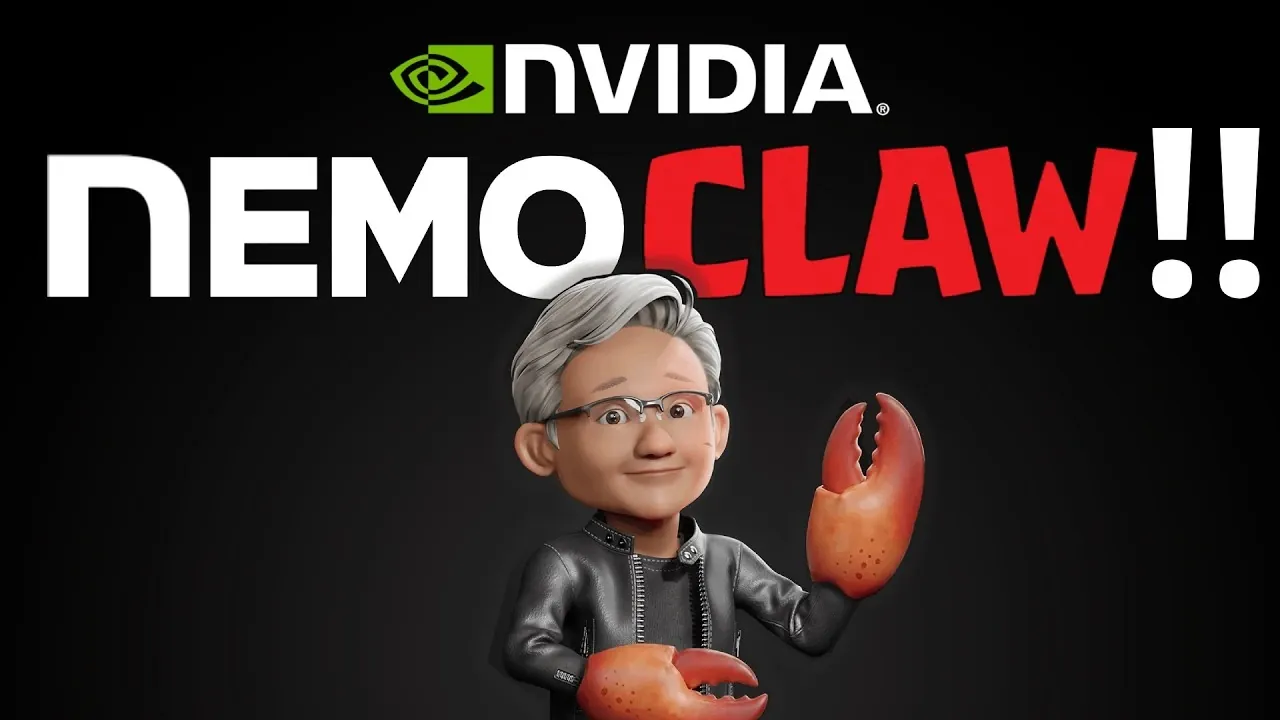
Nvidia’s recent unveiling of NemoClaw at GTC 2026 marks a significant step in addressing enterprise challenges tied to autonomous AI agent systems. As explained by Sam Witteveen, NemoClaw serves as a reference architecture built to simplify the adoption of OpenClaw, an open source AI framework. By integrating features like OpenShell, a YAML-based security runtime for defining granular permissions and locally deployable Neotron models optimized for Nvidia hardware, NemoClaw prioritizes security and operational efficiency. These capabilities make it a practical solution for enterprises aiming to deploy AI agents without compromising sensitive data or disrupting existing workflows.
Explore how NemoClaw’s design enables secure AI agent deployment, from its compatibility with enterprise ecosystems to its role in automating processes like client onboarding and contract management. Gain insight into the hardware advancements, such as the Gro 3 LPU chips, that enhance computational performance for AI workloads. This explainer also previews Nvidia’s plans to expand NemoClaw’s capabilities with pre-trained Neotron Ultra models, making sure enterprises can tackle increasingly complex challenges in the evolving AI landscape.
What is NVIDIA NemoClaw?
TL;DR Key Takeaways :
- Nvidia introduced “NemoClaw,” a reference architecture designed to simplify the adoption of OpenClaw, focusing on enterprise needs like security, local deployment and seamless integration.
- NemoClaw includes key features such as Neotron Models for secure, local AI deployment and OpenShell for granular security controls, making sure compliance and operational efficiency.
- The new Gro 3 LPU chips were unveiled, offering faster AI processing and energy efficiency, complementing NemoClaw’s capabilities for enterprise-scale AI operations.
- NemoClaw is tailored for enterprise use cases like client onboarding, invoice extraction, contract management and RFP sourcing, enhancing productivity while maintaining security.
- Nvidia’s strategic focus on aligning hardware and software solutions positions it as a leader in enterprise AI, with plans to expand NemoClaw’s capabilities through advanced Neotron Ultra models.
NemoClaw is a purpose-built solution designed for enterprises seeking to harness the potential of OpenClaw and similar autonomous AI agent systems. It bridges the gap between the flexibility of open source frameworks and the rigorous demands of enterprise environments, allowing organizations to deploy and scale AI technologies with greater ease. By focusing on robust security measures, simplified installation processes and compatibility with existing enterprise ecosystems, NemoClaw enables IT teams to overcome common deployment challenges. This architecture ensures that enterprises can adopt AI solutions without compromising on operational efficiency or security.
Key Features of NemoClaw
NemoClaw introduces a suite of features aimed at enhancing the usability, security and scalability of AI agent systems. These features are designed to address the specific needs of modern enterprises:
- Neotron Models: NemoClaw includes locally deployable AI models, such as the flagship Neotron 3 Super, which prioritize data security by making sure that sensitive information remains within an organization’s infrastructure. These models are optimized for Nvidia hardware, including DGX Spark supercomputers and RTX workstations, delivering exceptional performance and reliability for OpenClaw-compatible systems.
- OpenShell: A core component of NemoClaw, OpenShell is an open source security runtime that uses YAML-based policy controls. This feature allows organizations to define and enforce granular permissions for AI agents, restricting access to sensitive databases, networks and APIs. OpenShell addresses the security concerns often associated with autonomous systems by providing a robust framework for controlling agent behavior.
These features collectively enable enterprises to deploy AI agents that are not only powerful but also secure and compliant with internal policies.

Here are additional guides from our expansive article library that you may find useful on NVIDIA.
- DLSS 5 Real-Time Neural Rendering Explained
- NVIDIA Buys Groq : Licensing Targets Cheaper Inference
- NVIDIA Releases Open Source Nitrogen, Aimed Beyond Games
- NVIDIA Risk : Datacenter Spend vs Device-Side AI Momentum
- NVIDIA Groq Licensing Explained, $20B Deal Reshapes AI Chips
- PersonaPlex Voice AI : Full-Duplex Chat with Low Latency
- AI News, NVIDIA Vera Rubin Aims at 10M Token Context Windows
- How NVIDIA’s Plan Moves AI from Chips to Factory-Scale Systems
- NVIDIA Vera Rubin GPU at CES 2026 : 35 PF Training, 50 PF Inference
- NVIDIA Rubin vs Blackwell : 4x Fewer GPUs and 90 Percent Lower Cost
Understanding OpenClaw
OpenClaw serves as the foundation for NemoClaw. It is an open source framework that facilitates the creation of autonomous AI agents capable of performing complex tasks such as coding, web browsing, API interactions, and task chaining. While OpenClaw offers immense potential for automation and efficiency, it also presents challenges related to security vulnerabilities and attack surfaces. NemoClaw is specifically designed to mitigate these risks, making OpenClaw a more viable option for enterprise use. By addressing these concerns, NemoClaw ensures that organizations can use the capabilities of OpenClaw without exposing themselves to unnecessary risks.
Hardware Innovations
In addition to NemoClaw, Nvidia unveiled the Gro 3 LPU chips, powered by Grock IP, at GTC 2026. These chips are engineered to deliver faster AI processing and improved energy efficiency, allowing enterprises to handle demanding workloads with ease. Designed to integrate seamlessly with Nvidia’s supercomputing platforms, such as DGX Spark, the Gro 3 LPU chips enhance the performance of AI models and ensure scalability for large-scale operations. This hardware innovation complements NemoClaw by providing the computational power needed to support advanced AI agent systems, further strengthening Nvidia’s position as a leader in enterprise AI solutions.
Enterprise Use Cases
NemoClaw is tailored to meet the diverse needs of enterprises across various industries. Its capabilities are particularly well-suited for automating and optimizing critical business processes, including:
- Client Onboarding: Automating repetitive administrative tasks to streamline the onboarding process and improve efficiency.
- Invoice Extraction: Processing and organizing financial data with precision, reducing manual effort and errors.
- Contract Management: Simplifying the review, tracking and organization of legal documents to save time and resources.
- RFP Sourcing: Accelerating the identification and evaluation of potential vendors, allowing faster decision-making.
By mirroring employee permissions, NemoClaw ensures that AI agents operate securely within organizational boundaries. This approach maintains compliance with internal policies while allowing enterprises to boost productivity and streamline operations.
Strategic Implications
The launch of NemoClaw reflects Nvidia’s broader strategy to drive the adoption of OpenClaw-like systems while reinforcing its hardware ecosystem. By allowing enterprises to create secure, customized AI agents, Nvidia positions itself as a leader in the integration of AI technologies into enterprise workflows. This strategy not only addresses current challenges but also lays the foundation for future advancements in AI agent technologies. By aligning its hardware and software offerings, Nvidia ensures that organizations can adopt AI solutions that are both powerful and practical.
Looking Ahead
Nvidia has outlined ambitious plans for the future of NemoClaw. The company aims to develop and pre-train Neotron Ultra models, which will be capable of handling more advanced OpenClaw tasks. These models are expected to further expand the capabilities of AI agents, allowing them to tackle increasingly complex challenges. With a continued focus on security, local deployment, and enterprise integration, Nvidia is committed to making sure that AI technologies evolve in alignment with the needs of modern organizations. This forward-looking approach underscores Nvidia’s dedication to driving innovation in the field of enterprise AI.
Media Credit: Sam Witteveen
Disclosure: Some of our articles include affiliate links. If you buy something through one of these links, Geeky Gadgets may earn an affiliate commission. Learn about our Disclosure Policy.
