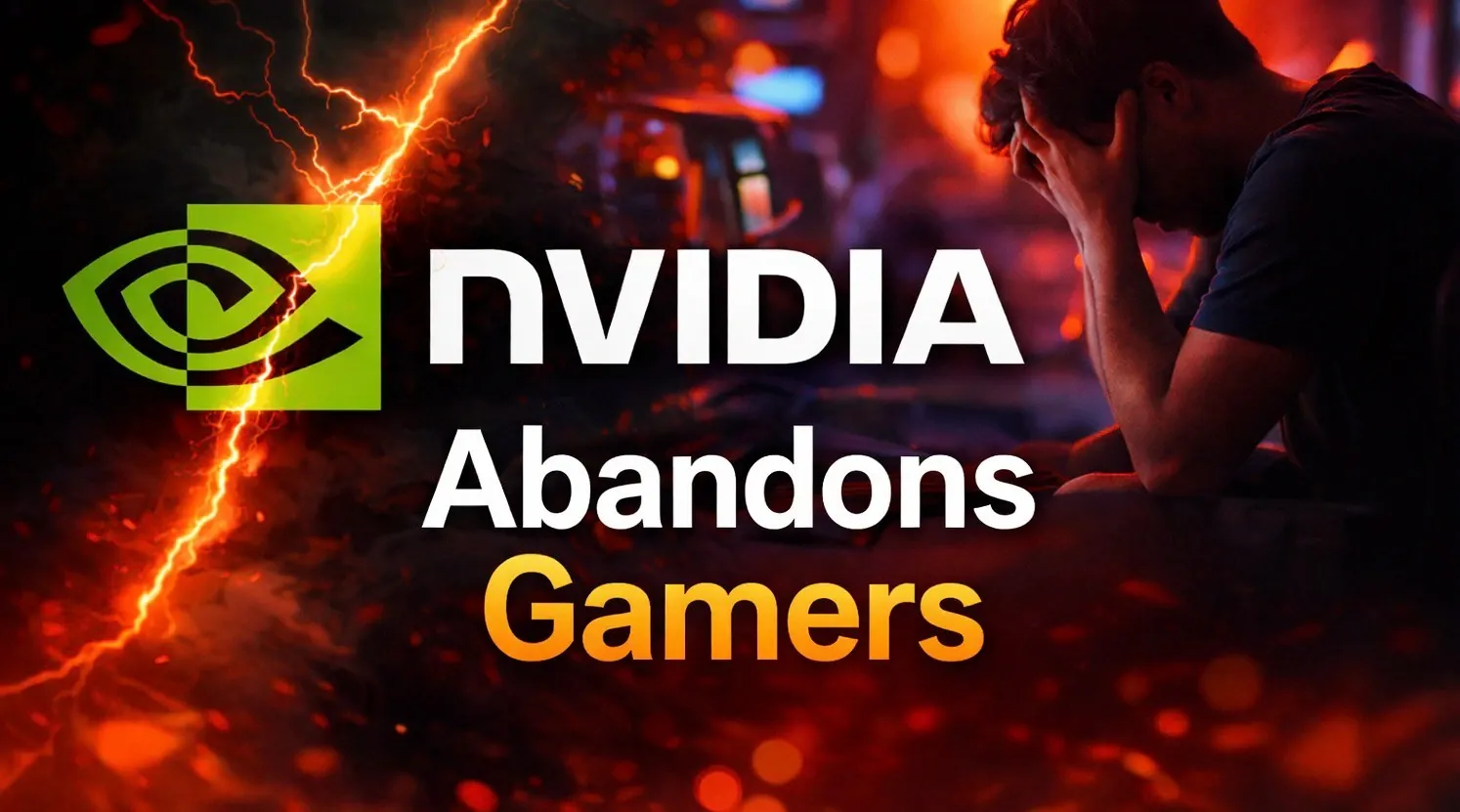
NVIDIA’s recent pivot from its gaming roots to a focus on artificial intelligence (AI) and data center technologies has sparked significant discussion among its user base. As outlined by Jacobweeby, this shift has been driven by the growing demand for AI applications, such as training large language models and powering autonomous systems, which have become major revenue drivers for the company. However, this transition has also led to tangible consequences for gamers, including reduced GPU availability and rising costs, signaling a departure from NVIDIA’s traditional emphasis on consumer gaming hardware.
In this deep dive, you’ll explore how NVIDIA’s strategic realignment impacts gamers, from the challenges of accessing affordable GPUs to the broader implications of subscription-based services like GeForce NOW. By understanding the company’s evolving priorities, you’ll gain a clearer picture of how these changes affect gaming hardware ownership and the future of consumer access. Whether you’re a gamer navigating these shifts or simply interested in the intersection of gaming and AI, this breakdown offers valuable insights into the trade-offs and risks shaping NVIDIA’s trajectory.
NVIDIA’s Shift to AI
TL;DR Key Takeaways :
- NVIDIA has shifted its focus from gaming hardware to artificial intelligence (AI) and data center technologies, reflecting broader industry trends but leaving gamers feeling sidelined.
- The pivot to AI has led to reduced production of consumer-grade GPUs, causing hardware shortages and inflated prices, making gaming technology less accessible and affordable.
- NVIDIA is embracing subscription-based services like GeForce NOW, moving away from traditional hardware ownership and raising concerns about recurring costs and diminished consumer control.
- The company’s heavy investment in AI, including a $30 billion stake in OpenAI, exposes it to the volatile and speculative nature of the AI market, posing significant financial risks.
- This strategic shift highlights a broader industry trend toward prioritizing digital access over physical ownership, sparking debates about consumer autonomy and the future of gaming technology.
NVIDIA’s Evolution: From Gaming to AI
NVIDIA’s transformation from a gaming-focused company to a leader in AI has been both intentional and rapid. Originally designed to enhance gaming experiences, NVIDIA’s GPUs have become indispensable tools for AI applications, including training large language models, powering autonomous systems, and supporting data center operations. The company has invested heavily in this sector, including a notable $30 billion stake in OpenAI, to solidify its dominance in the AI space.
This strategic shift, however, has come at a cost. The gaming community, which once formed the backbone of NVIDIA’s success, now feels increasingly sidelined. As resources are redirected toward AI, gamers are experiencing the tangible effects of this transition, from reduced hardware availability to rising costs, signaling a significant departure from NVIDIA’s original mission.
How Gamers Are Affected
NVIDIA’s pivot to AI has had profound implications for gamers, particularly in terms of hardware accessibility and affordability. These changes are not merely incidental but reflect a deliberate shift in the company’s priorities.
- Graphics Card Shortages: The production of consumer-grade GPUs, such as the GeForce series, has slowed as NVIDIA reallocates resources to meet the demands of AI and data center clients. This has led to reduced supply and inflated prices, making high-performance gaming hardware less accessible to many.
- Rising Costs: The latest flagship gaming GPUs are significantly more expensive than their predecessors, further alienating budget-conscious gamers who once relied on NVIDIA for affordable, innovative technology.
These challenges highlight the growing divide between NVIDIA’s AI ambitions and the needs of its gaming audience, raising concerns about the company’s commitment to its original customer base.
Why NVIDIA Has Abandoned Gamers

Browse through more resources below from our in-depth content covering more areas on NVIDIA.
- AI Bubble Risk Explained, OpenAI’s $1.15T Spend vs Revenue
- NVIDIA Buys Groq : Licensing Targets Cheaper Inference
- NVIDIA Releases Open Source Nitrogen, Aimed Beyond Games
- Running NVIDIA’s Nemotron 30B AI Locally : 1 Million Context Window
- NVIDIA Risk : Datacenter Spend vs Device-Side AI Momentum
- Amazon Tranium 3 vs NVIDIA GPUs : Price, Speed & Efficiency Compared
- NVIDIA Groq Licensing Explained, $20B Deal Reshapes AI Chips
- NVIDIA PersonaPlex Voice AI : Full-Duplex Chat with Low Latency
- AI News, NVIDIA Vera Rubin Aims at 10M Token Context Windows
- How NVIDIA’s Plan Moves AI from Chips to Factory-Scale Systems
The Subscription Model: A New Era for Gaming?
In addition to its focus on AI, NVIDIA has embraced subscription-based services, such as GeForce NOW, which allow users to rent GPU power rather than owning physical hardware. This model represents a significant departure from traditional gaming hardware ownership and reflects broader trends in the tech industry.
- Recurring Costs: Gamers now face ongoing subscription fees to access high-performance computing, mirroring the shift seen in streaming and cloud gaming platforms.
- Reduced Ownership: The move toward subscription services diminishes consumer control over hardware, replacing one-time purchases with perpetual payments.
While this model offers flexibility and scalability, it has sparked debates about affordability and the erosion of consumer autonomy. For many gamers, the shift raises critical questions about whether the industry is moving toward a future where access replaces ownership entirely.
Ownership vs. Access: A Broader Industry Trend
NVIDIA’s adoption of subscription-based services is part of a larger trend across the tech and entertainment industries, where companies are increasingly prioritizing digital access over physical ownership. This approach offers undeniable benefits, such as convenience and scalability, but it also comes with significant trade-offs.
Gamers who once purchased and owned their hardware outright now face the prospect of ongoing payments to stay current with technology. This shift has ignited discussions about consumer rights, particularly in an era where subscription models dominate markets ranging from software to entertainment. The implications of this trend extend beyond gaming, raising broader questions about the future of consumer autonomy in a subscription-driven economy.
The Risks of Betting Big on AI
NVIDIA’s heavy investment in AI is not without significant risks. While the AI market offers immense potential, it is also characterized by volatility and speculation. Analysts have warned of a potential AI bubble, fueled by overvaluation and unsustainable growth. If this bubble bursts, companies like NVIDIA, which have committed billions to AI ventures, could face severe financial repercussions.
- Market Volatility: The unpredictable nature of the AI market could lead to sudden shifts in demand, impacting NVIDIA’s revenue streams and overall stability.
- Industry-Wide Impact: A downturn in the AI sector could ripple across the tech industry, affecting major players such as Microsoft, Google, and AMD, all of whom have made substantial investments in AI.
For NVIDIA, the stakes are particularly high. Its pivot to AI represents a fundamental shift in its business model, making the company increasingly reliant on a market that is still in its early stages of development. This gamble underscores the inherent risks of prioritizing emerging technologies over established markets like gaming.
What This Means for the Gaming and Tech Industries
NVIDIA’s focus on AI reflects broader transformations within the gaming and tech landscapes. Competitors like AMD are also grappling with the challenge of balancing gaming hardware production with the growing demand for AI solutions. Meanwhile, subscription-based models are reshaping how consumers interact with technology, emphasizing access over ownership.
However, the potential instability of the AI market introduces significant uncertainty. If the AI sector fails to meet its lofty expectations, companies like NVIDIA could face financial setbacks, potentially disrupting the broader tech ecosystem. For gamers, these changes raise critical questions about the future of gaming technology, affordability, and the balance between innovation and accessibility.
NVIDIA’s strategic shift underscores the evolving priorities of the tech industry, highlighting both the opportunities and challenges of navigating a rapidly changing landscape. As the company continues to redefine its focus, the implications for gamers, consumers, and the industry at large remain profound and far-reaching.
Media Credit: jacobweeby
Disclosure: Some of our articles include affiliate links. If you buy something through one of these links, Geeky Gadgets may earn an affiliate commission. Learn about our Disclosure Policy.
