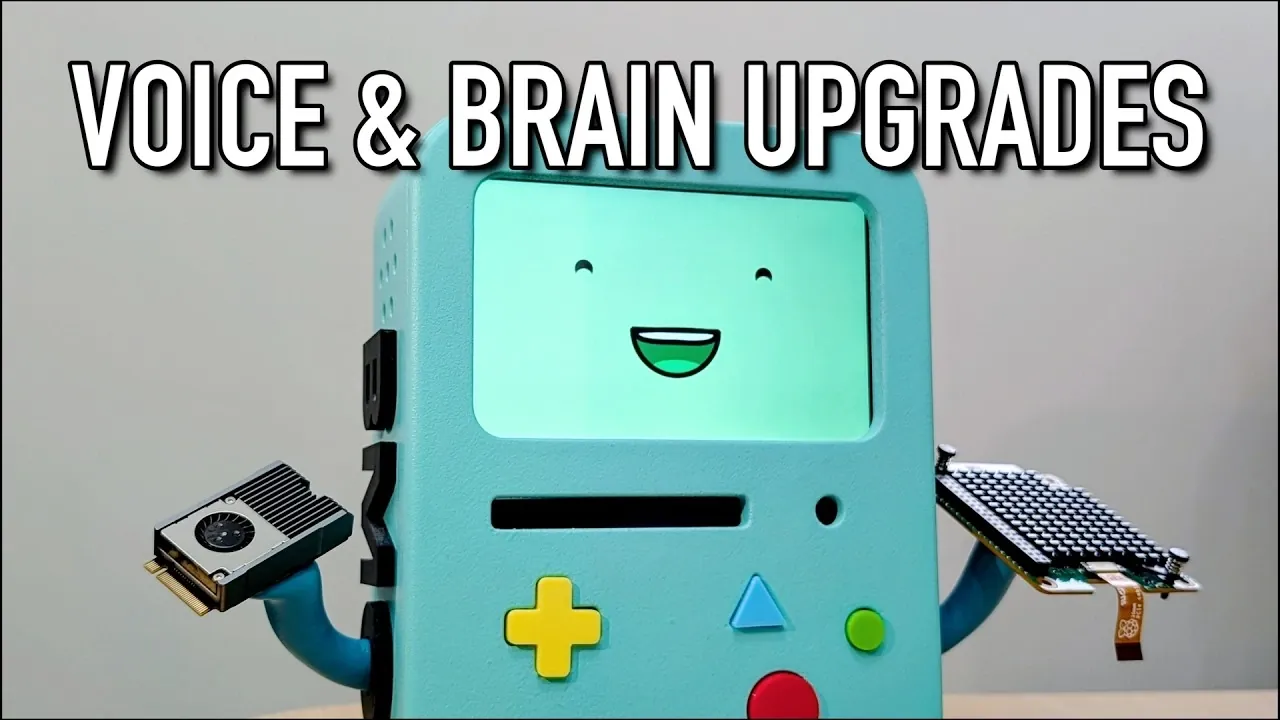
Developing a locally-run AI agent inspired by Beemo from Adventure Time involves a careful balance of creativity, technical precision and ethical responsibility. In a recent overview, brenpoly explores how open source frameworks like Piper and Cozy Voice were used to craft a distinctive Korean-accented English voice for the AI. This approach not only captures the playful essence of Beemo but also respects intellectual property boundaries by avoiding direct replication of the original character’s voice. The project further highlights the importance of sourcing training data ethically, making sure compliance with public domain guidelines while addressing broader concerns about transparency in AI development.
This overview provide more insights into the technical and ethical complexities of creating a functional and engaging AI personality. You’ll learn how neural network-based text-to-speech systems were optimized for performance on limited hardware, allowing high-quality outputs without excessive computational demands. Additionally, the breakdown examines the integration of system prompts with large language models to achieve a playful yet practical AI demeanor. By the end, you’ll gain insights into balancing creative goals with technical constraints and how open source solutions can drive responsible AI innovation.
Voice Generation: Balancing Creativity and Ethics
TL;DR Key Takeaways :
- The project focuses on creating a locally-run AI agent inspired by Beemo from Adventure Time, blending creativity, technical innovation and ethical responsibility through open source tools and human-centric design.
- A custom Korean-accented English voice model was developed using tools like Piper and Cozy Voice, making sure ethical compliance by sourcing training data from public domain resources and avoiding direct replication of the original voice actor.
- Advanced neural network-based text-to-speech (TTS) systems and optimization techniques, such as knowledge distillation, were employed to achieve high-quality voice outputs on limited hardware, making the AI accessible and efficient.
- The AI agent was designed with a playful and curious personality, balancing creative goals with technical constraints of locally hosted models, making sure engaging interactions while maintaining practical functionality.
- Ethical considerations were prioritized throughout the project, including the use of open source tools and transparency in development, serving as a model for responsible AI practices and fostering collaboration within the community.
Crafting a distinctive voice for the AI agent required a thoughtful approach to balance creativity with ethical and legal considerations. Instead of directly replicating the original voice actor’s performance, the project used open source tools such as Piper and Cozy Voice to develop a custom voice model. This model features a Korean-accented English voice, capturing the whimsical and playful essence of Beemo while respecting intellectual property rights.
The training data for the voice model was carefully sourced from public domain resources to ensure ethical compliance. However, this raised broader questions about the responsible use of publicly available data in AI development. The project emphasizes the importance of transparency and accountability in voice generation, serving as a model for ethical practices in the field. By prioritizing these principles, the creator demonstrated how AI can be developed responsibly without compromising creativity or functionality.
Technical Innovations in Voice Modeling
To achieve natural and flexible voice outputs, the project employed advanced neural network-based text-to-speech (TTS) systems like Piper. These systems were chosen for their adaptability and superior quality compared to traditional concatenative methods. While generative AI voice cloning was considered, it was ultimately excluded to avoid ethical pitfalls and ensure the project adhered to responsible AI practices.
Optimizing performance on limited hardware was a key challenge. The creator used knowledge distillation techniques to fine-tune pre-existing models, employing tools such as Textie Mixspechy. This approach allowed the project to deliver high-quality voice outputs without requiring extensive computational resources. By focusing on localized AI systems, the project demonstrated the potential for robust performance even on modest hardware setups, making advanced AI accessible to a wider audience.

Here are more detailed guides and articles that you may find helpful on AI voice.
- Top Reasons Why Flow AI is the Fantastic Voice-to-Text Tool
- How to build an AI Voice Assistant for free
- ChatTTS a new open source AI voice text-to-speech AI model
- SunFounder Fusion AI HAT+ Price, Specs & LLM Support for Pi
- OpenAI AI Pen Code Named “Gumdrop” Launching Soon
- Microsoft Vibe Voice Voice Cloning: Offline TTS for Long Audio
- 5 Time Saving Al Tools for Content Creators in 2026
- AI Voice Open Source App Chatterbox Features Zero-Shot Cloning
- Qwen 3 TTS Voice Cloning Guide 2026 : Free Tools & Setup Tips
- Chatterbox : Open Source Local TTS, 200ms GPU Speech Speed
Crafting a Distinct AI Personality
A central goal of the project was to imbue the AI agent with a playful and curious personality reminiscent of Beemo. This was achieved by integrating system prompts with large language models (LLMs), allowing the AI to emulate the character’s demeanor while maintaining practical functionality. The result was an AI agent capable of engaging users in a manner that felt both natural and entertaining.
However, balancing personality customization with the technical constraints of locally hosted models posed significant challenges. Smaller models often struggled to deliver fast response times, requiring careful optimization to ensure a seamless user experience. This aspect of the project underscores the importance of aligning creative goals with technical feasibility, demonstrating that thoughtful design can overcome hardware limitations.
Evaluating AI Accelerators for Performance
Improving the AI agent’s processing capabilities involved rigorous testing of various AI accelerators. Devices such as the M5 Stack’s 8850 module and the Raspberry Pi AI Hat Plus 2 (Halo 10H) were evaluated based on metrics like time-to-first-token (TTFT) and tokens-per-second (TPS). These metrics provided valuable insights into the performance and efficiency of different hardware configurations.
While some accelerators offered significant speed improvements, trade-offs emerged between performance, flexibility and the use of open versus closed architectures. The project ultimately prioritized open source solutions to maintain transparency and adaptability. This decision reflects a commitment to ethical AI development, even if it meant sacrificing some processing speed. By focusing on open source tools, the project ensured that the AI agent remained accessible and modifiable for future improvements.
Ethical and Technical Reflections
This project highlights the intricate balance between technical innovation and ethical responsibility in AI development. While voice cloning and other advanced techniques are technically feasible, they carry risks of misuse and raise important ethical concerns. By prioritizing human-centric design and transparency, the creator demonstrated a commitment to responsible AI practices that prioritize user trust and societal impact.
Collaboration and community contributions played a pivotal role in the project’s success. Open source tools and shared expertise enabled the development of an AI agent that aligns with ethical standards while achieving technical excellence. This collaborative approach underscores the value of collective effort in advancing AI technology responsibly.
By addressing ethical challenges, using innovative technologies and fostering a spirit of collaboration, this project serves as a blueprint for responsible and innovative AI development. It demonstrates that creating a unique and functional AI agent is as much about thoughtful design and ethical considerations as it is about technical achievements.
Media Credit: brenpoly
Disclosure: Some of our articles include affiliate links. If you buy something through one of these links, Geeky Gadgets may earn an affiliate commission. Learn about our Disclosure Policy.
