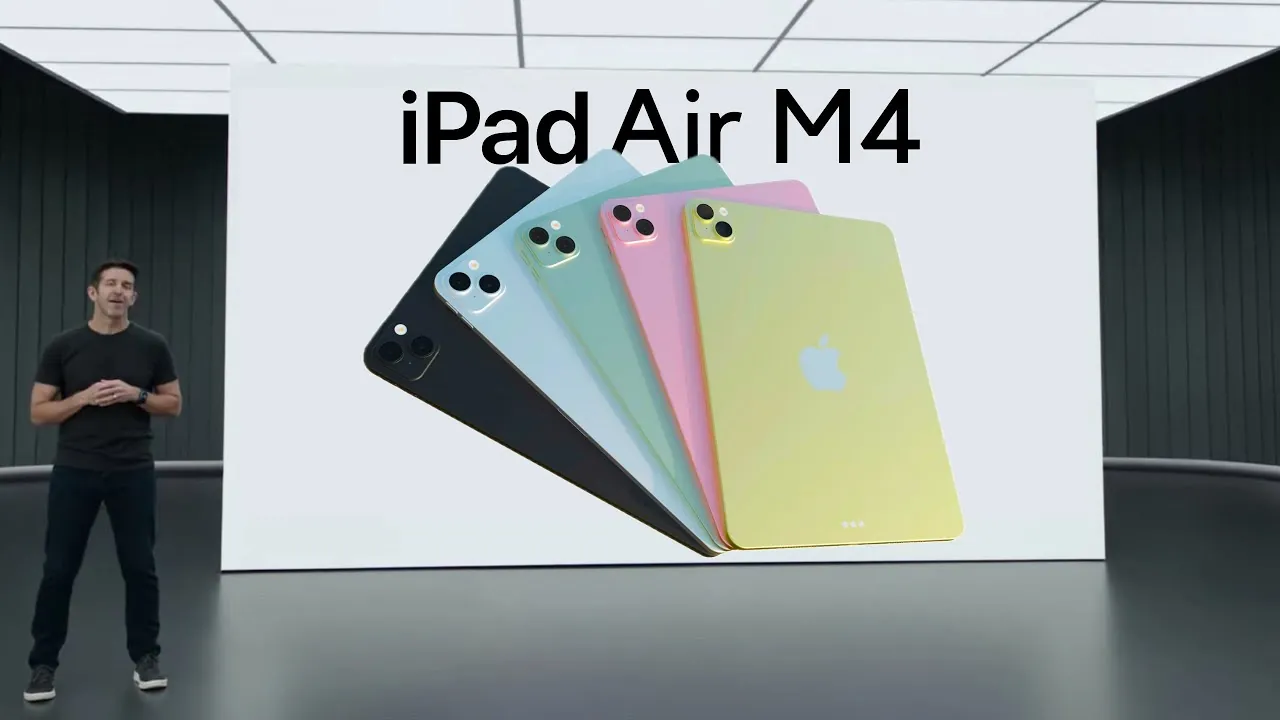
The M4 iPad Air introduces a series of meaningful enhancements while retaining its familiar design, making sure it remains a versatile option for a wide range of users. With upgrades in storage, connectivity, and performance, this mid-range tablet continues to strike a balance between innovation and accessibility. However, the much-anticipated transition to OLED displays is still on the horizon, as the current model relies on LCD technology. Apple’s deliberate approach reflects its strategy of delivering practical improvements without alienating its existing user base, making the M4 iPad Air a compelling choice for both new and returning customers. The video below from SaranByte gives us more details about the M4 iPad Air.

Storage and Charging: Practical Enhancements
One of the most notable updates to the M4 iPad Air is the potential increase in base storage to 256GB, doubling the capacity of its predecessor. This upgrade addresses the growing demand for more space to store apps, high-resolution media, and productivity tools. For users who rely on their iPads for work, education, or entertainment, this change offers greater value by reducing the need to invest in higher storage tiers. By providing ample storage as a standard feature, Apple ensures the device remains competitive in a crowded market.
Charging capabilities are also expected to see improvements, with faster charging technology likely to be included. While specific details remain speculative, Apple’s focus on efficiency suggests that the M4 iPad Air may support quicker charging speeds. However, the included charger may not fully use this capability, potentially requiring users to purchase a higher-wattage adapter to unlock the full benefits. This approach aligns with Apple’s broader strategy of offering advanced features while encouraging accessory upgrades, giving users the flexibility to customize their experience.
OLED Displays: A Future Investment
Despite growing anticipation for OLED technology, the M4 iPad Air will continue to feature an LCD display. Apple’s roadmap indicates that OLED panels will first debut on the iPad Mini in 2026, with the iPad Air following in 2027. This phased rollout allows Apple to refine its OLED production processes, manage costs, and ensure the technology meets its high standards before introducing it to mid-range devices.
When OLED displays eventually arrive on the iPad Air, they are expected to be a less advanced version compared to those found in the Pro models. This differentiation ensures the iPad Air remains competitively priced while still offering a significant visual upgrade over LCD. For now, users must decide whether to invest in the current model or wait for the OLED iteration, which will likely come at a higher price point. This decision underscores the importance of balancing immediate needs with long-term preferences.
Performance and Connectivity: A Leap Forward
At the heart of the M4 iPad Air is the M4 chipset, designed to deliver enhanced performance and energy efficiency. This processor is well-suited for demanding tasks, making it a reliable option for a wide range of users, from casual consumers to professionals. Whether you’re editing videos, multitasking across multiple apps, or engaging in high-performance gaming, the M4 chip ensures smooth and responsive performance, reinforcing the iPad Air’s reputation as a versatile device.
Connectivity sees significant advancements as well. The inclusion of the C1X modem enables faster 5G speeds, making sure users can enjoy seamless streaming, downloading, and online collaboration. Support for Wi-Fi 7 and Bluetooth 6 further enhances wireless performance, offering faster data transfer rates and improved device pairing. Additionally, the integration of Thread networking improves compatibility with smart home devices, reducing latency and allowing smoother communication across connected ecosystems. These upgrades position the M4 iPad Air as a future-ready device, capable of adapting to the demands of an increasingly digital world.
Design: Familiar Yet Functional
Apple has chosen to retain the same design for the M4 iPad Air, prioritizing user familiarity and accessory compatibility. This decision ensures that existing accessories, such as keyboards, cases, and styluses, remain fully functional, offering added value to current users. While the overall aesthetic remains unchanged, the possibility of new color options could refresh the lineup and appeal to style-conscious buyers, providing a subtle yet effective way to differentiate the new model.
This design consistency reflects Apple’s broader strategy of balancing innovation with practicality. By maintaining the same form factor, Apple ensures that users can seamlessly transition to the new model without needing to replace their existing accessories. This approach not only enhances the device’s appeal but also reinforces its position as a reliable and cost-effective choice for both new and returning customers.
Pricing and Consumer Considerations
The eventual introduction of OLED displays in 2027 is expected to result in a price increase for the iPad Air. For budget-conscious consumers, the current LCD model offers a more affordable option without compromising on performance or connectivity. This makes the M4 iPad Air an attractive choice for those who prioritize functionality and value over innovative display technology.
However, for users who place a premium on display quality, waiting for the OLED iteration may be worth the investment, despite the higher cost. This pricing dynamic highlights the importance of understanding your priorities when choosing a device. If you need a reliable, high-performing tablet now, the M4 iPad Air is an excellent option. On the other hand, if you’re willing to wait for future advancements, the OLED version may better align with your preferences.
The M4 iPad Air exemplifies Apple’s commitment to delivering thoughtful, incremental upgrades that enhance the user experience. By focusing on practical improvements in storage, connectivity, and performance, Apple ensures the device remains relevant and competitive in a rapidly evolving market. Whether you choose to invest in the current model or wait for the OLED iteration, the M4 iPad Air continues to uphold Apple’s reputation for quality, reliability, and innovation.
Here are more detailed guides and articles that you may find helpful on the M4 iPad Air.
- Apple iPad Air: Features, Pricing, and Release Date Explained
- Apple’s OLED Rollout: How It Impacts the M4 iPad Air
- iPad Air 2026 Features: M4 Chip and OLED Display
- 2026 M4 iPad Air: Everything You Need to Know
- Apple iPad Air: What Makes It a Must-Have in 2026
Source & Image Credit: SaranByte
Disclosure: Some of our articles include affiliate links. If you buy something through one of these links, Geeky Gadgets may earn an affiliate commission. Learn about our Disclosure Policy.
