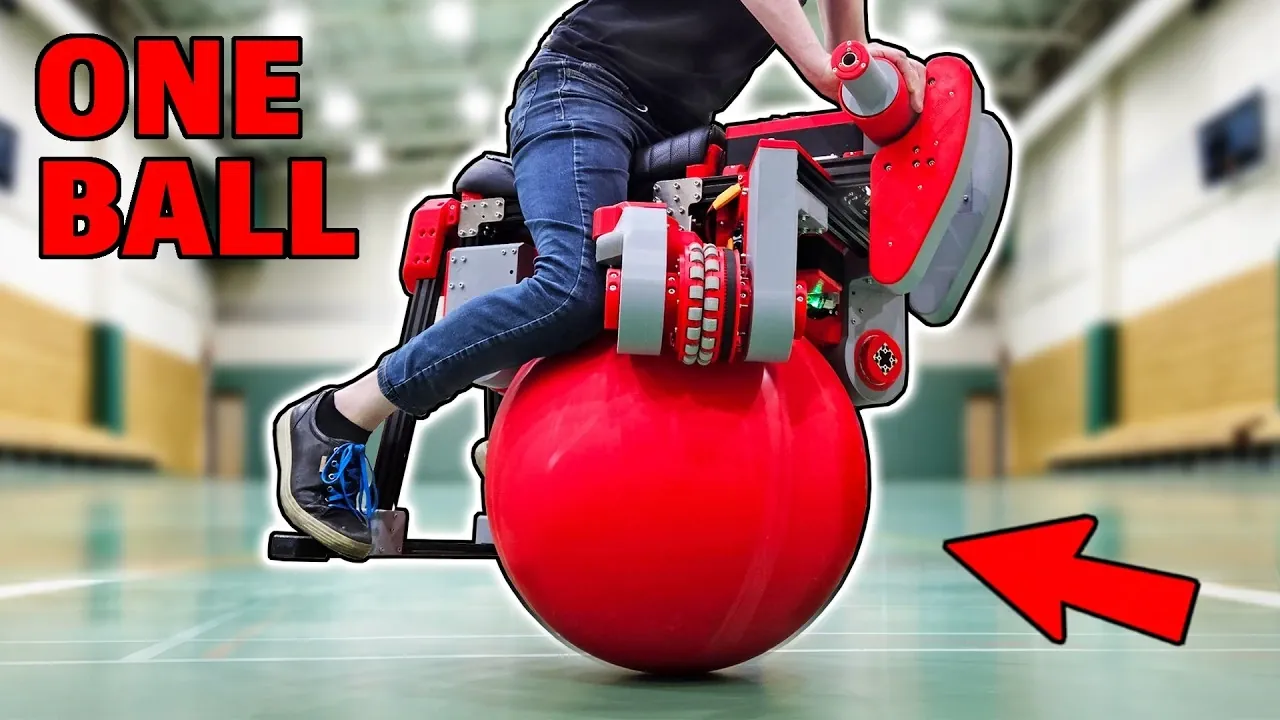
James Bruton has developed a prototype one-ball balancing bike capable of moving in any direction while maintaining stability. The design incorporates custom omni-wheels with aluminum cores and 216 bearings, allowing smooth multidirectional movement even under heavy loads. This project builds on his earlier two-ball bike and highlights ongoing challenges, such as improving steering precision and maintaining consistent stability during operation.
You’ll learn how the bike’s direct belt drive system, powered by brushless motors, ensures efficient power transfer to the omni-wheels. The guide also explores the advanced electronics, including a TNC 4.1 microcontroller and PID controller, that regulate balance and responsiveness. Additionally, it covers the use of materials like aluminum and 3D-printed Polymax PLA, which combine to create a lightweight yet durable structure for continued experimentation.
Omnidirectional One-Ball Bike
TL;DR Key Takeaways :
- James Bruton has developed a new one-ball balancing bike capable of omnidirectional movement, building on his earlier two-ball bike project.
- The bike uses advanced components such as custom omni-wheels, a direct belt drive system and a lightweight aluminum chassis to achieve stability and multidirectional mobility.
- Steering remains a significant challenge, with experimental solutions like flight control surfaces and foam wings requiring further refinement for precise maneuverability.
- Advanced electronics, including a TNC 4.1 microcontroller, IMU and PID controller, enable the bike to maintain balance and respond dynamically to rider input and external forces.
- Future improvements focus on enhancing steering mechanisms, mitigating static electricity interference, optimizing electronic stability and improving rider ergonomics for practical usability.
How It Works: Design and Mechanics
At the heart of this project lies the single-ball balancing system, which enables the bike to maintain stability and move seamlessly in any direction. This is achieved through a combination of innovative components, each contributing to the bike’s unique capabilities:
- Custom Omni-Wheels: These wheels, featuring aluminum cores and 216 bearings, are designed to assist smooth, multidirectional movement while making sure durability under significant loads.
- Direct Belt Drive System: Powered by brushless motors, this system provides efficient power transfer to the omni-wheels, allowing for precise and responsive control.
- Lightweight Chassis: Constructed from 40/40 aluminum extrusion, the modular frame offers both rigidity and adaptability, supporting the rider and components while allowing easy adjustments during testing phases.
This combination of components creates a platform capable of balancing and moving in any direction. However, it also introduces unique challenges, particularly in steering and maintaining consistent stability under dynamic conditions.
Overcoming Challenges: Steering and Stability
The one-ball bike’s design presents significant challenges, particularly in the area of steering. Unlike traditional bicycles, which rely on handlebars for directional control, this design requires alternative solutions to achieve precise maneuverability. Bruton has explored several unconventional approaches, including:
- Flight Control Surfaces: These components manipulate air resistance to influence the bike’s direction, offering a novel method of steering.
- Foam Wings: Large foam structures are used to create drag, assisting with directional control. While promising, these require further refinement to ensure consistent and reliable performance.
Another critical challenge is the impact of static electricity, which can interfere with the bike’s sensitive electronics. To address this, Bruton applied nickel screening spray to shield key components from electrical interference. Additionally, maintaining the rider’s balance over the ball is essential for stability, necessitating precise calibration of the bike’s center of gravity and control systems.
Omni-Directional ONE-BALL Bike Build

Here are more detailed guides and articles that you may find helpful on 3D printed projects.
- DIY Budget Gaming PC From a PS5 APU & RDNA2 Graphics
- How to build a Robot Arm using 3D printed Parts and Arduino
- Printy Panels Innovative 3D Printed shelving system
- Top 3D Printed Mini Server Racks Tested for Home or Office in 2025
- The War On 3D Printing : Design Files, Printer Sales & Platform Pressure
- 3D Printed Raspberry Pi Handheld Games Console
- 3D Printed Hand Crank Generator Creates 30Watts Of Power (video)
- KOKONI plug-and-print family friendly 3D printer
- Impact of PLA-HR Filament on Sports Equipment Manufacturing
- Ultimo 3D Printable Modular Display Case System.Webp
Electronics: The Brain of the Bike
The bike’s advanced electronics serve as the foundation for its ability to balance and move effectively. These systems work in unison to ensure stability and responsiveness, even in dynamic conditions. Key components include:
- TNC 4.1 Microcontroller: This device, paired with an inertial measurement unit (IMU), continuously monitors the bike’s orientation and adjusts motor output to maintain balance.
- PID Controller: A proportional-integral-derivative controller fine-tunes the bike’s balance by managing roll and pitch, making sure smooth and stable operation.
- User Input: Twist-grip controls allow the rider to move forward, backward and sideways. Bruton has also suggested that leaning could provide a more intuitive steering method in future iterations.
These electronic systems are integral to the bike’s functionality, allowing it to respond dynamically to changes in the rider’s position and external forces.
Materials and Fabrication
Bruton’s approach to fabrication emphasizes a balance between cost efficiency and structural integrity. By combining advanced materials with innovative manufacturing techniques, he has created a prototype that is both robust and adaptable. Key materials include:
- 3D-Printed Polymax PLA Components: These lightweight and customizable parts are ideal for prototyping, allowing for precise tolerances and rapid iteration.
- Aluminum Components: Used for critical structural elements such as the chassis and omni-wheel cores, aluminum provides the strength and durability needed to support the rider and withstand dynamic forces.
This hybrid fabrication approach enables Bruton to experiment with different designs while maintaining the structural integrity required for real-world testing.
Testing and Performance
Initial testing has demonstrated the bike’s ability to balance and move effectively in controlled environments. The single-ball system successfully maintains stability, even when subjected to the dynamic forces generated by rider movement. However, steering remains a challenge, with current mechanisms such as foam wings requiring further refinement to achieve the desired level of control and responsiveness.
Bruton has also noted the importance of optimizing the bike’s electronic systems to improve overall performance. By fine-tuning the control algorithms and addressing issues such as static electricity interference, he aims to enhance the bike’s stability and usability in future iterations.
What’s Next: Future Improvements
As the project progresses, Bruton has identified several key areas for improvement to enhance the bike’s functionality and user experience:
- Steering Mechanisms: Developing more intuitive and reliable methods of directional control, potentially incorporating leaning or other user inputs.
- Static Electricity Mitigation: Further shielding of sensitive electronics to prevent interference and ensure consistent performance.
- Ergonomic Enhancements: Adding features such as handlebars, footpegs and improved seating to increase rider comfort and usability.
- Electronic Stability Optimization: Refining the control systems to achieve smoother and more responsive operation under a variety of conditions.
These planned improvements reflect Bruton’s commitment to pushing the boundaries of what is possible in personal transportation, with the ultimate goal of creating a practical and versatile omnidirectional vehicle.
A Vision for the Future of Mobility
James Bruton’s one-ball bike represents a remarkable achievement in the field of engineering and design. By combining creativity with innovative technology, Bruton has developed a prototype that challenges conventional notions of personal transportation. While significant challenges remain, this project serves as a testament to the potential of innovative engineering to redefine mobility solutions. As refinements continue, the one-ball bike could pave the way for new applications and advancements, offering a glimpse into the future of omnidirectional vehicles.
Media Credit: James Bruton
Disclosure: Some of our articles include affiliate links. If you buy something through one of these links, Geeky Gadgets may earn an affiliate commission. Learn about our Disclosure Policy.
