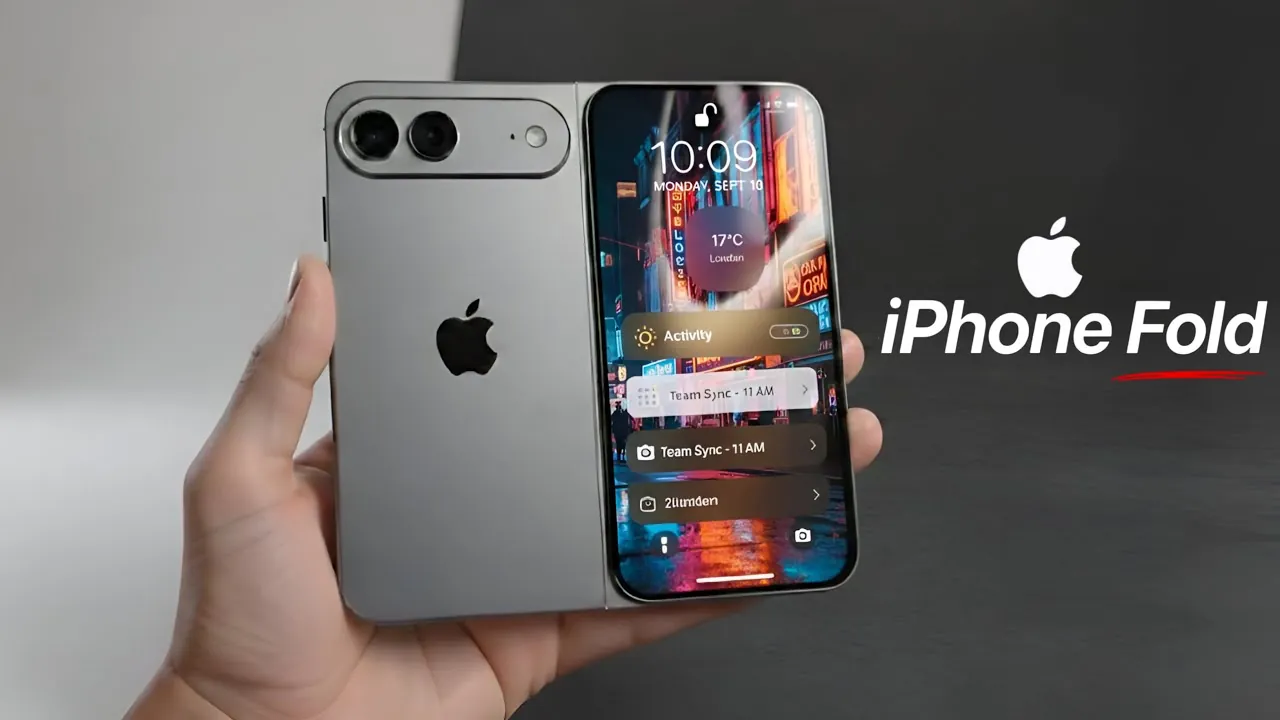
Apple is preparing to make a significant move into the foldable smartphone market with the highly anticipated iPhone Fold, set to launch in September 2026 alongside the iPhone 18 Pro lineup. This device is expected to merge Apple’s renowned design principles with advanced technology, offering a new take on foldable smartphones. However, Apple faces a formidable challenge from Samsung, whose Galaxy Z Fold series has long been the benchmark in this category. The iPhone Fold’s debut marks a pivotal moment in the competition between these tech giants.

When to Expect the iPhone Fold
The iPhone Fold is rumored to make its debut in September 2026, aligning its release with Apple’s flagship iPhone 18 Pro lineup. This strategic timing underscores Apple’s intent to position the iPhone Fold as a premium product within its ecosystem. By entering the foldable market at this stage, Apple benefits from observing and learning from Samsung’s years of experience, allowing it to refine its offering before launch. This calculated approach reflects Apple’s commitment to delivering a polished product that meets the high expectations of its user base.
Design and Build: A Premium Take on Foldables
Apple is reportedly focusing on a combination of aluminum and titanium for the iPhone Fold’s construction, aiming to strike a balance between durability and lightweight design. This choice addresses the durability concerns often associated with foldable devices, making sure the iPhone Fold can withstand daily use. The device will feature two displays: a 7.8-inch inner screen designed for immersive activities such as multitasking and media consumption, and a 5.3-inch outer display for quick interactions like checking notifications or responding to messages. While the outer display is smaller than Samsung’s Galaxy Z Fold 8, Apple’s emphasis on portability and ease of use may resonate with users who prioritize compactness in their devices.
The design is expected to reflect Apple’s minimalist aesthetic, with seamless integration of hardware and software. This approach could set the iPhone Fold apart in a market where foldable devices often prioritize functionality over form.
Under the Hood: Power and Connectivity
At the core of the iPhone Fold will be Apple’s A20 chip, a next-generation processor engineered to deliver exceptional performance and energy efficiency. This chip is expected to handle demanding tasks such as multitasking, gaming, and video editing with ease. Additionally, the device will feature Apple’s in-house C2 modem, which promises enhanced connectivity and robust 5G support. These components highlight Apple’s dedication to making sure a seamless and reliable user experience, even in its first foray into foldable technology.
The iPhone Fold’s hardware will likely be complemented by optimized software, using Apple’s ecosystem to provide smooth integration with other devices such as the iPad, MacBook, and Apple Watch. This level of connectivity could be a key differentiator in a market where software optimization often lags behind hardware innovation.
Dual Displays: Functionality and Usability
The dual-display setup is a defining feature of the iPhone Fold. The 7.8-inch inner screen offers a spacious canvas for activities like multitasking, gaming, and streaming, while the 5.3-inch outer display is designed for quick, on-the-go interactions. This configuration caters to a wide range of use cases, from productivity to entertainment. However, the smaller outer display may raise concerns about usability, particularly when compared to Samsung’s larger alternatives.
Apple’s software optimization will play a crucial role in addressing these concerns. Features such as split-screen multitasking, gesture controls, and app continuity between displays are expected to enhance the overall user experience. By focusing on intuitive software design, Apple aims to maximize the functionality of both screens, making sure the iPhone Fold meets the diverse needs of its users.
Camera System: Balancing Features and Practicality
The iPhone Fold is rumored to feature a dual 48 MP rear camera system and an 18 MP front camera, offering competitive specifications for photography and video recording. While these features are impressive, they fall short of Samsung’s rumored 200 MP main sensor for the Galaxy Z Fold 8. This disparity highlights a potential trade-off, as Apple appears to prioritize practicality and design over pushing the boundaries of camera technology.
Another notable feature is the potential integration of Touch ID into the power button, which could replace Face ID. This shift may appeal to users who value convenience and reliability, particularly in scenarios where facial recognition is less effective. However, it also represents a departure from Apple’s recent focus on Face ID, raising questions about how this change will be received by consumers.
Competing with Samsung’s Foldable Dominance
Apple’s entry into the foldable market directly challenges Samsung, whose Galaxy Z Fold series has set the standard for innovation and durability. The Galaxy Z Fold 8, expected to launch around the same time as the iPhone Fold, is likely to feature larger displays, advanced camera systems, and refined hardware. Samsung’s extensive experience in the foldable segment gives it a significant advantage, particularly in addressing durability concerns and incorporating user feedback.
Despite these challenges, Apple’s ecosystem and software integration could give it a competitive edge. The seamless connectivity between Apple devices, combined with the company’s reputation for quality and innovation, may attract users who value a cohesive digital experience. This dynamic sets the stage for a compelling rivalry between two of the biggest names in technology.
Pricing and Market Implications
The iPhone Fold is expected to start at over $2,000, placing it firmly in the premium segment of the market. This pricing strategy aligns with Apple’s focus on high-end consumers but positions the device in direct competition with Samsung’s Galaxy Z Fold 8, which is also anticipated to exceed $1,999. By entering the foldable market at this price point, Apple signals its intent to compete not just on features but also on brand value and ecosystem integration.
Apple’s entry into the foldable market could have far-reaching implications for the industry. The company’s ability to use its loyal customer base and ecosystem may challenge Samsung’s dominance, potentially reshaping consumer expectations for foldable devices. As the September 2026 release approaches, the iPhone Fold’s success will depend on its ability to deliver a compelling combination of design, performance, and usability in a rapidly evolving market.
Expand your understanding of iPhone Fold with additional resources from our extensive library of articles.
- Apple Foldable iPhone: Design, Features, and Pricing Revealed
- iPhone Fold Price, Specs, and Release Date Rumors
- Apple’s iPhone Fold: Creaseless Display and Hybrid Design
- iPhone Fold Leak: Specs, Features, and Release Date Details
- Apple’s Foldable iPhone Ultra: Features, Design, and Release Date
Source & Image Credit: Demon’s Tech
Disclosure: Some of our articles include affiliate links. If you buy something through one of these links, Geeky Gadgets may earn an affiliate commission. Learn about our Disclosure Policy.
