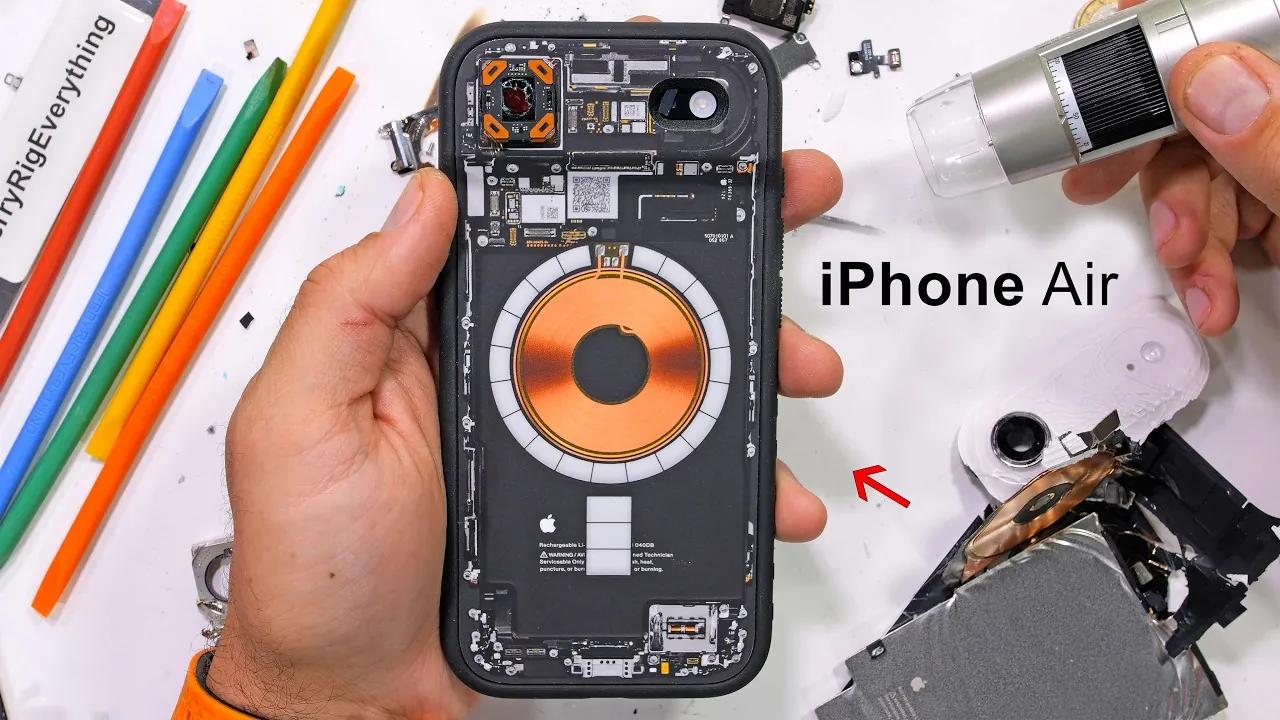
The iPhone Air teardown video below from JerryRigEverything provides an in-depth view of Apple’s latest strides in smartphone design, emphasizing a blend of technological innovation, sustainability, and repairability. This device reflects Apple’s ongoing efforts to create products that are not only innovative but also environmentally conscious. With features like a titanium exoskeleton and extensive use of recycled materials, the iPhone Air demonstrates a clear commitment to reducing its environmental footprint while maintaining the high standards of performance and design that users expect.

Durability and Material Choices
Central to the iPhone Air’s design is its titanium exoskeleton, a material chosen for its remarkable strength-to-weight ratio. This ensures the device is both lightweight and highly durable, capable of withstanding the rigors of daily use. Apple has also incorporated 3D-printed titanium near the USB-C port, showcasing its adoption of advanced additive manufacturing techniques. This method not only enhances precision but also reduces material waste by 33%, highlighting Apple’s focus on efficiency and sustainability.
The iPhone Air’s construction is a testament to Apple’s dedication to environmentally responsible practices. The device incorporates a significant amount of recycled materials, including:
- 100% recycled copper, cobalt, and gold
- 95% recycled lithium
- 80% recycled steel
- 100% recycled aluminum in its internal structure
These choices underscore Apple’s leadership in setting new standards for sustainability within the tech industry. By integrating such materials, the company not only reduces its reliance on virgin resources but also minimizes the environmental impact of its manufacturing processes.
Enhanced Repairability
The iPhone Air takes significant steps toward improving repairability, making it easier for users to address common issues and extend the device’s lifespan. The back glass and screen have been redesigned for easier replacement, while the battery system now features electrically releasing adhesive, simplifying removal and replacement. These changes align with Apple’s broader sustainability goals by reducing electronic waste and encouraging users to repair rather than replace their devices.
Despite these advancements, some challenges remain. For example, while the internal layout has been streamlined to improve access to components, the charging port is still complex to repair and may require specialized tools. Nevertheless, the overall design represents a meaningful step forward in creating devices that are more accessible for repairs, benefiting both users and the environment.
Battery and Charging Efficiency
The iPhone Air is equipped with a 3,149 mAh battery housed in a durable metal enclosure. This design enhances both safety and longevity, ensuring consistent performance over time. Additionally, the battery shares a design with the wireless charger, which simplifies the supply chain and improves manufacturing efficiency.
While wireless charging offers undeniable convenience, the teardown reveals a 35% energy loss during the charging process, indicating room for improvement in this area. Despite this drawback, the robust battery design and efficient manufacturing processes remain standout features, reflecting Apple’s commitment to balancing performance with sustainability.
Camera and Sensor Innovations
Apple continues to push the boundaries of smartphone photography with the iPhone Air. The device features a 48 MP rear camera equipped with sensor-shift optical image stabilization, which reduces blurring by making precise adjustments to the sensor. On the front, an 8 MP camera with a square sensor design enhances the quality of selfies and video calls.
The integration of DSLR-level stabilization technology into a compact smartphone is particularly noteworthy. This achievement allows Apple to deliver professional-grade image quality without increasing the device’s size or weight, making high-quality photography more accessible to everyday users.
Audio and Vibration Performance
The iPhone Air’s audio and vibration systems are designed to provide a premium user experience. A single loudspeaker delivers clear and robust sound, suitable for calls, media playback, and other applications. Meanwhile, the advanced vibration motor offers tactile feedback, though it is slightly less powerful compared to other models. Together, these features contribute to a well-rounded and enjoyable user experience, enhancing the device’s overall appeal.
Sustainability at the Core
Sustainability is a defining feature of the iPhone Air’s design. The extensive use of recycled materials, such as cobalt, lithium, and aluminum, significantly reduces the environmental impact of production. Additionally, Apple’s adoption of 3D printing techniques minimizes material waste, further supporting its eco-friendly objectives.
These initiatives are part of Apple’s broader commitment to reducing its carbon footprint and promoting a circular economy. By prioritizing sustainability, Apple not only sets a benchmark for the tech industry but also encourages other manufacturers to adopt similar practices, fostering a more environmentally responsible approach to technology.
Design and Durability Observations
The iPhone Air’s design strikes a careful balance between functionality and resilience. Its IP68 waterproof rating is achieved through the use of adhesive and gaskets, providing reliable protection against water and dust. The combination of titanium and aluminum ensures a lightweight yet durable structure, making the device practical for everyday use while maintaining a premium feel.
This thoughtful approach to design reflects Apple’s dedication to creating products that are both aesthetically pleasing and highly functional. By addressing durability and usability in tandem, the iPhone Air stands out as a device that meets the demands of modern users without compromising on quality or sustainability.
A Thoughtful Evolution in Smartphone Design
The iPhone Air teardown reveals a device that embodies Apple’s commitment to innovation, sustainability, and repairability. By integrating recycled materials, advanced manufacturing techniques, and user-friendly repair features, the iPhone Air represents a significant step forward in smartphone design. At the same time, it delivers the performance, durability, and build quality that users have come to expect from Apple.
This balance of technological advancement and environmental responsibility positions the iPhone Air as a forward-thinking addition to Apple’s product lineup. As the tech industry continues to evolve, the iPhone Air serves as a compelling example of how innovation can be harnessed to create products that are not only innovative but also aligned with the principles of sustainability and long-term usability.
Explore further guides and articles from our vast library that you may find relevant to your interests in the iPhone Air.
- What’s Inside the iPhone Air
- Is the iPhone 17 Air Worth It? Pros, Cons, and Full Breakdown
- Geeky Gadgets – The Latest Technology News
- Apple MacBook Air M3 teardown reveals its faster dual NAND flash
- Apple iPhone
Source & Image Credit: JerryRigEverything
Disclosure: Some of our articles include affiliate links. If you buy something through one of these links, Geeky Gadgets may earn an affiliate commission. Learn about our Disclosure Policy.
