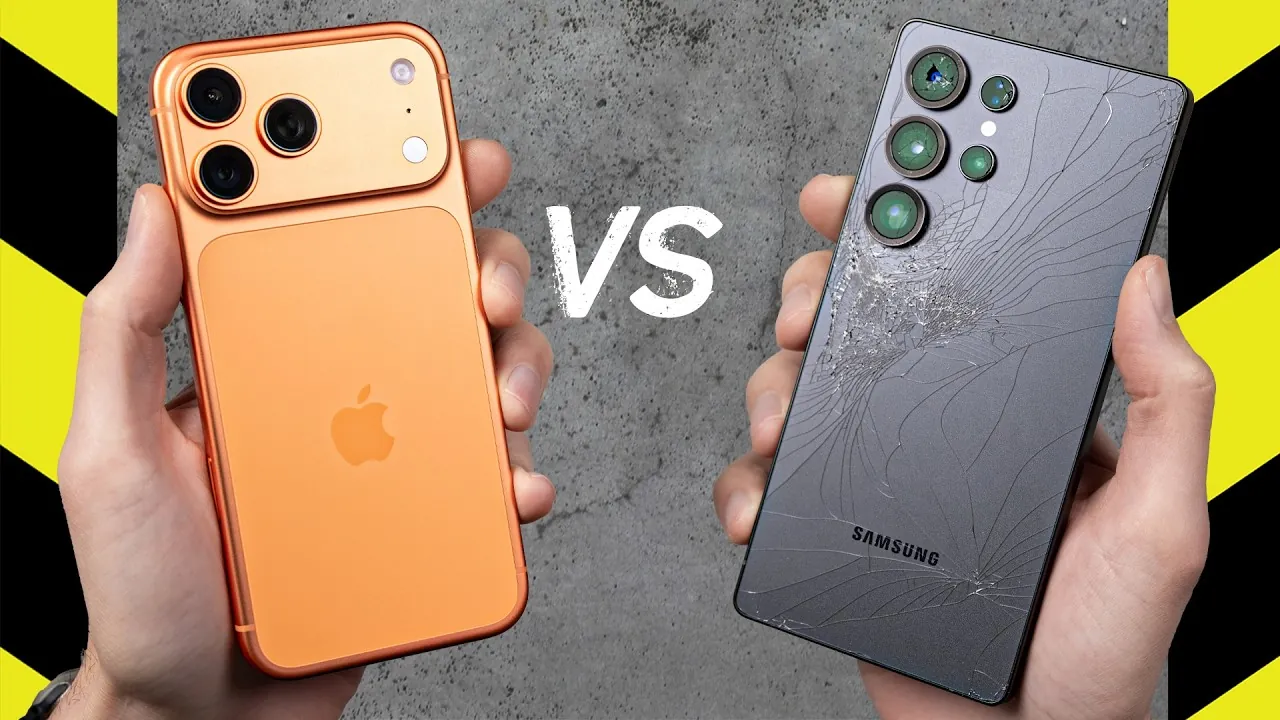
Durability remains a critical factor when selecting a flagship smartphone, especially as devices become more advanced and expensive. To provide clarity, we’ve compared the iPhone 17 Pro Max and Galaxy S25 Ultra through rigorous drop tests designed to simulate real-world scenarios. Both smartphones incorporate innovative materials and engineering, but their performance highlights distinct advantages and limitations. Rather than identifying a definitive winner, this analysis underscores each device’s unique strengths, helping you make an informed decision based on your priorities. Let’s find out how the two handsets perform in the test video from PhoneBuff.

iPhone 17 Pro Max: Built for Rigidity
Apple has focused on enhancing the durability of the iPhone 17 Pro Max with a series of thoughtful upgrades aimed at reducing damage from accidental drops and everyday wear. Key features include:
- Aluminum Unibody Design: The aluminum frame not only adds structural rigidity but also reduces the glass surface area, minimizing the risk of catastrophic damage during impacts. This design choice ensures a balance between durability and lightweight construction.
- Ceramic Shield 2: An upgraded version of Apple’s proprietary glass technology, Ceramic Shield 2 offers improved scratch resistance and impact durability. This innovation protects both the front and back panels, making the device more resilient to accidental drops and abrasions.
These features position the iPhone 17 Pro Max as a robust option, particularly for users concerned about glass protection and maintaining the device’s aesthetic over time.
Galaxy S25 Ultra: Engineered for Strength
Samsung’s Galaxy S25 Ultra takes a different approach to durability, emphasizing structural integrity and resistance to wear and tear. Its standout features include:
- Titanium Frame: Known for its exceptional strength-to-weight ratio, the titanium frame resists dents and scuffs, particularly during corner impacts. This material choice enhances the phone’s ability to withstand significant physical stress.
- Corning Gorilla Armor: Samsung’s advanced glass protection technology provides superior scratch resistance and reduces the likelihood of shattering upon impact. This ensures the device remains functional and visually appealing even after repeated use.
These innovations make the Galaxy S25 Ultra a durable contender, especially for users who prioritize structural strength and scratch resistance in their devices.
Drop Test Results: How They Compare
To evaluate real-world durability, both devices underwent a series of controlled drop tests. The results reveal how each phone performs under different conditions:
- 1m Back Drop: The iPhone 17 Pro Max exhibited less damage to its glass and camera system compared to the Galaxy S25 Ultra, showcasing its superior glass protection.
- 1m Corner Drop: The Galaxy’s titanium frame outperformed the iPhone’s aluminum unibody, which showed visible dents and scuffs upon impact.
- 1m Face Drop: Both devices experienced cracking, but the Galaxy retained full functionality, giving it a slight edge in this scenario.
- 1.5m Back Drop: The iPhone’s camera system remained intact, while the Galaxy’s suffered significant damage, highlighting the iPhone’s focus on camera protection.
- 1.5m Corner Drop: The Galaxy’s titanium frame remained largely unscathed, while the iPhone’s main camera lost focus functionality due to the impact.
- 1.5m Face Drop: Both phones sustained additional glass damage but retained overall functionality, demonstrating their resilience under extreme conditions.
These results emphasize the trade-offs between the two devices. While the iPhone excels in protecting its glass and camera system, the Galaxy offers superior structural integrity and scratch resistance.
How the Tests Were Conducted
To ensure consistent and reliable results, the drop tests were performed using a precision mounting system that eliminated variability in how the devices hit the surface. The testing surface was covered with 80-grit sandpaper to replicate real-world conditions, such as asphalt or concrete. This methodology provided a realistic assessment of how each smartphone would fare in everyday scenarios, offering valuable insights into their durability.
Strengths in Different Areas
The iPhone 17 Pro Max and Galaxy S25 Ultra both represent significant advancements in smartphone durability, but their strengths cater to different user needs:
- iPhone 17 Pro Max: Excels in protecting its camera system and minimizing glass damage, thanks to its Ceramic Shield 2 and aluminum unibody design. This makes it an ideal choice for users who prioritize camera functionality and aesthetic preservation.
- Galaxy S25 Ultra: Offers superior structural integrity and scratch resistance, courtesy of its titanium frame and Corning Gorilla Armor. This makes it a strong contender for users who value long-term durability and resistance to physical wear.
Ultimately, the choice between these two flagship smartphones depends on your specific priorities. If protecting the camera system and reducing glass damage are your main concerns, the iPhone 17 Pro Max may be the better option. On the other hand, if structural strength and scratch resistance are more important, the Galaxy S25 Ultra could be the right fit. Both devices are built to endure the demands of daily use, making sure that durability is no longer a compromise in the world of premium smartphones.
Below are more guides on iPhone 17 Pro Max durability from our extensive range of articles.
- iPhone 17 Pro TechWoven Cases: Features, Price, and More
- iPhone 17 Pro Max: Design, Camera, and Performance
- iPhone 17 Pro Max: Release Date, Price, and Key Innovations
- iPhone 17 Pro Max Rumors: Features, Specs, and Release Date
- Everything You Need to Know About the iPhone 17 Pro Max
Source & Image Credit: PhoneBuff
Disclosure: Some of our articles include affiliate links. If you buy something through one of these links, Geeky Gadgets may earn an affiliate commission. Learn about our Disclosure Policy.
