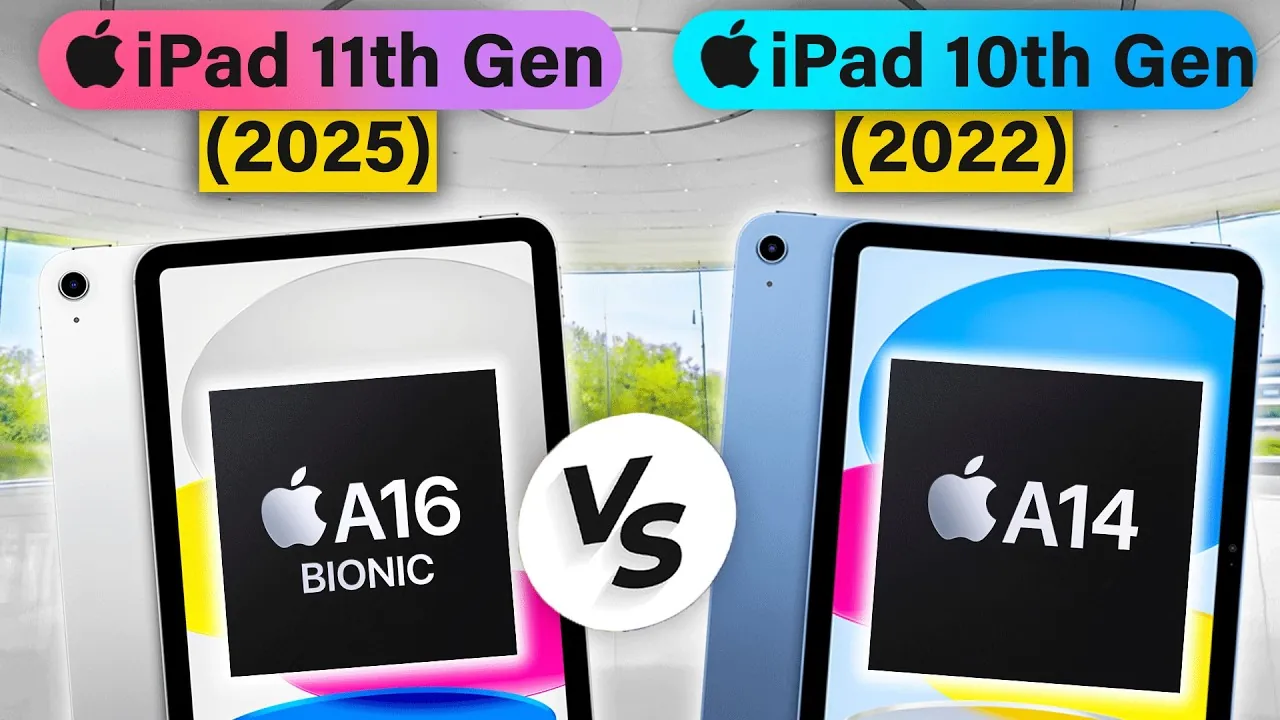
When comparing the iPad 11th generation to the iPad 10th generation, the differences may appear subtle at first glance. However, the iPad 11 introduces notable upgrades in performance, storage, and longevity, making it a compelling choice for new buyers or those with older devices. For current iPad 10 users, the decision to upgrade requires careful consideration of specific needs and priorities, the video below from Matt Talks Tech gives us more details.

Display: Consistency Over Innovation
Both the iPad 11 and iPad 10 feature a 10.9-inch Liquid Retina display with a resolution of 2360×1640, delivering a sharp 264 pixels per inch (PPI). Brightness levels remain at 500 nits, and the refresh rate is capped at 60Hz.
- No advancements in display technology or quality between the two models.
- Both provide a consistent and reliable visual experience for everyday use.
If you are seeking innovative display features like higher refresh rates or OLED technology, neither model offers significant innovations in this area. However, the display quality remains excellent for tasks such as streaming, browsing, and light creative work.
Processor and Performance: A16 Bionic Takes the Lead
The iPad 11 is equipped with the A16 Bionic chip, while the iPad 10 runs on the A14 Bionic chip. Both processors feature a 6-core CPU, 4-core GPU, and a 16-core Neural Engine, but the A16 delivers approximately 20% better performance, making it a more powerful option for demanding tasks.
- The A16 excels in resource-intensive activities like video editing, gaming, and multitasking.
- The A14 remains capable for everyday tasks, but the A16 ensures smoother performance and better future-proofing.
For users who prioritize speed, efficiency, and longevity, the iPad 11 offers a clear advantage. Its enhanced processing power ensures a seamless experience, particularly for those using performance-heavy applications.
RAM and Storage: Enhanced Multitasking and Capacity
The iPad 11 features 6GB of RAM, compared to the 4GB in the iPad 10. This increase significantly improves multitasking capabilities and performance in memory-intensive applications. Storage options also differ between the two models:
- iPad 10: Starts at 64GB and maxes out at 256GB.
- iPad 11: Starts at 128GB and maxes out at 512GB.
The additional RAM and higher storage capacities make the iPad 11 a better choice for users who frequently run multiple apps, work with large files, or require ample space for media and applications. These upgrades cater to both casual users and professionals seeking a more versatile device.
Software and Updates: Extended Support for the Future
Both models run iPadOS 18, Apple’s latest operating system for tablets, making sure access to the newest features and improvements. However, the iPad 11 is expected to receive software updates for approximately five years, compared to three years for the iPad 10.
- iPad 11 offers extended software support, making sure compatibility with future apps and features.
- Ideal for users planning to keep their device for several years without worrying about obsolescence.
For those who value longevity and staying up-to-date with Apple’s ecosystem, the iPad 11 is the more future-proof option.
Battery and Charging: Reliable but Unchanged
Battery life remains consistent across both models, offering up to 10 hours of usage on a single charge. Charging is handled via USB-C with a 20W adapter, providing a reliable and efficient charging experience.
- No wireless charging support for either model.
- Battery performance is dependable but unchanged between generations.
For users satisfied with current battery standards, both models deliver equally reliable performance, making this aspect a non-factor in the decision-making process.
Connectivity: Modern and Identical
Both the iPad 11 and iPad 10 offer the same connectivity features, making sure fast and stable connections for a variety of use cases:
- Wi-Fi 6 and Bluetooth 5.3 for seamless wireless connectivity.
- Optional 5G support for cellular variants, providing high-speed mobile data access.
Whether you are streaming content, connecting peripherals, or using mobile data, both devices deliver identical connectivity experiences, making sure versatility in different environments.
Cameras: Functional but Unchanged
The camera systems on both models are virtually identical, offering reliable performance for video calls, casual photography, and content creation:
- 12MP rear camera capable of 4K video recording for high-quality visuals.
- 12MP front-facing landscape camera with Center Stage functionality for enhanced video call experiences.
While the cameras are sufficient for most users, neither model introduces new features or improvements in this area. Those seeking advanced photography or videography capabilities may need to explore other devices in Apple’s lineup.
Apple Pencil Support: Familiar and Unchanged
Both models support the 1st-generation Apple Pencil, which requires an adapter for charging. They are also compatible with the USB-C Apple Pencil but do not support the Apple Pencil Pro.
- The Apple Pencil experience is identical on both devices, offering precision for note-taking and creative work.
- No enhancements in stylus functionality or compatibility.
For users who rely on the Apple Pencil for productivity or creativity, either model will suffice without offering any additional benefits.
Build and Design: Consistent Aesthetics
The iPad 11 and iPad 10 share the same chassis design, with a negligible weight difference of just 1 gram (476g for the iPad 10 and 477g for the iPad 11). Both models are available in four colors: silver, blue, pink, and yellow.
- Modern and functional design remains unchanged across both generations.
- Weight and color options are consistent, offering no distinction in aesthetics.
For users who value a sleek and modern design, both models deliver the same visual appeal and build quality.
Price: More Value for the Same Cost
The iPad 10, originally priced at $449, is now available for $349 for the base 64GB model. The iPad 11 starts at $349 for the base 128GB model, offering more storage and improved specifications at the same price.
- iPad 11 provides better value with enhanced performance and storage capacity.
- For budget-conscious buyers, the iPad 11 is the stronger proposition.
The pricing structure makes the iPad 11 an attractive option for new buyers, delivering more features and capabilities without increasing the cost.
Making the Right Choice
The iPad 11th generation delivers meaningful upgrades in performance, RAM, and storage while maintaining the same price point as the iPad 10th generation.
- If you own an older iPad, such as the 9th generation or earlier, the iPad 11 is a worthwhile investment.
- For current iPad 10 users, the improvements may not justify an upgrade unless specific features like extended software support or additional storage are priorities.
- For new buyers, the iPad 11 offers a balanced and future-proof option in Apple’s tablet lineup.
Ultimately, your choice depends on your current device, usage needs, and long-term priorities. Both models deliver excellent performance, but the iPad 11 stands out as the more versatile and future-ready option.
Here is a selection of other guides from our extensive library of content you may find of interest on iPad 11th generation.
- iPad 11th Generation: Features, Specs, and Release Date Rumors
- 2025 iPad 11th Gen: Features, Release Date, and Pricing
- iPad 11 2025: Features, Pricing, and Release Date
- iPad 11 Rumors: Will It Be the Best iPad of 2025?
- 2025 iPad 11: Everything We Know So Far!
Source & Image Credit: Matt Talks Tech
Disclosure: Some of our articles include affiliate links. If you buy something through one of these links, Geeky Gadgets may earn an affiliate commission. Learn about our Disclosure Policy.
