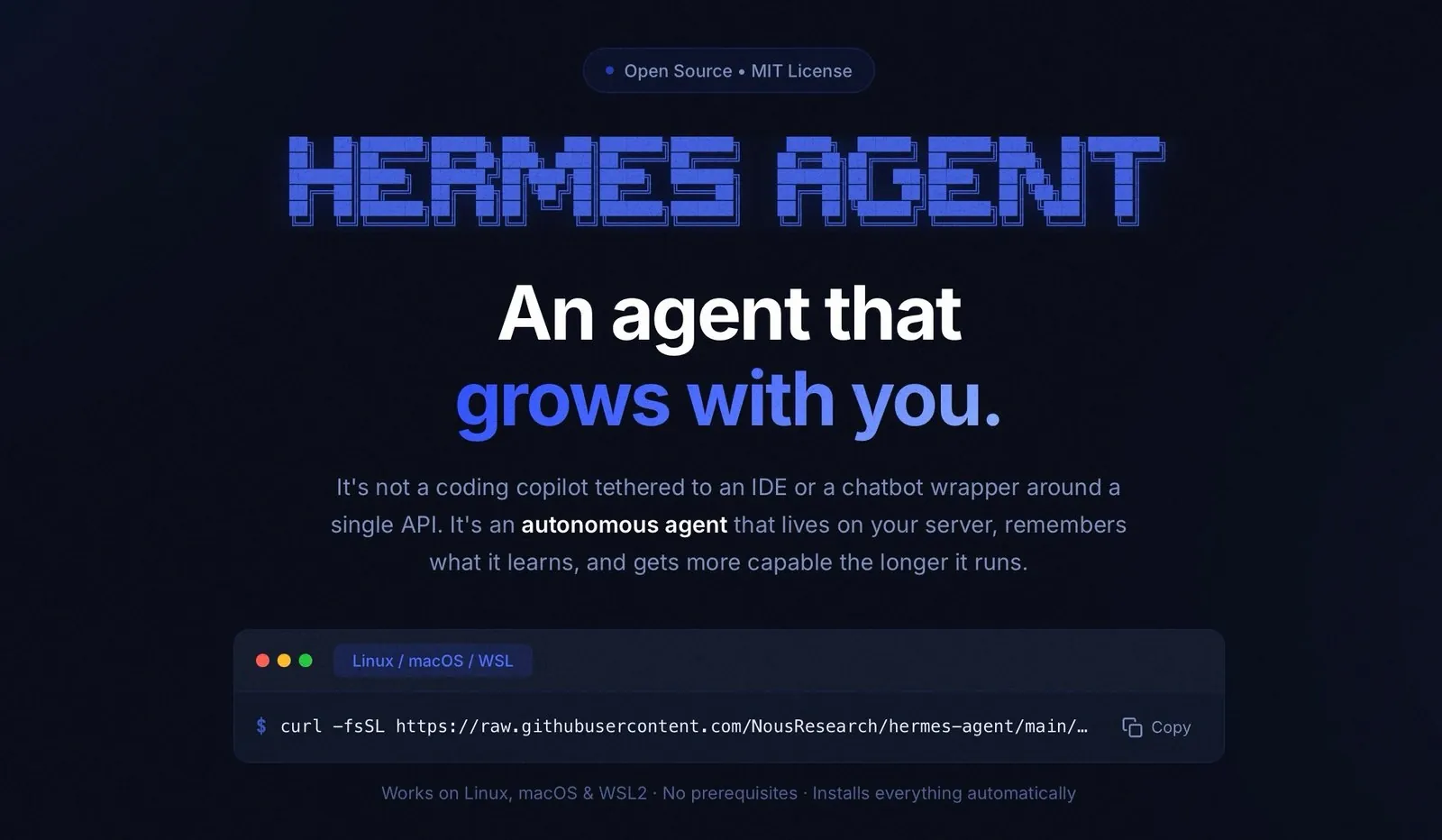
Hermes Agent, developed by Nous Research, represents a significant step in artificial intelligence with its capacity for independent learning and adaptation. Central to its design is a self-improving loop that evaluates performance after every 15 tasks, refining its abilities by analyzing both successes and failures. This process is supported by features such as the Generic Evolution of Prompt Architectures (JEPA) and a four-layer memory system, which together enhance its ability to produce context-aware outputs. As detailed by David Ondrej, these mechanisms enable Hermes Agent to handle a diverse range of tasks with increasing precision.
Discover how Hermes Agent’s modular deployment options cater to users with varying technical needs, from low-cost VPS setups to advanced GPU clusters. Learn about its integration with communication platforms like Telegram, Slack and Discord, as well as its applications in automating workflows for software development and creative industries. This overview also examines how Hermes Agent compares to other AI systems, offering a closer look at its distinctive features and areas for future development.
Hermes Agent : Self Improving AI
TL;DR Key Takeaways :
- Hermes Agent is an open source AI tool by Nous Research that autonomously learns, adapts and evolves, introducing a self-improving paradigm in artificial intelligence.
- Key features include a self-improving loop, JEPA for optimizing prompts and code and a four-layer memory system with intelligent forgetting for efficient information management.
- It offers simple deployment options, ranging from low-cost VPS setups to high-performance GPU clusters and supports multiple AI models for flexibility and customization.
- Hermes Agent integrates seamlessly with popular communication tools (e.g., Telegram, Slack, Discord) and development pipelines, providing deployment flexibility across diverse environments.
- Its versatility enables applications in software development, data science, task automation and creative projects, making it a valuable tool for professionals and enthusiasts alike.
Hermes Agent’s core strength lies in its ability to continuously enhance its performance through self-improvement. Its standout features include:
- Self-Improving Loop: This innovative mechanism evaluates the agent’s performance after every 15 tool calls, analyzing successes and failures to refine its skills. By autonomously generating new capabilities, Hermes Agent becomes increasingly efficient and effective over time, requiring minimal user intervention.
- Generic Evolution of Prompt Architectures (JEPA): This feature optimizes prompts, skills and code by analyzing execution traces. The result is more accurate and contextually relevant outputs, making sure that the agent consistently delivers high-quality results.
- Four-Layer Memory System: Hermes Agent employs a sophisticated memory structure to manage and retain information effectively:
- Markdown files for persistent storage
- SQLite databases for structured data management
- Procedural memory for task-specific knowledge
- User modeling for personalized interactions
To maintain efficiency, the system uses intelligent forgetting, retaining critical information while compressing or discarding less relevant data.
These features collectively enable Hermes Agent to adapt dynamically, making it a powerful tool for both technical and non-technical users seeking intelligent automation and problem-solving capabilities.
Simple Deployment and Setup
Hermes Agent is designed with user convenience in mind, offering a straightforward deployment process and extensive customization options. Its open source nature ensures compatibility with a variety of environments and budgets. Deployment options include:
- Low-cost setups, such as $5 VPS servers
- High-performance GPU clusters for demanding tasks
- Serverless environments for scalable solutions
Getting started is as simple as running a single command, making the installation process accessible even to users with limited technical expertise. Hermes Agent also supports multiple AI models, ranging from open source frameworks to proprietary platforms like OpenAI and Anthropic. This flexibility ensures that users can tailor the tool to their specific needs and preferences.

Here are more detailed guides and articles that you may find helpful on AI agents.
- NVIDIA GTC 2026 Nemoclaw Launch & AI Agent Updates
- Kimi K2.5 Multi-Agent System : Parallel AI for Faster Tasks
- Claude Can Now Code Websites “By Sight” With Drawbridge
- Cursor AI Browser Experiment Shows Limits of Autonomous Dev Teams
- Beginner’s Guide to Building & Selling AI Agents
- Building AI Agents to analyze Excel spreadsheet data and more
- New CLI Tool Makes Deploying AI Agents Ridiculously Easy
- Antigravity vs Cursor vs Windsurf : Autonomy, Costs & Limits Compared
- Ion UI Guide: Set up Multiple AI Agents on Mac, Windows, Linux
- AI Trading Simulator with Debating Agents for Easier Stock Research
Seamless Integrations
Hermes Agent integrates effortlessly into existing workflows, enhancing productivity across various platforms. It supports popular communication tools, including:
- Telegram
- Discord
- Slack
- Signal
Beyond communication, Hermes Agent can function as a standalone tool or be embedded into development pipelines. For backend operations, it offers six terminal options, including local execution, Docker and SSH, providing deployment flexibility across diverse environments. This adaptability makes it an ideal choice for users seeking seamless integration into their existing systems.
How Hermes Agent Compares to Alternatives
Hermes Agent stands out as a versatile and developer-focused alternative to other tools in the market. For instance, while OpenClaw excels in specific, narrowly defined tasks, Hermes Agent offers broader, general-purpose capabilities. Its migration tools simplify the transition from platforms like OpenClaw, minimizing disruptions to existing workflows.
Although Hermes Agent is a relatively new entrant in the AI landscape, its rapid development cycle ensures continuous improvements. While it may currently lack the polish of more established platforms like Agent Zero, its innovative features and open source nature position it as a strong contender poised for significant growth.
Real-World Applications
The versatility of Hermes Agent makes it suitable for a wide array of applications across industries. Some of its key use cases include:
- Software Development: Automate repetitive coding tasks, generate new code snippets and streamline development workflows.
- Data Science: Analyze datasets, extract insights and optimize data processing pipelines with minimal manual intervention.
- Task Automation: Handle complex workflows efficiently, saving time and reducing operational overhead.
- Creative Projects: Generate content, brainstorm innovative ideas and adapt to unique challenges through autonomous skill creation.
Hermes Agent’s ability to self-improve ensures that it remains relevant and effective across a wide range of industries and tasks, making it a valuable tool for professionals and hobbyists alike.
The Future of Self-Improving AI
Hermes Agent exemplifies the next generation of artificial intelligence tools, emphasizing adaptability, self-improvement and user-centric design. As part of a broader trend toward autonomous and self-improving AI systems, it has the potential to transform industries ranging from software development to creative arts.
Its open source framework and developer-focused approach ensure that Hermes Agent will continue to evolve and expand its capabilities. As the technology matures, its applications are likely to grow, offering even greater value to users seeking innovative solutions to complex challenges.
Media Credit: David Ondrej
Disclosure: Some of our articles include affiliate links. If you buy something through one of these links, Geeky Gadgets may earn an affiliate commission. Learn about our Disclosure Policy.
