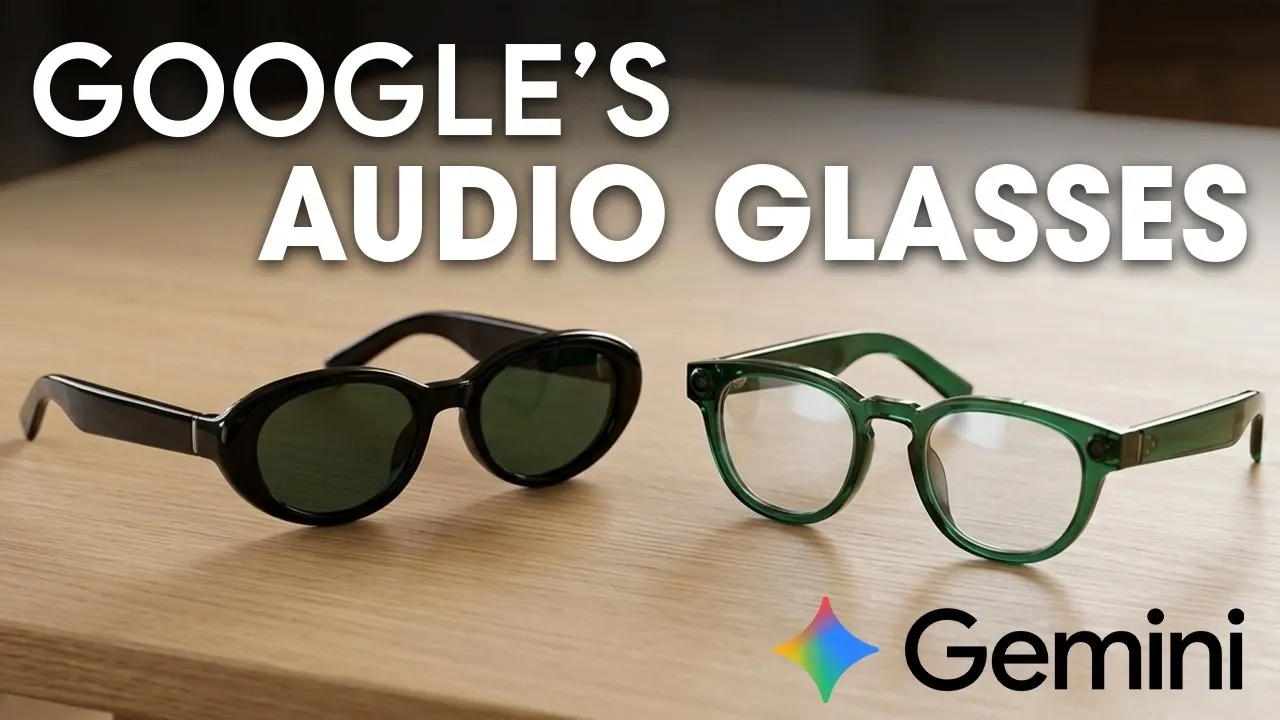
Google has officially announced its audio glasses at Google I/O 2026, marking a significant step into wearable technology. Built on the Android XR platform, which was co-developed with Samsung and Qualcomm, these glasses combine audio functionality with practical applications like real-time navigation and AI-powered assistance through Google’s Gemini AI. As highlighted by TechAvid, the glasses also focus on aesthetics, featuring designs from Warby Parker and Gentle Monster to appeal to a range of fashion preferences.
Explore this breakdown to understand the glasses’ real-time navigation features, how AI integration supports smarter daily interactions and the role of the Android XR platform in allowing device interoperability. Gain insight into how these elements come together to shape the functionality and appeal of Google’s latest wearable.
What Are Google Audio Glasses?
TL;DR Key Takeaways :
- Google unveiled its “intelligent eyewear” audio glasses at Google I/O 2026, built on the advanced Android XR platform in collaboration with Samsung and Qualcomm, with a fall 2026 release date.
- The glasses combine advanced audio capabilities with stylish designs, featuring partnerships with fashion brands Warby Parker and Gentle Monster to cater to diverse aesthetic preferences.
- Key features include real-time navigation, AI-powered assistance via Google Gemini, messaging and photo capture and smartwatch integration for seamless daily interactions.
- The Android XR platform fosters an ecosystem of interoperable devices, positioning Google as a leader in wearable and spatial computing technologies.
- Google’s strategy emphasizes a balance between functionality and fashion, entering a competitive market while hinting at future innovations like display-equipped versions and expanded capabilities.
Google’s audio glasses introduce a new category of wearable devices that blend advanced audio capabilities with practical, everyday usability. Built on the Android XR platform, these glasses benefit from Google’s strategic partnerships with Samsung and Qualcomm, making sure a seamless integration of hardware and software. Designed to meet both functional and aesthetic needs, the glasses promise to redefine how you interact with your environment. With their fall 2026 debut, they are poised to set a new benchmark in wearable technology, offering users an intuitive and stylish way to stay connected and informed.
Design: Where Technology Meets Style
Google’s audio glasses are the result of a thoughtful collaboration with renowned fashion brands Warby Parker and Gentle Monster, making sure a wide range of styles to suit diverse preferences.
- Warby Parker: Known for minimalist and traditional designs, this line caters to users who prefer understated, everyday eyewear that blends seamlessly into professional and casual settings.
- Gentle Monster: Offering bold, high-fashion designs, this collection appeals to users seeking eyewear that doubles as a statement piece, combining innovative technology with avant-garde aesthetics.
By merging style with functionality, Google addresses the growing demand for wearable devices that enhance personal style without compromising on technological innovation. This dual design philosophy ensures the glasses appeal to a broad spectrum of users, from professionals and tech enthusiasts to fashion-forward individuals.

Learn more about Android XR by reading our previous articles, guides and features :
- What to Expect from Google’s 2026 Smart Glasses Reveal
- Everything We Know About the Samsung Galaxy Glasses Launch in 2026
- Android XR: EVERYTHING You Need to Know!
- Samsung’s Next Big Wearable: How Galaxy Glasses Will Change the Way You Use Android
- August 2026: Mark Your Calendars for the Samsung Galaxy Glasses Debut
- Move Over, Ray-Ban Meta: Samsung’s AI Galaxy Smart Glasses Are Finally Coming This Year
- Meta’s Nightmare: Samsung Smart Glasses Release Date LEAKED!
- 5 Smart Glasses Tested: Why an $89 Pair Beats Ray-Ban Meta
- The Ray-Ban Meta Killer? Samsung Smart Galaxy Glasses Launching in 2026
- Google AI Glasses and Android XR : The Future of Augmented Reality
Features That Redefine Everyday Life
Google’s audio glasses are packed with features designed to enhance daily interactions and improve convenience. These functionalities aim to simplify how you navigate the world, communicate and access information:
- Real-time navigation: Equipped with onboard cameras, the glasses provide live scene understanding, allowing you to navigate your surroundings with ease and confidence.
- Messaging and photo capture: Integrated cameras enable you to send messages and capture moments effortlessly, making sure you stay connected and never miss an important memory.
- Smartwatch integration: The glasses offer glanceable information, allowing you to access notifications and updates without the need to check your phone or smartwatch constantly.
- AI-powered assistance: Google’s advanced AI assistant, Gemini, provides real-time support, offering directions, reminders and contextual insights tailored to your needs.
These features are designed to work intuitively, allowing you to interact with your environment in smarter, more efficient ways. Whether you’re navigating a busy city, managing your schedule, or capturing life’s moments, the glasses aim to make everyday tasks more seamless and enjoyable.
The Android XR Platform: A Foundation for Innovation
At the heart of Google’s audio glasses lies the Android XR platform, a robust foundation for wearable and spatial computing technologies. This platform fosters an ecosystem of interoperable devices, encouraging other companies to develop XR hardware that integrates seamlessly with Google’s offerings.
A key component of this ecosystem is Gemini, Google’s AI assistant, which acts as the unifying layer across devices. Gemini ensures consistent performance and seamless integration, allowing users to transition effortlessly between devices within the Android XR ecosystem. By establishing Android XR as a standard, Google is not only positioning itself as a leader in extended reality (XR) but also driving innovation and collaboration across the industry. This approach underscores Google’s commitment to creating a cohesive and future-ready ecosystem for wearable technology.
Competing in a Crowded Market
Google’s audio glasses enter a highly competitive market, directly challenging established players like Meta’s smart glasses. However, Google’s strategy sets it apart by emphasizing a balance between advanced functionality and fashionable design.
By offering a variety of styles and practical features, the glasses aim to attract users who value both utility and aesthetics. This strategic positioning highlights Google’s dedication to creating devices that integrate seamlessly into daily life, making technology more accessible and appealing. The collaboration with fashion brands further strengthens this approach, making sure the glasses resonate with a wide range of users, from tech enthusiasts to style-conscious individuals.
What’s Next for Google’s Wearable Technology?
Google has hinted at exciting future developments for its wearable technology lineup. These include additional designs and potentially display-equipped versions of the audio glasses, which could further expand their capabilities and offer even more immersive experiences.
Projects like Project Aura suggest that Google is exploring ambitious applications for wearable technology, pushing the boundaries of what these devices can achieve. As the Android XR ecosystem continues to evolve, users can expect a steady stream of innovations that redefine the possibilities of wearable tech. From enhanced AI integration to new hardware features, Google’s roadmap for wearable technology promises to deliver new advancements that cater to the needs of modern users.
A Bold Step Toward the Future
Google’s audio glasses represent a significant leap forward in wearable technology, combining advanced features, AI-driven assistance and diverse design options. Built on the Android XR platform and supported by an ecosystem of interoperable devices, these glasses are set to transform how you interact with the world around you.
With their fall 2026 launch, Google is not only entering the wearable market but also shaping the future of extended reality. Whether you’re a professional seeking practical tools, a tech enthusiast eager for innovation, or a fashion-forward user looking for stylish functionality, these glasses promise to leave a lasting impact on both technology and personal style.
Media Credit: TechAvid
Disclosure: Some of our articles include affiliate links. If you buy something through one of these links, Geeky Gadgets may earn an affiliate commission. Learn about our Disclosure Policy.
