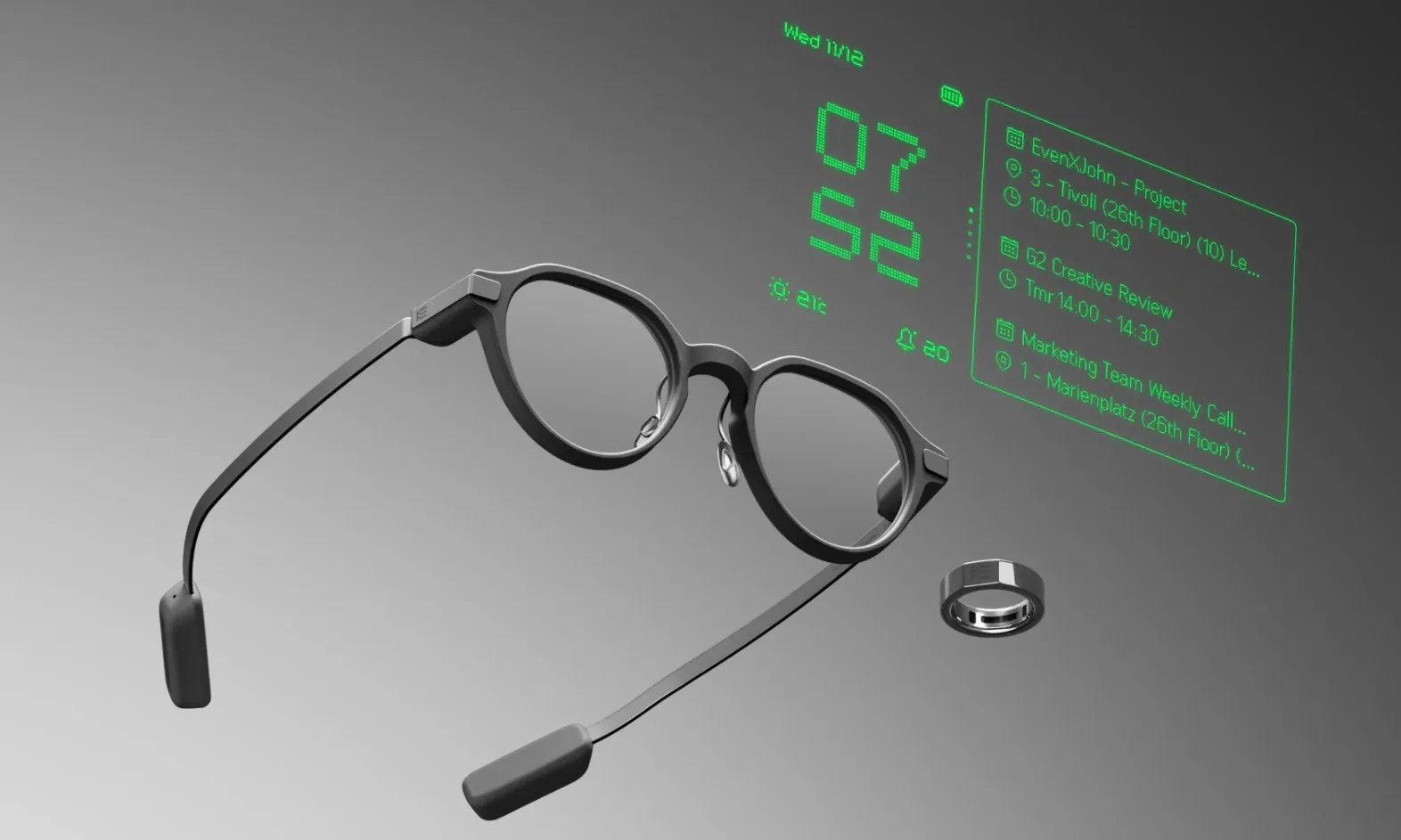
The Even Realities G2 smart glasses and R1 smart ring represent a step forward in wearable technology, combining augmented reality and health tracking in compact designs. Spencer Scott Pugh highlights how the G2 glasses feature a green monochrome heads-up display (HUD) that overlays information like translations or transcriptions in real time, making them practical for tasks such as public speaking. The R1 ring, on the other hand, offers health monitoring and touchpad controls, serving as a versatile companion to the glasses in various scenarios.
Discover how these devices handle real-world applications, including professional and educational environments. Gain insight into the G2 glasses’ AI-driven capabilities, the R1 ring’s approach to tracking health metrics and how open source software contributes to their adaptability. This rundown provides a detailed look at their functionality, design and potential limitations.
Augmented Reality
TL;DR Key Takeaways :
- The G2 smart glasses and R1 smart ring integrate augmented reality (AR) and health tracking, targeting professionals, academics and tech enthusiasts with niche applications.
- The G2 glasses feature a green monochrome heads-up display (HUD) with real-time transcription, translation, AI-powered meeting notes and teleprompter functionality for productivity and communication.
- The R1 smart ring acts as a health tracker and controller for the G2 glasses, monitoring metrics like steps, heart rate, sleep patterns and SpO2 levels, while offering tactile feedback and a sleek design.
- Battery life is adequate but not exceptional, with the G2 glasses lasting a typical workday and the R1 ring providing a full day under normal use, though heavy usage may require frequent recharging.
- Open source software enables third-party app development, making the devices future-ready, but limitations like inconsistent touch controls and lack of text message functionality restrict their broader appeal.
Design and Build Quality
Both the G2 glasses and R1 ring emphasize comfort and aesthetics, using lightweight yet durable materials to ensure long-term usability. The G2 glasses improve upon their predecessor, the G1, with a more polished and ergonomic design. Available in two frame styles, round and square, they allow users to select a style that aligns with their personal preferences. Meanwhile, the R1 smart ring features a ceramic-like finish that exudes sophistication and modernity. This attention to detail ensures that both devices not only perform well but also maintain a premium look and feel, appealing to users who prioritize both functionality and style.
Key Features of the G2 Smart Glasses
The G2 smart glasses are equipped with a green monochrome heads-up display (HUD) that overlays critical information directly into the user’s field of vision. This HUD enhances depth perception and provides an immersive, intuitive interface. The glasses are particularly well-suited for productivity and communication, offering features such as:
- Real-time transcription and translation to assist seamless communication across languages.
- AI-powered meeting notes that automatically capture and organize key points.
- Teleprompter functionality, ideal for public speaking and presentations.
Interaction with the G2 glasses is managed through touchpads located on the frames, allowing easy navigation without the need for additional devices. These features make the G2 glasses a valuable tool for professionals, academics and individuals seeking enhanced productivity on the go.

Explore further guides and articles from our vast library that you may find relevant to your interests in smart glasses.
- Google’s New AI Smart Glasses Are Leaving Meta Behind
- Move Over, Ray-Ban Meta: Samsung’s AI Galaxy Smart Glasses Are Finally Coming This Year
- Nothing Al Smart Glasses : Premium AR Features with Everyday Comfort
- Apple Glasses Leak: The Features That Could Kill Meta’s Ray-Bans
- Even Realities G2 Smart Glasses Review : Display Notifications, Navigation & More
- Even G2 Smart Glasses One Month Later : Notifications, Translation and Battery Life
- Even Realities G2 Smart Glasses Built for Busy Professionals
- What It’s Actually Like to Wear the New Rokid AI Glasses
- The Wait Is Almost Over: Apple’s Smart Glasses Just Hit a Major Production Milestone
- The Hidden Genius Behind Apple’s Upcoming Smart Glasses
R1 Smart Ring: Features and Functionality
The R1 smart ring serves as both a standalone health tracker and a complementary device to the G2 glasses. Its integrated touchpad allows users to control the glasses without direct interaction, adding a layer of convenience. Beyond its role as a controller, the R1 ring excels in health monitoring, tracking a variety of metrics such as:
- Steps taken and heart rate for daily activity insights.
- Sleep patterns and skin temperature to assess overall wellness.
- SpO2 levels for monitoring blood oxygen saturation.
The ring’s tactile feedback enhances user interaction, while its sleek and compact design ensures it remains unobtrusive. By combining functionality with style, the R1 ring stands out as a versatile addition to the G2 ecosystem, appealing to users who value both health tracking and convenience.
Battery Life and Portability
Battery performance is a critical consideration for wearable devices and the G2 glasses and R1 ring offer adequate but not exceptional battery life. The G2 glasses come with a charging case that doubles as a portable power source, allowing users to recharge on the go. Under standard usage, the glasses can last through a typical workday, though heavy use may require mid-day recharging.
The R1 ring, on the other hand, provides a full day of battery life under normal conditions. However, users engaging in frequent health monitoring or extended interactions with the glasses may find themselves needing to recharge more frequently. While the battery life is sufficient for most scenarios, it may fall short for users seeking round-the-clock functionality.
Best Use Cases
The G2 glasses and R1 ring excel in specific scenarios, particularly for professionals and academics who benefit from their real-time AI features. These devices are tailored for environments where productivity and accessibility are paramount. Ideal use cases include:
- Business meetings where real-time transcription and translation enhance communication.
- Public speaking engagements that benefit from the teleprompter functionality.
- Academic settings where note-taking and translation tools streamline workflows.
However, their utility for general, everyday tasks remains limited. For example, the inability to reply to text messages directly from either device may frustrate users seeking a more comprehensive wearable solution. This limitation underscores the devices’ focus on niche applications rather than universal functionality.
Open source Software: A Unique Advantage
One of the standout aspects of the Even Realities ecosystem is its open source software, which encourages third-party developers to create custom applications. This approach not only expands the potential capabilities of the G2 glasses and R1 ring but also ensures that the devices can adapt to evolving user needs. While the current feature set is robust, the open source nature of the software positions the G2 and R1 as future-ready devices, capable of growing alongside advancements in wearable technology.
Limitations to Consider
Despite their innovative features and sleek design, the G2 glasses and R1 ring have certain limitations that may impact their appeal. Key drawbacks include:
- The G2 glasses may not be ideal for users who do not wear glasses regularly, as adding prescription lenses can complicate their usability.
- The R1 ring’s touchpad controls can occasionally be inconsistent, requiring multiple attempts to register inputs.
- The lack of functionality for replying to text messages limits their practicality for everyday use.
These limitations highlight the devices’ focus on specialized applications, which may deter users seeking a more versatile wearable experience. While they excel in specific scenarios, their restricted functionality may not meet the expectations of a broader audience.
Final Perspective
The Even Realities G2 smart glasses and R1 smart ring represent a significant step forward in the realm of wearable technology. With their innovative features, sleek design and open source software, they cater to professionals and tech enthusiasts seeking innovative tools for productivity and health tracking. However, their limited practicality for general use and reliance on niche applications may restrict their appeal to a wider audience. For those with specific needs in augmented reality and health monitoring, the G2 and R1 offer a glimpse into the future of wearables, serving as specialized tools that blend functionality with forward-looking design.
Media Credit: Spencer Scott Pugh
Disclosure: Some of our articles include affiliate links. If you buy something through one of these links, Geeky Gadgets may earn an affiliate commission. Learn about our Disclosure Policy.
