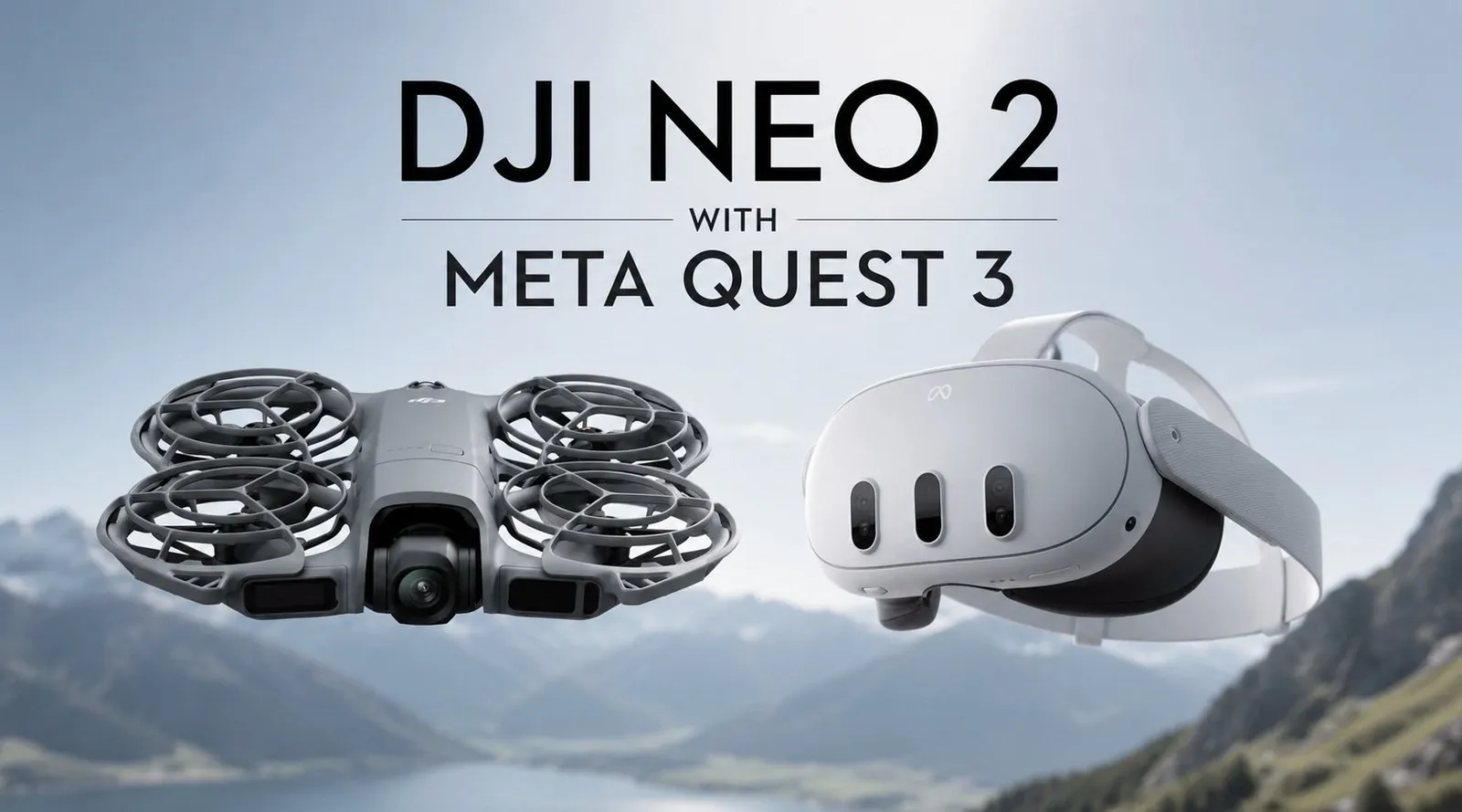
Flying the DJI Neo 2 drone while using the Meta Quest 3 VR headset creates a dynamic First-Person View (FPV) experience that blends advanced technology with immersive visuals. Kola explores this pairing, highlighting how the DJI Fly app enables a live camera feed from the drone to display directly in the VR headset. This setup offers a unique way to navigate and interact with the environment, but it also introduces challenges such as video feed lag and the need for open, obstacle-free spaces to ensure safe operation.
In this overview, you’ll gain insight into the technical setup process, including how to address common issues like wireless interference and optimizing frame rate settings. Explore the differences between using the Meta Quest 3 and alternatives like the Xreal 1 Pro AR glasses and learn practical tips for enhancing flight safety and efficiency. Whether you’re flying for recreation or tackling tasks like roof inspections, this guide provides actionable advice to help you get the most out of this FPV combination.
DJI Neo 2 & Meta Quest 3
TL;DR Key Takeaways :
- Pairing the DJI Neo 2 drone with the Meta Quest 3 VR headset creates an immersive FPV flying experience, ideal for both recreational and practical applications.
- Setup involves using the DJI Fly app for wireless connectivity, but challenges like connection issues, video feed lag and battery limitations may arise.
- The combination performs best in open spaces, offering smooth navigation and reduced collision risks, while confined areas pose challenges due to limited situational awareness.
- Practical applications include roof inspections, landscape surveys and creative videography, benefiting from the real-time immersive camera feed.
- Key recommendations include operating in open environments, maintaining visual contact, using a spotter, optimizing app settings and starting with a fully charged battery for optimal performance.
Equipment and Setup Overview
The evaluation of this FPV setup involved the following equipment:
- DJI Neo 2 drone, known for its advanced camera capabilities and reliable flight performance.
- Meta Quest 3 VR headset, offering high-resolution visuals and wireless connectivity.
- DJI Fly app, essential for controlling the drone and streaming its live camera feed.
- Xreal 1 Pro AR glasses, used as a comparison to assess the immersive quality of the Meta Quest 3.
The DJI Fly app was installed on the Meta Quest 3, allowing wireless connectivity between the drone and the headset. This setup allowed the pilot to experience a real-time, immersive FPV view of the drone’s camera feed. The process was relatively straightforward, but it required attention to detail to ensure seamless operation.
Setup Process and Initial Challenges
Connecting the Meta Quest 3 to the DJI Neo 2 via the DJI Fly app was a simple process overall. The app facilitated wireless pairing and once connected, the drone’s live camera feed was displayed directly in the VR headset. However, some initial challenges emerged during the setup process:
- Connection issues: Initial attempts to pair the devices were hindered by wireless interference and outdated app versions, requiring adjustments and updates.
- Video feed lag: Occasional delays in the live feed were observed, likely due to suboptimal frame rate settings or network interference.
- Battery limitations: The drone’s battery was at 45% capacity during testing, which limited flight time and highlighted the importance of starting with a fully charged battery.
- Restricted navigation: Flying in confined spaces, such as a backyard, proved challenging due to the immersive nature of the VR headset, which obscures peripheral vision and increases the risk of collisions.
These challenges underscore the importance of proper preparation and selecting an appropriate environment for FPV flying with this setup.

Here are more guides from our previous articles and guides related to DJI Neo 2 that you may find helpful.
- What DJI Actually Changed in the New Neo 2 Drone
- Are You Making These 10 DJI Neo 2 Mistakes?
- DJI Neo 2 Tested : the Small Drone That Outperforms Rivals in 4K and Speed
- DJI Neo auto-follow drone for effortless content creation $199
- Why You Should Wait for the Luna Ultra Before Buying DJI
- Why the DJI Osmo Pocket 4P is Launching Under a Completely Different Name in the U.S.
- DJI Osmo Pocket 4P Global Launch is Finally Here
- How the Half-Priced DJI Lito X1 Drone Outperforms the Mini 5 Pro
- How the Insta360 Luna Ultra Challenges DJI’s Cinematic Dominance
- DJI Neo 2 vs Avata 2, the Honest Test That Flips Our Best Drone Pick Today
Performance Observations
The Meta Quest 3 delivered an exceptional FPV experience, offering a level of immersion that surpassed the Xreal 1 Pro AR glasses. The high-resolution visuals and wide field of view provided by the VR headset made flying the DJI Neo 2 both engaging and intuitive. However, the performance of this setup varied depending on the environment and conditions.
In open spaces such as parks or fields, the combination of the DJI Neo 2 and Meta Quest 3 excelled. The expansive environment allowed for smooth navigation and reduced the risk of collisions. Conversely, confined areas like backyards posed significant challenges. The immersive VR view limited situational awareness, making it difficult to avoid obstacles and maintain safe operation.
This setup also demonstrated potential for practical applications, such as roof inspections or surveying hard-to-reach areas. The ability to view the drone’s camera feed in real-time through the VR headset enhanced precision and efficiency. However, it is crucial to maintain visual contact with the drone to comply with aviation regulations and ensure safety.
Key Recommendations for Optimal Use
To make the most of flying the DJI Neo 2 with the Meta Quest 3, consider the following recommendations:
- Choose open environments: Operate the drone in spacious, unobstructed areas to reduce the risk of collisions and improve maneuverability.
- Maintain visual contact: Always keep the drone within your line of sight, even when using FPV mode, to ensure compliance with safety regulations.
- Use a spotter: Enlist the help of a spotter to monitor the drone’s surroundings and provide situational awareness, especially in complex environments.
- Optimize settings: Adjust the frame rate and resolution settings in the DJI Fly app to minimize video feed lag and enhance responsiveness.
- Ensure full battery capacity: Start with a fully charged drone battery to maximize flight time and avoid interruptions during operation.
- Practice in safe conditions: Familiarize yourself with the controls and FPV setup in a controlled environment before attempting more complex flights.
By following these recommendations, you can enhance both the safety and enjoyment of this immersive FPV experience.
Practical Applications and Final Thoughts
The pairing of the DJI Neo 2 with the Meta Quest 3 offers a unique and immersive way to experience drone flying. While it excels in open spaces, its potential extends beyond recreational use. Practical applications such as roof inspections, landscape surveys and creative videography can benefit from the precision and engagement provided by this setup. However, challenges such as limited battery life, video feed lag and the need for situational awareness must be addressed to unlock its full potential.
By preparing adequately, optimizing settings and selecting suitable environments, you can make the most of this innovative combination. Whether for leisure or practical purposes, the DJI Neo 2 and Meta Quest 3 deliver an FPV experience that is both captivating and functional.
Media Credit: Kola
Disclosure: Some of our articles include affiliate links. If you buy something through one of these links, Geeky Gadgets may earn an affiliate commission. Learn about our Disclosure Policy.
