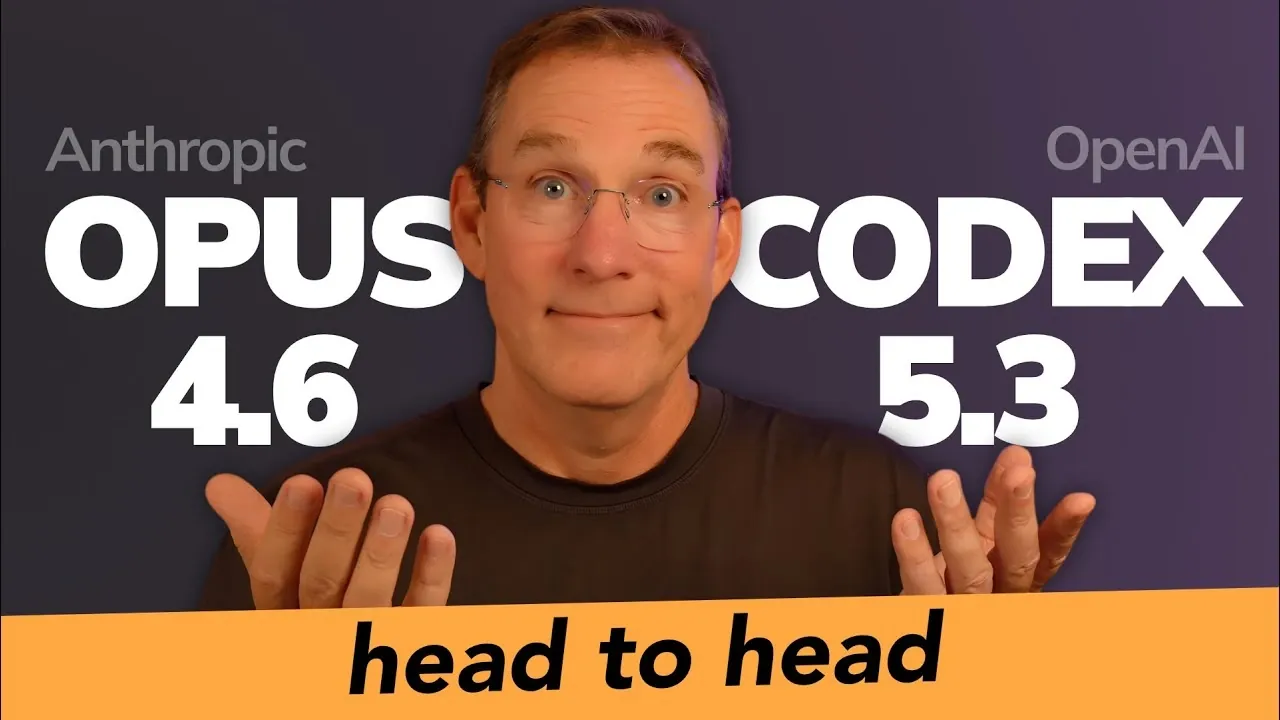
What happens when two of the most advanced AI coding models go head-to-head in real-world scenarios? Opus 4.6 vs Codex 5.3 have both earned reputations as innovative systems, but their strengths and weaknesses reveal stark differences when put to the test. In this breakdown, Matt Maher walks through how these two models perform across critical tasks like planning, writing, and handling complex workflows. From polished technical precision to dynamic adaptability, the feature explores how each model’s unique approach impacts its effectiveness in diverse situations. If you’ve ever wondered which AI model truly delivers when the stakes are high, this is the comparison you didn’t know you needed.
Throughout this feature, you’ll uncover the surprising ways these models tackle challenges like balancing efficiency with capability and adapting to evolving requirements. Whether it’s Opus 4.6’s seamless integration with external systems or Codex 5.3’s near-flawless execution of detailed plans, the insights here will help you weigh their real-world practicality. But the story isn’t as simple as picking a winner, it’s about understanding which model aligns with your goals. With so much at stake in today’s fast-paced workflows, the nuances of this comparison might just change how you think about AI-powered productivity.
Opus 4.6 vs Codex 5.3 Overview
TL;DR Key Takeaways :
- Writing Style: Opus 4.6 excels in formal, professional communication, while Codex 5.3 adopts a conversational and engaging tone, catering to broader audiences.
- Planning and Execution: Codex 5.3 offers high accuracy in execution but may miss some requirements, whereas Opus 4.6 adapts dynamically and provides actionable insights for evolving workflows.
- Tool Integration: Opus 4.6 integrates seamlessly with external tools, enhancing its ability to handle complex tasks, while Codex 5.3 faces challenges in this area.
- Efficiency vs. Precision: Codex 5.3 prioritizes precision and detail but at the cost of speed, whereas Opus 4.6 balances speed and quality, making it ideal for time-sensitive projects.
- Use Case Suitability: Codex 5.3 is better for tasks requiring engineering precision and detailed planning, while Opus 4.6 is more suited for adaptable, efficient, and tool-integrated workflows.
Writing and Communication: Precision Meets Personality
When it comes to writing and communication, Opus 4.6 and Codex 5.3 adopt distinct approaches, catering to different user needs.
Opus 4.6, developed by Anthropics, is designed to deliver polished, coherent, and professional outputs. Its responses are particularly well-suited for tasks requiring high levels of precision and clarity, such as technical documentation, formal overviews, or structured communication. The model’s ability to maintain a consistent tone and logical structure ensures that its outputs are both accurate and easy to understand.
Codex 5.3, on the other hand, has evolved to offer a more conversational and engaging tone. Its responses are imbued with personality and rhythm, making interactions feel more natural and approachable. This adaptability is especially beneficial when engaging with non-technical audiences or creating content that requires a more relatable tone.
For example, when tasked with drafting a technical document, Opus 4.6 produced a clear and structured output that adhered to formal conventions. Codex 5.3, while slightly less formal, adjusted its tone dynamically, making the content more accessible to a broader audience. This distinction highlights the importance of aligning the model’s communication style with the intended purpose of the task.
Planning and Execution: Accuracy vs. Flexibility
Effective planning and execution are critical for AI models tasked with managing complex workflows. In this area, Codex 5.3 and Opus 4.6 showcase contrasting strengths.
Codex 5.3 excels in engineering precision, achieving an impressive 98-99% coverage of critical requirements during execution. This high level of accuracy makes it a reliable choice for tasks that demand meticulous attention to detail. However, like all AI models, it occasionally overlooks certain requirements due to the inherent challenges of planning and prioritization.
Opus 4.6, while slightly less precise in its initial execution, compensates with its adaptability and iterative approach. The model is adept at identifying gaps in its plans and suggesting actionable improvements, making it particularly effective for workflows that require ongoing refinement. This flexibility is invaluable in scenarios where requirements evolve over time, such as agile project management or iterative design processes.
For instance, when tasked with creating a project roadmap, Codex 5.3 delivered a highly detailed plan but required multiple iterations to address overlooked elements. Opus 4.6, by contrast, produced a workable draft more quickly and incorporated feedback seamlessly, demonstrating its strength in dynamic environments.
Opus 4.6 vs Codex 5.3 Tested in the Real World

Master AI coding models with the help of our in-depth articles and helpful guides.
- Claude 4 vs Grok 4 : Which AI Model is Best for AI Coding?
- ChatGPT 5 vs Claude Sonnet: Real-World AI Coding Comparison
- Kimi K2 : The Open-Weight AI Model Transforming Coding
- VSCode Ollama Guide: Add Llama 3.1 Chat for Local AI Coding
- GPT-5.2 vs Opus 4.5 : Head to Head AI Coding Showdown
- New Grok 4 Coder (Sonic) Tested – AI
- OpenAI GPT-5.1 Early Test vs Gemini 3.0 : AI Coding Model
- Sonnet 4.5 vs GLM 4.6 vs Codex : Detailed AI Coding Comparison
- Google’s Secret AI Model Dragontail : Features & Benefits Explored
- How QWEN 3 Coder Outperforms GPT-4.1 in AI Coding
Complex Task Handling: The Role of Ecosystem Integration
The ability to handle complex tasks is a key differentiator between advanced AI models. Both Opus 4.6 and Codex 5.3 were tested on tasks such as researching, writing, publishing articles, generating images, and creating HTML outputs. Their performance in these scenarios underscores the importance of a model’s operational ecosystem.
Opus 4.6 uses its versatile operational ecosystem to enhance its capabilities. By integrating seamlessly with external tools such as Chrome extensions, it can perform tasks like generating images, embedding them into HTML, and producing polished outputs with minimal manual intervention. This ability to use external resources effectively makes Opus 4.6 a powerful tool for managing multifaceted projects.
Codex 5.3, despite its superior engineering capabilities, encounters challenges with tool integration. For example, it struggles to generate and embed images independently, limiting its ability to produce fully polished outputs without additional user input. This limitation highlights the significance of a model’s ecosystem in determining its overall effectiveness and efficiency.
Efficiency vs. Capability: Finding the Optimal Balance
Efficiency is another area where Opus 4.6 and Codex 5.3 diverge. Codex 5.3, particularly in its “Extra High” setting, prioritizes precision and detail, often refining outputs to achieve near-perfect accuracy. While this approach results in highly detailed and reliable results, it can also lead to longer processing times and reduced efficiency.
Opus 4.6, by comparison, strikes a better balance between speed and quality. It completes tasks with fewer iterations and within shorter timeframes, making it a more practical choice for time-sensitive projects. For example, when tasked with creating a detailed project plan, Codex 5.3 produced a highly accurate document but required significant time and multiple iterations to finalize it. Opus 4.6, while slightly less detailed, delivered a usable plan more quickly, demonstrating its suitability for scenarios where efficiency is a priority.
Key Insights for Decision-Making
The comparison between Opus 4.6 and Codex 5.3 reveals several important insights that can guide your choice of model:
- Writing Style: Opus 4.6 excels in formal and professional communication, while Codex 5.3 offers a more conversational and engaging tone for broader audiences.
- Planning and Execution: Codex 5.3 delivers high accuracy in execution but may overlook some requirements, whereas Opus 4.6 provides actionable insights and adapts effectively to evolving workflows.
- Tool Integration: Opus 4.6 benefits from a robust operational ecosystem, allowing seamless integration with external tools and enhancing its ability to handle complex tasks.
- Efficiency: Codex 5.3 prioritizes precision but at the expense of speed, while Opus 4.6 offers faster results with acceptable accuracy, making it ideal for time-sensitive projects.
Making the Right Choice
Selecting between Opus 4.6 and Codex 5.3 depends on your specific project requirements and priorities. If your work demands engineering precision, detailed planning, and high accuracy, Codex 5.3 is the stronger option. However, if you need a model that integrates seamlessly with external tools, adapts to changing requirements, and delivers results efficiently, Opus 4.6 is the better choice.
By understanding the unique strengths and limitations of each model, you can make an informed decision that aligns with your project’s goals, timelines, and constraints. Both models represent significant advancements in AI technology, offering powerful tools to enhance productivity and streamline complex workflows.
Media Credit: Matt Maher
Disclosure: Some of our articles include affiliate links. If you buy something through one of these links, Geeky Gadgets may earn an affiliate commission. Learn about our Disclosure Policy.
