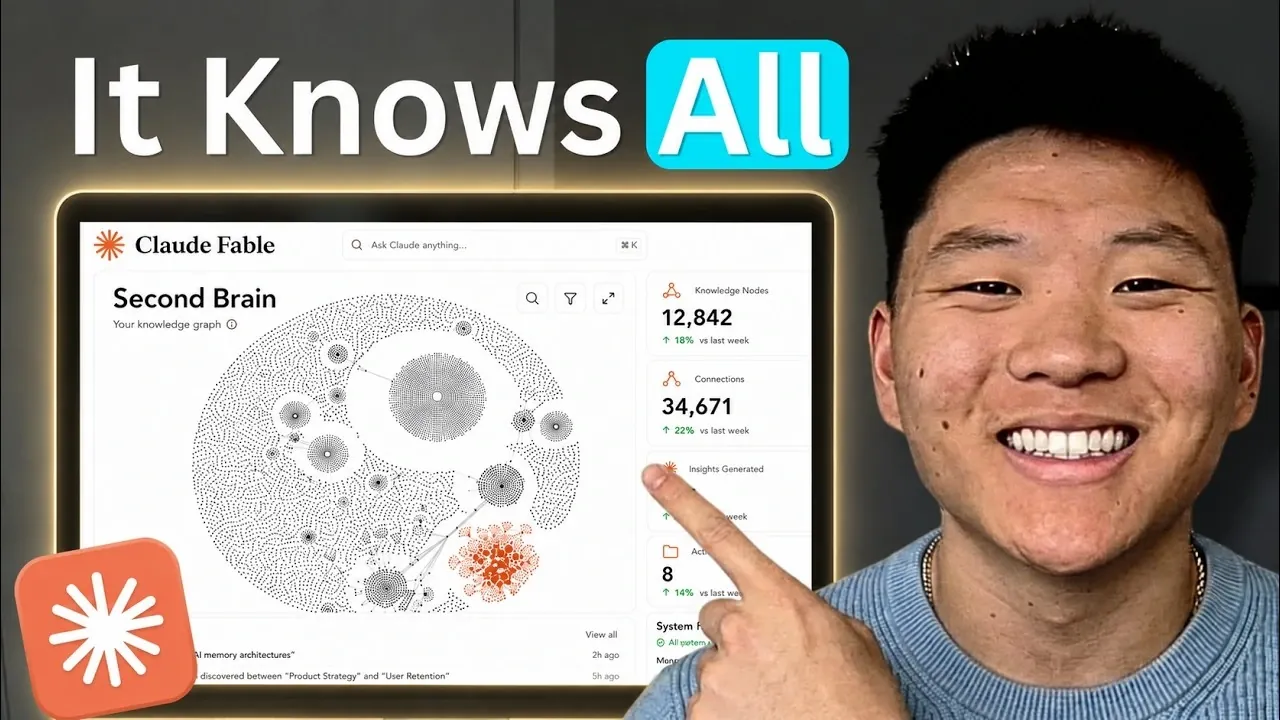
Claude Fable, an AI model, can be adapted into a structured system for managing knowledge and workflows, as demonstrated by Nate Herk. Using the “Four C’s” framework—Context, Connections, Capabilities and Cadence, he explains how to create an AI Operating System (AIOS) that organizes information, automates repetitive tasks and evolves with changing demands. This approach ensures that processes remain efficient and accessible, even when handling complex or dynamic projects.
Explore how to structure your data with markdown files and folder hierarchies, connect live data sources through APIs and design agents for tasks like content generation or data analysis. Gain insight into addressing challenges such as session limits and cost management, while learning techniques to balance automation with manual input. This explainer provides actionable steps for building an AIOS that aligns with both individual and collaborative goals.
What is Claude Fable?
TL;DR Key Takeaways :
- Claude Fable is a innovative AI model designed for complex reasoning, multi-step problem-solving and robust cybersecurity, making it ideal for managing intricate workflows despite its higher costs and session limitations.
- An AI Operating System (AIOS) centralizes knowledge, automates workflows and enhances productivity using the “Four C’s” framework: Context, Connections, Capabilities and Cadence.
- Building an AIOS involves organizing data, integrating external sources via APIs and developing specialized agents to handle tasks like data analysis and workflow automation.
- Overcoming challenges like high costs, session limits and maintaining accuracy requires balancing automation with manual oversight and continuously evaluating the system’s cost-effectiveness.
- Adopting an AIOS fosters efficiency, collaboration and innovation, with a focus on iterative improvement, team integration and future-proofing through a tool-agnostic, adaptable design.
Claude Fable is a innovative AI model designed to handle complex reasoning and knowledge-intensive tasks. Its capabilities include multi-step problem-solving, deep contextual understanding and robust cybersecurity measures. These features make it particularly well-suited for managing intricate workflows and solving sophisticated problems. However, its premium nature comes with trade-offs, such as higher costs and session limitations compared to earlier models. Despite these challenges, Claude Fable stands out as a powerful tool for individuals and organizations aiming to optimize their processes and achieve greater efficiency.
Creating Your AI Operating System (AIOS)
An AI Operating System (AIOS) serves as a centralized hub for managing information, automating tasks and improving decision-making. By using Claude Fable, you can design a system tailored to your unique needs and goals. The foundation of an effective AIOS lies in the “Four C’s” framework, which ensures a structured and adaptable approach:
- Context: Organize both static and dynamic data for seamless retrieval and analysis, making sure that information is always accessible and actionable.
- Connections: Integrate live data sources using APIs and command-line interfaces (CLIs) to enable real-time updates and maintain a flow of relevant information.
- Capabilities: Develop workflows, automations and specialized skills that align with your objectives, enhancing the system’s overall functionality.
- Cadence: Automate repetitive tasks to save time, maintain consistency and allow for more focus on strategic activities.
By following this framework, you can create a system that not only organizes information but also actively contributes to your productivity and decision-making processes.

Become an expert in Claude Fable with the help of our in-depth articles and helpful guides.
- Claude Mythos 5 and Fable 5 Officially Launch
- How Xbox’s 2026 Showcase Changes the Game for Next-Gen Consoles
- Meet Claude Mythos : Anthropic’s Powerful Successor to Opus
- Why Anthropic is Delaying the Public Release of Claude Mythos
- Anthropic Claude Mythos AI World’s Newest Obsession a 10-Trillion Parameter
- Anthropic Leak Reveals Claude Mythos Model and Cybersecurity Risks
- A Complete Breakdown of the Claude Mythos 1 Leak and Features
- ChatGPT 5.6 vs Claude Mythos 5 : Leaks Reveal Two Very Different Futures for AI
- Why Anthropic is Secretly Holding Back the Claude Mythos Release
- Why Claude Mythos May Become an Opus Integration Rather Than a Public AI
Adopting a New Mindset
Transitioning to an AIOS requires a shift in how you approach tools and processes. Instead of relying on scattered applications, you consolidate functions into a unified system. This shift involves iterative improvement, where feedback loops are used to refine the system over time. Encouraging team adoption is equally critical, as shared knowledge management amplifies the system’s value and fosters collaboration. By embracing this mindset, you can unlock the full potential of your AIOS and ensure it evolves alongside your needs.
How to Build Your AIOS
Building an effective AIOS begins with a clear plan and the right tools. Start by organizing your information using markdown files and structured folder systems. These foundational tools provide a framework for managing data efficiently. Next, use APIs to connect external data sources, making sure secure integrations through scoped permissions. This step allows your AIOS to access and process real-time information.
To further enhance the system’s utility, consider developing specialized agents to handle specific tasks, such as data analysis, content creation, or workflow automation. These agents act as extensions of the AIOS, allowing it to perform a wide range of functions tailored to your needs. By combining these elements, you can create a robust and adaptable system that supports your goals.
Overcoming Challenges
While Claude Fable offers significant advantages, it is not without its challenges. The high cost and session limits may pose barriers for some users, while its robust safeguards, though essential for security, can occasionally restrict functionality. To address these issues effectively:
- Regularly verify AI-generated outputs to maintain accuracy and trust in the system.
- Strike a balance between automation and manual oversight to ensure reliability and avoid over-dependence on AI.
- Continuously evaluate the cost-effectiveness of your AIOS to maximize its value and ensure it aligns with your budget.
By proactively managing these challenges, you can ensure that your AIOS remains a valuable and reliable tool.
Boosting Efficiency and Productivity
To fully use your AIOS, treat Claude Fable as a collaborative partner rather than just a tool. Use interview-style prompts to extract insights, refine workflows and solve problems. Regularly update the system’s architecture and skills to adapt to changing needs and priorities. This iterative approach allows you to unlock new levels of efficiency, creativity and problem-solving, making sure that your AIOS continues to deliver value over time.
Team Integration and Knowledge Sharing
For organizations, teaching team members to build and use their own AIOS can foster innovation and collaboration. Shared knowledge repositories reduce duplication and inefficiency, while clear communication and training ensure smooth adoption. A well-integrated AIOS can become a cornerstone of team productivity, allowing everyone to work smarter and more cohesively. By promoting knowledge sharing and collaboration, you can create a culture of continuous improvement and innovation.
Future-Proofing Your AIOS
Designing your AIOS with adaptability in mind is essential for long-term success. A tool-agnostic approach ensures that your system can evolve alongside advancements in AI and automation. By viewing your AIOS as a long-term investment, you can build a resilient framework that remains relevant as technology progresses. This forward-thinking strategy allows you to stay ahead of the curve and continue reaping the benefits of your AIOS in an ever-changing landscape.
Media Credit: Nate Herk | AI Automation
Disclosure: Some of our articles include affiliate links. If you buy something through one of these links, Geeky Gadgets may earn an affiliate commission. Learn about our Disclosure Policy.
