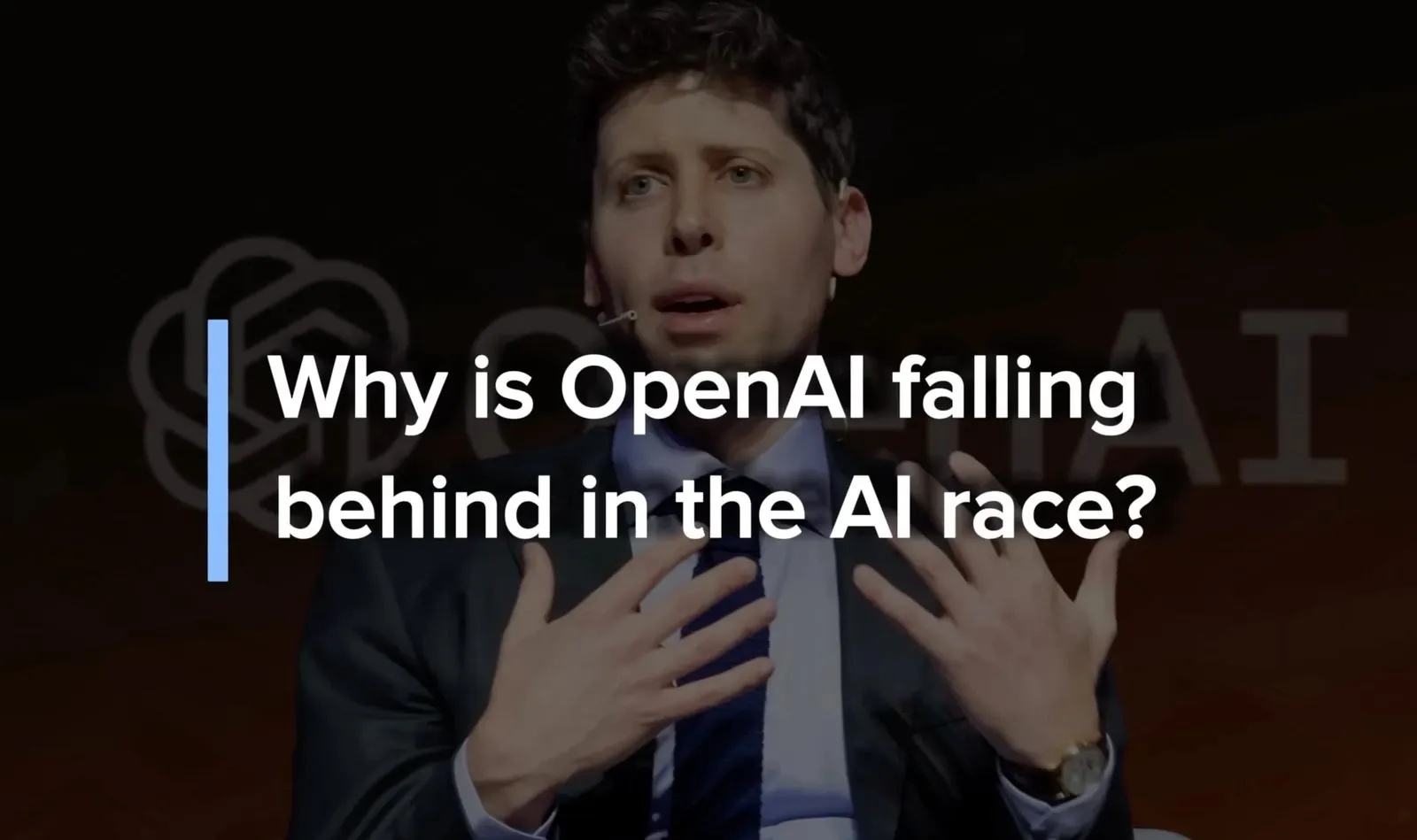
OpenAI, once celebrated as a trailblazer in artificial intelligence with the unprecedented success of ChatGPT, now finds itself at a crossroads. Economy Media explores how the company’s rapid rise has exposed critical vulnerabilities, from escalating financial losses, estimated at $200 million per month, to a noticeable slowdown in innovation. For instance, recent updates to its AI models have yielded only modest performance gains of around 15%, raising concerns about its ability to maintain a competitive edge in a fast-evolving industry. These challenges, compounded by internal instability and intensifying competition, paint a complex picture of a company struggling to sustain its early momentum.
Dive into this explainer to understand the multifaceted pressures shaping OpenAI’s current trajectory. You’ll gain insight into the financial hurdles that threaten its sustainability, the strategic missteps contributing to declining user engagement and the growing competition from rivals like Google’s Gemini. Additionally, the breakdown examines how internal leadership turnover and employee dissatisfaction are affecting the company’s capacity to innovate and adapt. These interconnected dynamics offer a deeper understanding of what’s at stake for OpenAI as it navigates one of the most critical junctures in its history.
The Meteoric Rise of OpenAI
TL;DR Key Takeaways :
- OpenAI is facing significant financial challenges, with daily operating costs exceeding $5 million and monthly losses of $200 million, raising concerns about its long-term sustainability.
- The pace of innovation at OpenAI has slowed, leading to a decline in user engagement and putting its reputation as an industry leader at risk.
- Intensifying competition from major players like Google’s Gemini and other emerging platforms threatens OpenAI’s market dominance and highlights the need for differentiation.
- Internal instability, including leadership turnover and employee dissatisfaction, is undermining the company’s strategic direction and operational efficiency.
- Structural and strategic hurdles, such as high infrastructure costs and reliance on external funding, pose significant risks to OpenAI’s ability to achieve sustainable growth and profitability.
OpenAI’s journey to prominence was marked by the extraordinary success of ChatGPT, which became the fastest-growing consumer application in history, attracting over 100 million users within just two months of its launch. This achievement positioned OpenAI as a leader in artificial intelligence, raising expectations among users, investors and industry stakeholders. However, the rapid growth also exposed vulnerabilities in the company’s long-term strategy, as the demands of scaling up began to strain its resources and infrastructure.
The company’s early success was fueled by its ability to deliver innovative AI solutions that resonated with a broad audience. Yet, as the industry matures, OpenAI must now contend with the reality that maintaining its position at the forefront of innovation requires more than just initial breakthroughs, it demands sustained progress and adaptability in the face of growing challenges.
Financial Struggles Threaten Sustainability
OpenAI’s financial health has become a pressing concern. The company’s operating costs exceed $5 million per day, yet its revenue currently covers only 60% of these expenses. This imbalance has resulted in monthly losses estimated at $200 million, forcing OpenAI to rely heavily on external investments to remain operational. Such a dependency on outside funding raises questions about the company’s financial sustainability in the long term.
In response to these challenges, OpenAI has announced ambitious plans to raise $40 billion in private funding and explore ad-based revenue streams. While these measures may provide temporary relief, they are unlikely to fully offset the rising costs associated with maintaining and expanding its AI infrastructure. The financial strain underscores the urgent need for OpenAI to develop a more sustainable business model that balances growth with profitability.

Expand your understanding of OpenAI with additional resources from our extensive library of articles.
- OpenAI Gumdrop Pen, Local AI, Voice and Handwriting Capture
- ChatGPT 5.3 Codex vs Claude Opus 4.6 : Best Fit for Coding, Tasks & More
- Why Did OpenAI Shut Down Sora? The Real Reason Explained
- OpenClaw & OpenAI : Key Security Issues, Token Usage and Next Steps
- OpenAI Dime Leak: What the Ad Showed and Why OpenAI Denied It
- Will OpenClaw Stay Open Source After OpenAI Integrates the Platform?
- ChatGPT 5.4 Pro vs Gemini 3.1 vs Claude Opus 4.6 on Reasoning Tests
- Microsoft vs OpenAI : Azure Hosting Dispute & AWS Deal
- OpenAI Revenue Outlook for 2026 & the $8 ChatGPT Option
- Why Did OpenAI Shut Down Sora? The Real Reason Explained
Innovation Slows, User Engagement Declines
OpenAI’s reputation as an innovation leader is being tested by a noticeable slowdown in the pace of its technological advancements. Recent updates to its AI models have delivered only incremental improvements, with performance gains of approximately 15%. This stagnation has contributed to a decline in user engagement, as evidenced by a drop in the average daily usage of ChatGPT from 27 minutes to 21 minutes. Such trends suggest that users may be losing interest in the platform, potentially due to unmet expectations for new features or capabilities.
The company’s ability to deliver meaningful innovations will be critical to reversing this trend. Without significant breakthroughs, OpenAI risks losing its competitive edge in an industry where technological progress is a key driver of success. To remain relevant, the company must prioritize research and development efforts that push the boundaries of what AI can achieve.
Rising Competition in the AI Market
The competitive landscape of the AI industry has become increasingly crowded, with major players like Google’s Gemini and other emerging platforms rapidly closing the gap. These competitors are using their extensive resources and integrating advanced AI capabilities into widely used products, offering compelling alternatives to OpenAI’s offerings.
As a result, OpenAI’s market dominance is under threat. The narrowing technological gap between OpenAI and its competitors makes it more challenging for the company to justify its premium position in the market. This intensifies the pressure on OpenAI to innovate and differentiate its products in order to retain its user base and attract new customers.
Internal Instability Compounds Challenges
In addition to external pressures, OpenAI is facing significant internal challenges. Leadership turnover has been a recurring issue, with 25% of key executives departing in recent years. High-profile exits, including co-founders and senior leaders, have created uncertainty about the company’s strategic direction and raised concerns about its ability to navigate its current challenges effectively.
Employee dissatisfaction is another growing concern. Surveys indicate that 40% of staff are worried about the lack of clear leadership, which has contributed to declining morale. This internal instability not only affects the company’s operational efficiency but also undermines its ability to attract and retain top talent, a critical factor in maintaining its competitive edge in the AI industry.
Structural and Strategic Hurdles
OpenAI’s business model faces significant structural challenges that threaten its long-term viability. The company’s high infrastructure costs are difficult to reconcile with its current revenue levels, creating a financial imbalance that is unsustainable in the long run. While OpenAI has outlined plans to invest over $100 billion in AI development, this ambitious approach carries substantial financial risks, particularly in the absence of a clear path to profitability.
The introduction of ads as a potential revenue source has also raised concerns. While this strategy may generate additional income, it risks alienating users who value an ad-free experience. Such a move could impact user retention and further complicate the company’s efforts to achieve sustainable growth.
What Lies Ahead for OpenAI?
The future of OpenAI is fraught with uncertainty. Its dominance in the AI industry is being challenged by competitors that are advancing both technologically and commercially. Without significant adaptations to its business model and a renewed focus on innovation, OpenAI risks deeper financial crises and potential bankruptcy by 2027.
To reclaim its leadership position, OpenAI must address its financial instability, reignite innovation and stabilize its internal operations. The company’s ability to balance rapid technological advancements with financial sustainability will ultimately determine whether it can overcome its current challenges or continue its downward trajectory.
- Will OpenAI find a way to regain its competitive edge?
- Can it adapt its business model to ensure long-term sustainability?
- Or will it succumb to the pressures of a rapidly evolving industry?
The answers to these questions will not only shape OpenAI’s future but also influence the broader trajectory of artificial intelligence innovation in the years to come.
Media Credit: Economy Media
Disclosure: Some of our articles include affiliate links. If you buy something through one of these links, Geeky Gadgets may earn an affiliate commission. Learn about our Disclosure Policy.
