What if the key to unlocking GPT-5’s full potential isn’t just in what you ask, but how you ask it? As AI models grow more sophisticated, the art of crafting prompts has become just as critical as the technology itself. ChatGPT 5, with its enhanced instruction-following and streamlined architecture, promises unprecedented precision and depth. But here’s the catch: these advancements demand a more thoughtful and strategic approach. A poorly structured prompt can derail even the most powerful AI, leaving you with irrelevant or lackluster results. The good news? With the right techniques, you can transform ChatGPT 5 into a tool that delivers outputs tailored to your exact needs, every time.
Jeff Su explains how to refine your prompts to harness GPT-5’s advanced capabilities and avoid common pitfalls. From using “router nudge phrases” to structuring instructions with XML-like clarity, we’ll unpack strategies that make the difference between mediocre and exceptional outputs. Whether you’re crafting concise summaries, generating in-depth analyses, or tackling complex projects, these techniques will help you unlock consistent, high-quality results. By the end, you’ll not only understand what makes ChatGPT 5 tick but also gain the tools to master it. After all, the way you prompt shapes the way it performs.
Optimizing ChatGPT 5 Prompts
TL;DR Key Takeaways :
- GPT-5 introduces model consolidation, using an invisible router to select the best model for your input, emphasizing the need for clear and precise prompts to achieve optimal results.
- The model excels at following explicit instructions, but poorly structured or vague prompts can hinder its performance, making clarity and precision essential.
- Practical strategies to optimize ChatGPT 5 outputs include using router nudge phrases, controlling response verbosity, using prompt optimization tools, structuring prompts with XML-like formats, and applying iterative refinement techniques like the “Perfection Loop.”
- Advanced techniques, such as saving reusable templates, combining multiple strategies, and prioritizing clarity, can further enhance GPT-5’s performance, especially for complex tasks.
- To fully harness ChatGPT 5’s potential, users must adopt a strategic and deliberate approach to prompting, using its enhanced capabilities for both simple and intricate projects.
What’s New in GPT-5?
OpenAI’s GPT-5 introduces several updates that directly impact how you interact with the model. Understanding these changes is essential for optimizing your prompts and achieving the best possible results.
- Model Consolidation: ChatGPT 5 operates with fewer models, relying on an invisible router to determine the most suitable model for your input. This consolidation improves efficiency but places greater emphasis on the clarity of your prompts. Ambiguous or vague instructions can lead to suboptimal outputs, making precision a critical factor in achieving success.
- Enhanced Instruction Following: The model now excels at following clear, explicit instructions. However, poorly structured or imprecise prompts can hinder its ability to deliver accurate and relevant responses. This makes it essential to focus on crafting well-defined and unambiguous instructions.
These updates enhance GPT-5’s capabilities but also require users to adopt a more deliberate and thoughtful approach to prompting.
Five Practical Strategies to Optimize GPT-5 Outputs
To maximize ChatGPT 5’s performance and adapt to its updated architecture, consider implementing these five actionable strategies:
1. Use Router Nudge Phrases
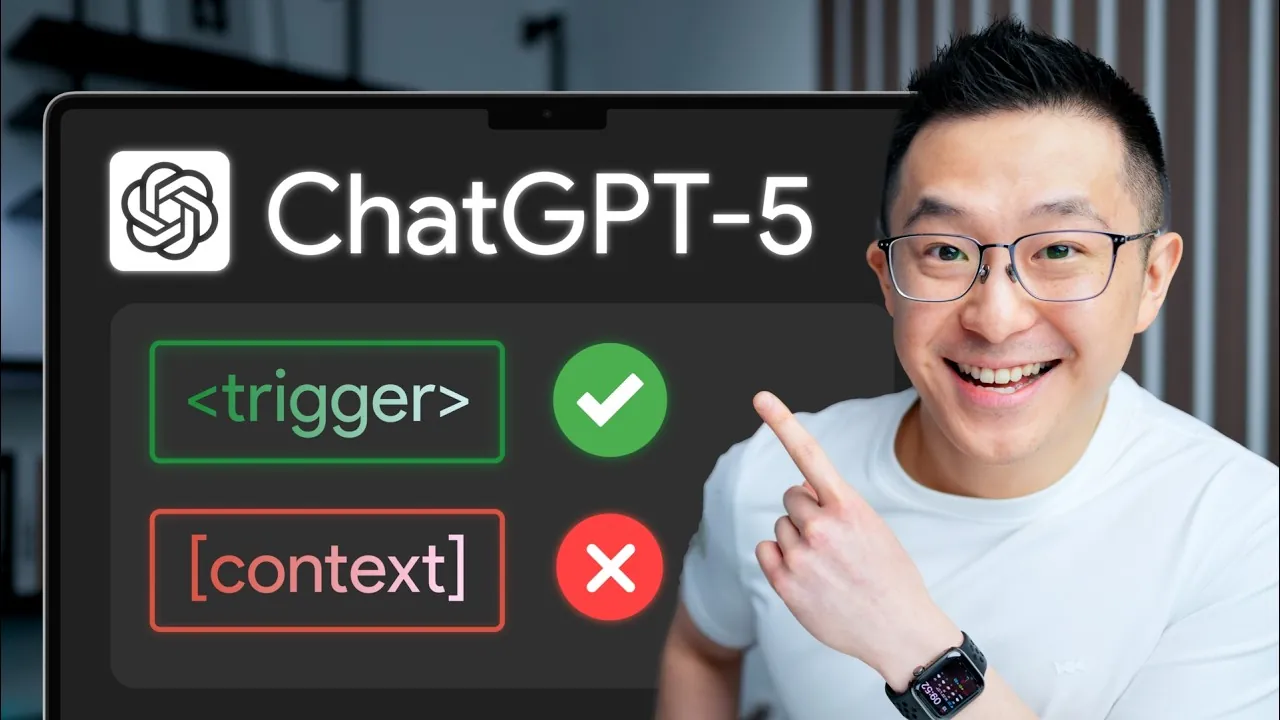
Incorporate specific phrases into your prompts to guide the invisible router toward selecting the most appropriate model for your task. For example, phrases like “analyze this carefully” or “consider all possibilities” can encourage deeper reasoning and improve the relevance of the model’s responses. These nudge phrases act as subtle cues, helping GPT-5 better align its outputs with your expectations.
2. Control the Level of Detail
Tailor the verbosity of GPT-5’s responses to suit your specific needs by explicitly stating the desired level of detail. For instance:
- For concise outputs: “Provide a brief summary.”
- For detailed explanations: “Explain this in depth.”
This approach ensures that the model’s responses align with your requirements, whether you need a quick overview or a comprehensive analysis.
3. Use Prompt Optimization Tools
Use OpenAI’s prompt optimization tools and meta-prompts to refine your instructions. These tools help you structure prompts for greater clarity and precision, making sure GPT-5 interprets your requests accurately. For example, a meta-prompt might include a preamble to establish context and specify the desired output format. This structured approach minimizes ambiguity and enhances the quality of the model’s responses.
4. Structure Prompts with XML Sandwiches
Organize your prompts into labeled sections using an XML-like format to improve clarity and reduce confusion. For example:
- Summarize the following article.
- The article discusses advancements in AI technology.
- Provide a bullet-point summary.
This method helps GPT-5 better understand your requirements, resulting in more accurate and relevant outputs. By breaking down complex instructions into clearly defined sections, you can streamline the model’s processing and enhance its performance.
5. Apply the Perfection Loop
Encourage GPT-5 to critique and refine its outputs until they meet your standards. For example, you might instruct the model to “Evaluate your response for accuracy and completeness. Revise it if necessary.” This iterative process is particularly effective for generating high-quality, complex outputs, such as detailed reports, technical documentation, or production-ready code. By fostering a cycle of self-improvement, you can achieve consistently superior results.
Prompt ChatGPT 5 the Right Way
Dive deeper into ChatGPT 5 prompting with other articles and guides we have written below.
- Master ChatGPT 5 Prompts With This Simple Strategy
- This One Prompt Turns ChatGPT 5 Into a Creative Powerhouse
- How to Write ChatGPT 5 Prompts for Excellent Responses
- How to Write ChatGPT 5 Prompts for Better Results and Efficiency
- ChatGPT 5 Prompt Secrets for Maximum Efficiency & Productivity
- ChatGPT 5 Prompt Writing Techniques for Better AI Responses
- 10 Biggest ChatGPT 5 Problems and How to Fix Them
- How ChatGPT 5 is Transforming Creative Writing and Storytelling
- 5 Simple ChatGPT Tricks to Unlock Its Full Potential in 2025
- 5 Proven Techniques to Get Better Results From ChatGPT-5
Advanced Prompting Techniques
For even more refined outputs, consider incorporating these advanced strategies into your workflow:
- Save Reusable Templates: Store frequently used phrases and prompt structures in a text expander or similar tool. This not only saves time but also ensures consistency across tasks, making it easier to replicate successful results.
- Combine Multiple Techniques: For complex tasks, integrate strategies such as nudge phrases, verbosity control, and XML structures. This layered approach allows you to address multifaceted challenges and achieve optimal results.
- Prioritize Clarity: Clear, explicit, and well-structured prompts are essential for using GPT-5’s enhanced instruction-following capabilities. Avoid vague or ambiguous language, and focus on providing detailed, precise instructions to guide the model effectively.
These advanced techniques can help you unlock even greater potential from GPT-5, particularly when tackling intricate or high-stakes projects.
Maximizing GPT-5’s Potential
GPT-5’s advancements in model consolidation and instruction following present significant opportunities for improved performance. However, these changes also require a more deliberate and strategic approach to prompting. By employing techniques such as router nudge phrases, verbosity control, and structured prompts, you can effectively navigate these updates and consistently achieve high-quality outputs. Whether addressing straightforward queries or managing complex projects, these strategies will enable you to fully use GPT-5’s capabilities and achieve your desired outcomes.
Media Credit: Jeff Su
Disclosure: Some of our articles include affiliate links. If you buy something through one of these links, Geeky Gadgets may earn an affiliate commission. Learn about our Disclosure Policy.
