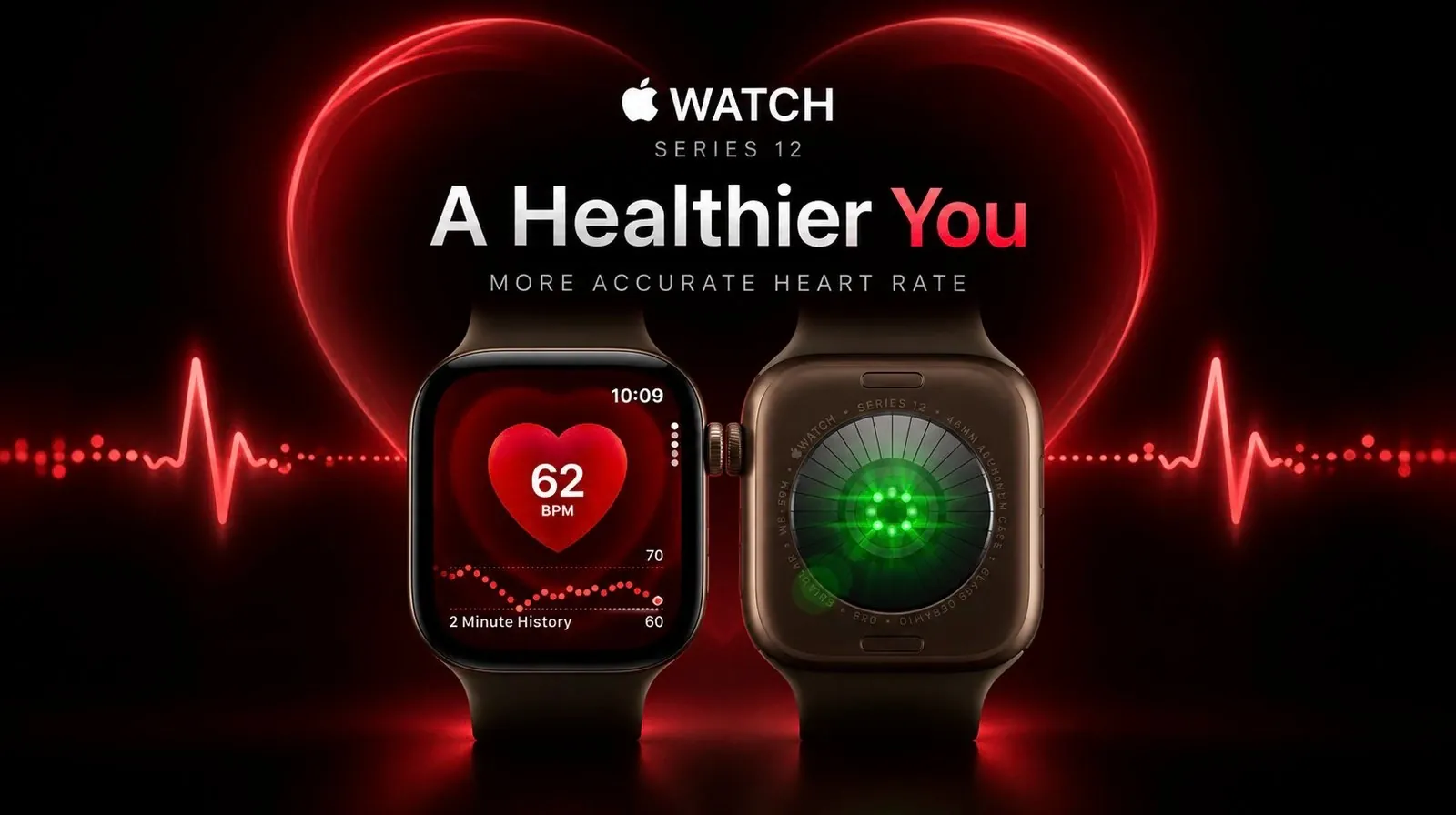
Apple’s latest internal study positions the Apple Watch Series 12 and Ultra 4 as leaders in heart rate accuracy, surpassing competitors like Garmin, Google Pixel Watch and WHOOP. Using the Polar H10 chest strap as a benchmark, the study evaluated performance across activities ranging from high-intensity interval training (HIIT) to daily routines. Notably, Apple’s devices demonstrated lower error rates, particularly in scenarios with rapid heart rate fluctuations. Chase the Summit examines these findings while addressing concerns about the study’s internal nature and the need for independent validation.
In this feature, you’ll gain insight into how Apple’s reduced sampling intervals and advanced algorithms contribute to its claimed accuracy edge. Explore how competitors like Garmin and Pixel Watch compare in both workout and everyday contexts and understand the significance of metrics like Mean Absolute Error (MAE) and Root Mean Square Error (RMSE) in evaluating performance. This breakdown also highlights the broader implications of relying on internal studies and why third-party validation remains crucial for consumers seeking reliable data.
Study Design and Methodology
TL;DR Key Takeaways :
- Apple’s internal study claims the Apple Watch Series 12 and Ultra 4 outperform competitors like Garmin and Google Pixel Watch in heart rate accuracy during workouts and daily activities.
- The study used the Polar H10 chest strap as a benchmark and evaluated devices across diverse activities, highlighting Apple’s advancements in heart rate monitoring technology.
- Apple’s latest models feature reduced heart rate sampling intervals (5 seconds) and advanced algorithms, which the company asserts contribute to superior accuracy despite competitors offering faster sampling rates.
- Performance rankings placed Apple at the top for both workouts and daily activities, with the Google Pixel Watch 4 and Huawei Watch 5 trailing closely behind.
- The study’s internal nature raises concerns about potential bias, emphasizing the need for independent third-party validation to confirm the findings and ensure impartiality.
The study evaluated heart rate accuracy across a diverse range of activities, including high-intensity workouts and routine daily movements. Participants wore multiple devices simultaneously to ensure consistent comparisons. The devices tested included:
- Apple Watch Series 12 and Ultra 4
- Garmin Forerunner 970
- Google Pixel Watch 4
- Huawei Watch 5
- Samsung Galaxy Watch 8
- Whoop 5.0
- Aura Ring Gen 5
The Polar H10 chest strap served as the control device, providing highly accurate heart rate data for comparison. This setup enabled researchers to measure how closely each wearable’s readings aligned with the Polar H10’s results. By incorporating a variety of devices and scenarios, the study aimed to provide a comprehensive assessment of heart rate monitoring performance.
Sampling Rates: A Critical Component of Accuracy
Heart rate sampling intervals, or the frequency at which devices record heart rate data, are a key factor in determining accuracy. Apple has introduced a significant enhancement in its latest models, reducing the sampling interval to 5 seconds, a substantial improvement over the 5-minute intervals used in earlier versions.
Competitors like Garmin, however, offer even faster sampling rates, ranging from 0.25 to 0.5 seconds. Despite this apparent advantage, Apple asserts that its devices achieve superior accuracy due to advanced algorithms that process and interpret heart rate data more effectively. This claim underscores the importance of software optimization in addition to hardware capabilities, though it also raises questions about how these algorithms compare to those of competitors.

Learn more about Apple Watch Series 12 with other articles and guides we have written below.
- Apple Watch Series 12 Leak Hints at a Massive Battery Upgrade
- Apple Watch Series 12 Could Feature 7 Upgrades This Year
- Apple Watch Series 12 Leak Reveals a Surprise Change for Upgraders
- Apple Watch 12 & Ultra 4: Leaks Reveal a Big Hardware Change
- Apple Watch Series 12 Leaks: New Chip, Siri AI and Fitness Tracking Upgrades
- Apple Watch Series 12 Leaks Reveal the Biggest Redesign Fans Didn’t See Coming
- Apple Watch Series 12: 3 Upgrades Leaked Right Before the Event
- Apple is Reportedly Changing How the Apple Watch Looks with the Series 12
- What the Apple Watch Series 12 Leaks Reveal About the S12 Chip
- The Apple Watch Series 12 May Bring the Biggest Change in Years
Accuracy Metrics: Evaluating Performance
The study employed two widely recognized metrics to assess the accuracy of the devices:
- Mean Absolute Error (MAE): This metric measures the average deviation of a device’s readings from the benchmark, providing a straightforward evaluation of accuracy.
- Root Mean Square Error (RMSE): This metric emphasizes larger deviations, offering insight into how well devices handle significant fluctuations in heart rate.
The Apple Watch Series 12 and Ultra 4 consistently demonstrated lower error rates across most activities, indicating higher accuracy. For example, during high-intensity interval training (HIIT)—a scenario known for rapid heart rate fluctuations, Apple’s devices maintained reliable readings. In contrast, some competitors struggled to keep up with these rapid changes, resulting in higher error rates.
Performance Rankings: Workouts and Daily Activities
The study ranked the devices based on their performance in two primary scenarios:
- Workouts: The Apple Watch Series 12 and Ultra 4 emerged as the top performers, followed by the Google Pixel Watch 4 and Huawei Watch 5. The Garmin Forerunner 970, despite its popularity among athletes, ranked fourth. The Whoop 5.0, Samsung Galaxy Watch 8 and Aura Ring Gen 5 rounded out the list.
- Daily Activities: Apple maintained its lead in this category as well, with the Huawei Watch 5 and Pixel Watch 4 closely trailing. Garmin’s Forerunner 970 performed admirably but failed to secure a spot in the top three.
These rankings highlight Apple’s advancements in heart rate monitoring technology while also emphasizing the competitive nature of the wearable market. Other brands continue to innovate, offering features and capabilities that appeal to specific user groups.
Study Limitations and the Need for Independent Validation
While the results of the study favor Apple, its internal nature raises concerns about potential bias. Independent, third-party testing is essential to validate these findings and ensure an impartial evaluation of the devices’ performance. Without external verification, the results should be interpreted cautiously.
The wearable technology market is highly competitive and claims of superior performance must be substantiated by rigorous, unbiased testing. Independent studies would provide a more comprehensive understanding of how these devices perform under real-world conditions, offering consumers greater confidence in their purchasing decisions.
Key Insights and Considerations
The Apple Watch Series 12 and Ultra 4 demonstrate significant advancements in heart rate monitoring, outperforming several competitors in both workout and daily activity scenarios. Their reduced sampling intervals and strong performance in accuracy metrics are noteworthy achievements.
However, the lack of independent validation leaves room for skepticism. For those considering a new wearable, it may be prudent to wait for third-party reviews and additional testing before making a decision. While Apple’s advancements are promising, a broader range of evaluations will provide a clearer picture of how these devices stack up against the competition in diverse settings.
Media Credit: Chase the Summit
Disclosure: Some of our articles include affiliate links. If you buy something through one of these links, Geeky Gadgets may earn an affiliate commission. Learn about our Disclosure Policy.
