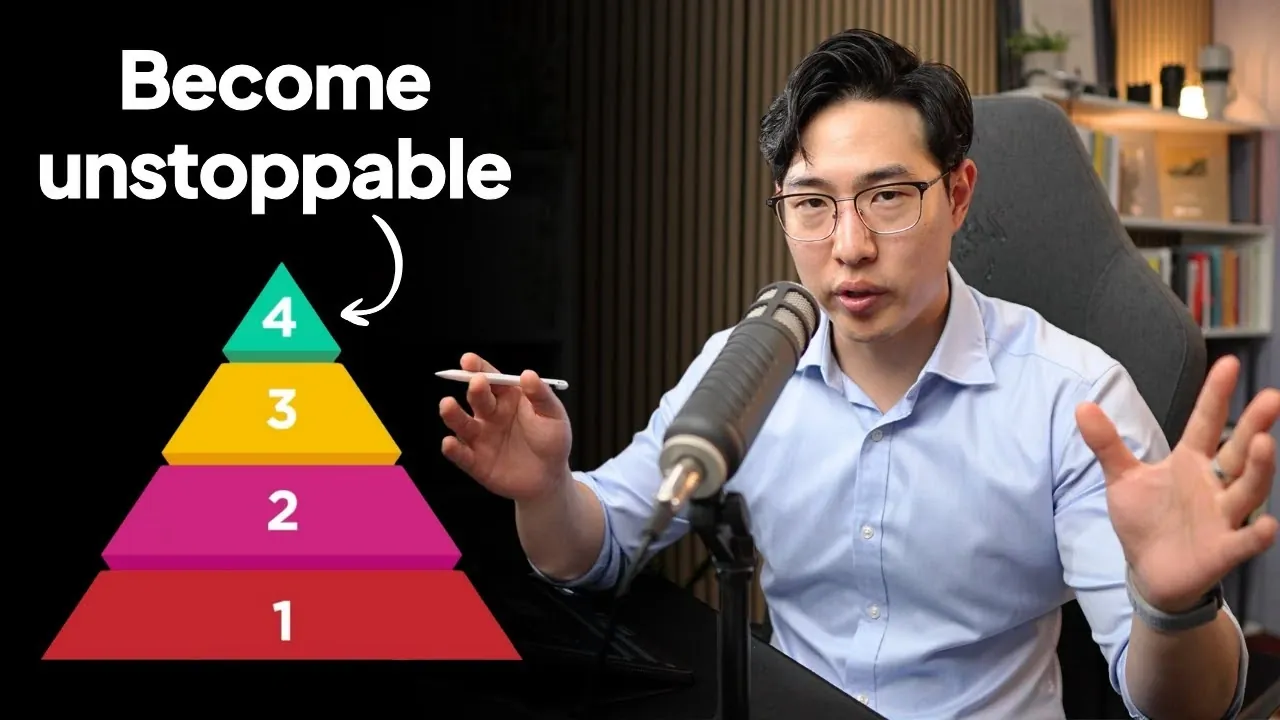
What if the secret to being more productive wasn’t about squeezing more hours into your day, but about fundamentally rethinking how you work? Most people approach productivity like a sprint, pushing harder, multitasking, or sacrificing rest to get more done. But these strategies often lead to burnout, not breakthroughs. Enter the 4 Levels Method, a fantastic framework designed to help you work smarter, not harder. Created by Justin Sung, this method doesn’t just promise incremental improvements; it offers a complete shift in how you manage your time, focus, and energy. Imagine a system where every task feels purposeful, your priorities are crystal clear, and you can finally escape the cycle of overwhelm. That’s the power of this approach.
In this framework explained by Justin Sung, you’ll uncover four interconnected stages, tracking, frontloading, prioritization, and flow, that build upon one another to create a sustainable path to peak productivity. You’ll learn how to identify hidden inefficiencies, design a day that works for you, and focus on what truly matters. But this isn’t just about checking off to-do lists; it’s about reshaping your mindset and creating an environment where you can thrive. Whether you’re struggling with constant distractions or feeling stuck in a haze of busyness, the 4 Levels Method offers practical tools to reclaim your time and energy. As you explore each level, you might just find that productivity isn’t about doing more, it’s about doing better.
The 4 Levels Method
TL;DR Key Takeaways :
- The 4 Levels Method focuses on working smarter, not harder, by addressing inefficiency, overwhelm, and lack of focus through a structured framework.
- Tracking: Understand how you spend your time using tools like apps or journals to identify inefficiencies and reclaim wasted hours.
- Frontloading: Plan tasks in advance with realistic goals to reduce decision fatigue and maintain momentum throughout the day.
- Prioritization: Focus on high-impact tasks aligned with your long-term goals, while eliminating or delegating less important activities.
- Flow: Create an environment for deep focus to achieve peak performance, satisfaction, and meaningful progress in your work.
Level 1: Tracking
The foundation of productivity begins with understanding how you currently spend your time. Without this awareness, it’s easy to feel overwhelmed, lose focus, or struggle to prioritize effectively. Many people rely on mental tracking, keeping a rough mental tally of their activities, but this often leads to inefficiencies and missed opportunities for improvement.
Explicit tracking is a more reliable approach. Using tools such as time-tracking apps, spreadsheets, or even a simple journal can provide a clear and accurate picture of your daily activities. For example, you might discover that you’re dedicating excessive time to low-priority tasks, leaving little room for high-value activities. By identifying these patterns, you can reclaim wasted hours and redirect your energy toward tasks that align with your goals. Tracking not only highlights inefficiencies but also enables you to make informed decisions about how to allocate your time.
Level 2: Frontloading
Once you’ve gained clarity on how you spend your time, the next step is to plan ahead. Frontloading involves organizing and structuring your tasks before your day begins, giving you a clear roadmap to follow. Tools such as to-do lists, calendars, and scheduling systems are invaluable for this stage, helping you create a structured plan that keeps you on track.
However, effective frontloading requires balance. Overloading your schedule with unrealistic goals can lead to frustration and burnout, undermining your productivity. To avoid this, focus on creating plans that are both ambitious and achievable. Consider allocating time for breaks, unexpected interruptions, and high-priority tasks. By frontloading thoughtfully, you can reduce decision fatigue, maintain momentum throughout the day, and ensure that your energy is directed toward meaningful work.
How to Be More Productive Than Everyone Else

Browse through more resources below from our in-depth content covering more areas on productivity frameworks.
- Master Apple Notes with the Forever Notes Framework
- How to Use the Time Sector System to Manage Tasks Effectively
- Discover the Hidden Powers of Apple Notes in iOS 18
- How to Use PARA in Microsoft OneNote to Boost Productivity
- Forever Notes Framework Review : A Smarter Way to Use Apple Notes
- Unlock Claude Code’s Full Potential with This Simple Hack
- How to Use Your iPad and Apple Notes to Boost Productivity
- New Framework Desktop Steam Console Build for Gaming
- How Agent OS Enhances Coding Efficiency & Workflow Optimization
- Framework 13 Laptop Review : Modular, Repairable & Linux Ready
Level 3: Prioritization
Planning alone is not enough to maximize productivity; you must also ensure that your efforts are focused on the right tasks. This is where prioritization comes into play. At this stage, you evaluate your tasks to determine what truly matters and what can be deferred, delegated, or eliminated. This process often involves making difficult decisions, such as saying “no” to less important commitments, a step that can feel uncomfortable but is essential for achieving meaningful progress.
Effective prioritization requires aligning your tasks with your long-term goals and values. For instance, balancing professional responsibilities with personal commitments may require constant reassessment of what deserves your attention. By focusing on high-impact tasks, you can avoid being consumed by urgent but less significant activities. Prioritization ensures that your time and energy are invested in pursuits that bring you closer to your objectives, rather than being scattered across competing demands.
Level 4: Flow
The ultimate goal of the 4 Levels Method is to achieve a state of flow, a mental state where you are fully immersed in your work, performing at your peak, and experiencing a sense of fulfillment. In this state, tasks that once felt overwhelming become manageable, and your productivity reaches new heights.
To reach flow, it’s essential to create an environment that supports deep focus. This might involve eliminating distractions, setting boundaries with others, or using tools like noise-canceling headphones. Scheduling uninterrupted work sessions and tackling challenging tasks during your peak energy periods can also help you enter this state. Flow is not just about efficiency; it’s about finding satisfaction and purpose in your work. When you achieve flow, you’re not merely completing tasks, you’re thriving and making meaningful progress.
Key Takeaways
The 4 Levels Method demonstrates that productivity is not about doing more, it’s about doing the right things effectively. Each level builds upon the skills and habits developed in the previous one, creating a comprehensive framework for managing your time and energy.
- Tracking: Gain a clear understanding of how you spend your time to identify inefficiencies and opportunities for improvement.
- Frontloading: Plan your day in advance to reduce decision fatigue, stay organized, and maintain focus.
- Prioritization: Direct your efforts toward tasks that align with your long-term goals and values, making sure meaningful progress.
- Flow: Cultivate an environment that supports deep focus, allowing you to immerse yourself in your work and perform at your best.
By mastering the 4 Levels Method, you can reduce stress, achieve your goals, and strike a balance between productivity and well-being. This approach is not about working harder, it’s about working smarter, with intention and clarity.
Media Credit: Justin Sung
Disclosure: Some of our articles include affiliate links. If you buy something through one of these links, Geeky Gadgets may earn an affiliate commission. Learn about our Disclosure Policy.
