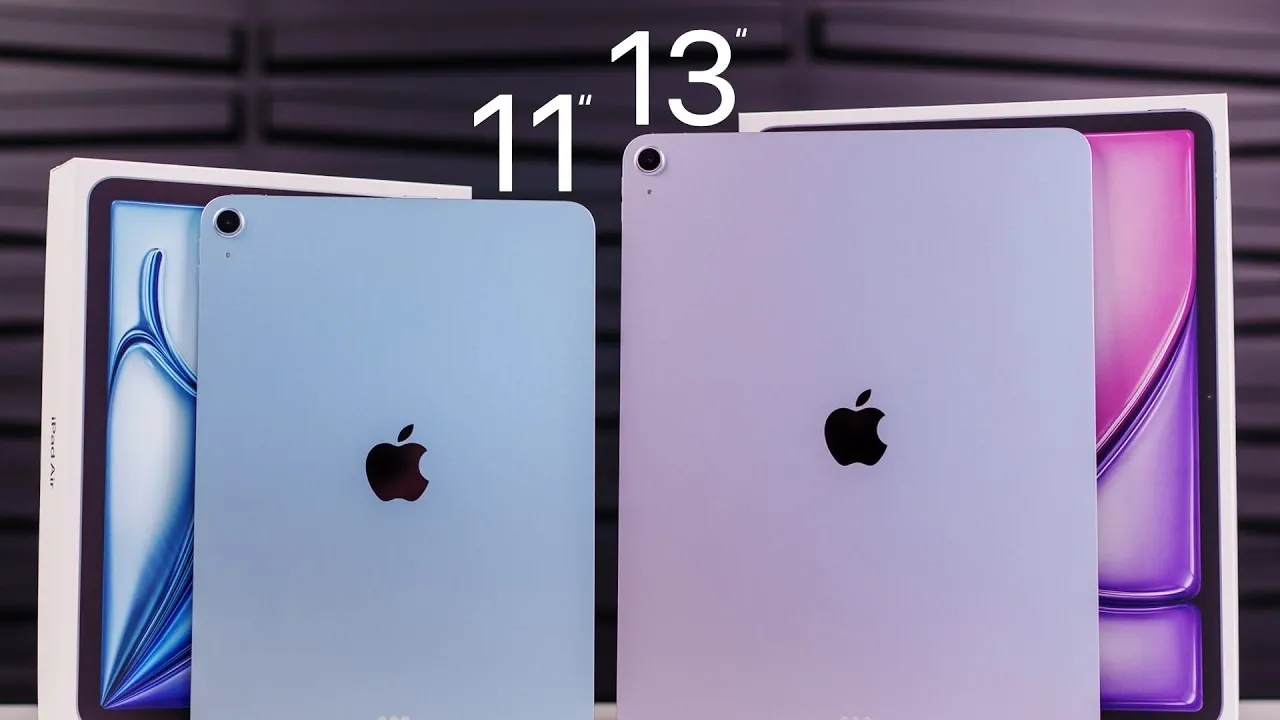
Apple’s 2026 iPad Air lineup introduces two distinct models: the 11-inch and 13-inch variants, both powered by the advanced M4 chip. While the external design remains consistent with the 2025 M3 model, the internal upgrades bring significant improvements in performance, connectivity, and efficiency. This guide explores the key differences between the two models, helping you determine which one best suits your needs and whether upgrading from an older iPad is worth considering. The video below from Brandon Butch gives us a look at the new iPad Air.

Design and Build: Familiar Yet Polished
The 2026 iPad Air models maintain Apple’s signature minimalist design, combining aesthetics with functionality. Available in four elegant colors—blue, purple, starlight, and space gray—these devices exude a premium look and feel.
- Weight and Portability: The 11-inch model weighs 464 grams, making it slightly heavier than its predecessor, while the 13-inch model weighs 616 grams. Despite the weight difference, both models retain a slim 6.1mm thickness, making sure they are easy to handle and store.
- Durability: The aluminum unibody construction ensures robust durability, making these devices suitable for daily use while maintaining their sleek appearance.
The design strikes a balance between portability and sturdiness, catering to users who value both style and practicality.
Display: Portability vs. Productivity
Both models feature Apple’s Liquid Retina display, offering 600 nits of brightness, the P3 wide color gamut for vibrant visuals and an anti-reflective coating for better usability in various lighting conditions. However, the screen size plays a crucial role in determining the ideal model for different use cases.
- 11-Inch Model: Compact and lightweight, this size is perfect for users who prioritize mobility and handheld use. It’s an excellent choice for students, travelers and casual users who need a portable device.
- 13-Inch Model: The larger screen is ideal for multitasking, creative work and immersive media consumption. It provides ample space for split-screen functionality and detailed visuals, though its size may feel less convenient for frequent travel or prolonged handheld use.
- Refresh Rate: Both models are limited to a 60Hz refresh rate, which may disappoint users accustomed to the smoother 120Hz ProMotion technology available in the iPad Pro lineup.
Choosing between the two displays depends on whether you prioritize portability or screen real estate for productivity and entertainment.
Performance: The M4 Chip Redefines Efficiency
At the core of the 2026 iPad Air is the M4 chip, delivering a substantial leap in performance compared to its predecessors.
- Processing Power: The M4 chip offers a 30% performance boost over the M3 and is up to 2.3 times faster than the M1, making sure seamless multitasking, faster app launches and smoother overall performance.
- Graphics and AI: A 9-core GPU enhances gaming, video editing and other graphics-intensive tasks, while the 16-core neural engine, capable of 38 trillion operations per second, excels at AI-driven applications such as photo editing and augmented reality.
- Memory: With 12GB of RAM (up from 8GB in the M3) and 20% higher memory bandwidth, the iPad Air is well-equipped for demanding applications, making it a versatile tool for professionals and creatives.
The M4 chip ensures that the 2026 iPad Air delivers top-tier performance, whether you’re working, gaming, or streaming.
Connectivity: Innovative Technology
The 2026 iPad Air introduces Apple’s proprietary C1X modem and N1 wireless chip, setting new benchmarks for connectivity.
- Wi-Fi and Bluetooth: Support for Wi-Fi 7 and Bluetooth 6 ensures faster, more stable connections, making it easier to stream, download and connect to peripherals.
- Cellular Models: Cellular versions offer 50% faster performance and 30% lower battery consumption compared to previous generations, making them ideal for users who require reliable connectivity on the go.
These advancements make the iPad Air a reliable companion for both remote work and entertainment, making sure uninterrupted connectivity in various scenarios.
Battery Life: Consistency Meets Efficiency
Both models maintain the same 10-hour battery life for web browsing as their predecessors. However, the M4 chip’s efficiency improvements enhance performance during gaming and graphics-intensive tasks, making sure a more consistent experience across diverse use cases. Whether you’re working on a project or streaming your favorite content, the battery life remains dependable.
Accessories: Boosting Productivity
The 2026 iPad Air supports a range of accessories designed to enhance productivity and creativity.
- Apple Accessories: The Magic Keyboard ($269) and Apple Pencil Pro ($130) are premium options for professionals and students, offering seamless integration and advanced functionality.
- Third-Party Alternatives: Cost-effective options, such as ESR’s Shift Magnetic Keyboard case, provide additional features like adjustable viewing angles and integrated trackpads at a lower price point.
These accessories expand the iPad Air’s capabilities, making it a versatile tool for work, study and creative pursuits.
Price and Storage Options
The 2026 iPad Air is positioned as a mid-range option, bridging the gap between the entry-level iPad and the premium iPad Pro.
- Pricing: The 11-inch model starts at $599, while the 13-inch model begins at $799. Cellular versions cost an additional $150.
- Storage: Both models offer storage options ranging from 128GB to 1TB, catering to a wide range of user needs.
This pricing strategy makes the iPad Air an attractive choice for users seeking high performance without the premium price tag of the iPad Pro.
Choosing Between the 11-Inch and 13-Inch Models
Deciding between the two models depends on your specific needs and preferences.
- 11-Inch Model: Best for users who value portability, prolonged handheld use and frequent travel.
- 13-Inch Model: Ideal for multitasking, creative applications and immersive media consumption, though its larger size may be less convenient for mobile users.
Your choice ultimately hinges on whether you prioritize mobility or screen size for productivity and entertainment.
Should You Upgrade?
The decision to upgrade depends on your current device and usage requirements.
- From M1 or M2 Models: The 2026 iPad Air offers significant performance and connectivity improvements, making it a compelling upgrade.
- From the M3 Model: Unless you require enhanced gaming performance or AI capabilities, the upgrade may not be as impactful. The M3 iPad Air and older iPad Pro models remain excellent alternatives at reduced prices.
For users with older devices, the M4 iPad Air represents a substantial improvement, while M3 users may find it more practical to wait for future iterations unless specific needs justify the upgrade.
Unlock more potential in ipad Air by reading previous articles we have written.
- M4 iPad Air Release Date, Features, and Pricing Explained
- Apple M4 iPad Air: Everything You Need to Know
- M4 iPad Air: What to Expect in Apple’s 2026 Model
- Apple M4 iPad Air Leak Reveals Key Upgrades for 2026
- Apple’s 2026 iPad Lineup: OLED Displays and More
- iPad Air M4 vs. M3: Full Comparison
Source & Image Credit: Brandon Butch
Disclosure: Some of our articles include affiliate links. If you buy something through one of these links, Geeky Gadgets may earn an affiliate commission. Learn about our Disclosure Policy.
