Researchers at MIT have ingeniously utilized one of Microsoft’s Kinect motion gaming controllers, in conjunction with a laptop and a laser, to develop a groundbreaking device capable of mapping interiors in real time. This innovative technology holds significant potential for various applications, particularly in emergency response scenarios.
The device has been meticulously designed and created to assist emergency personnel in rapidly mapping complex interiors and spaces. This development has been made possible through funding from the US Air Force and the Office of Naval Research. Watch the video after the jump to learn more about the Kinect mapping device project and see it in action.


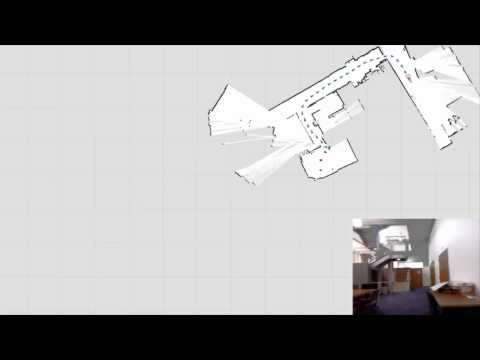
How the Kinect Mapping Device Works
The mapping system employs a 270-degree arc generated by a LIDAR (Light Detection and Ranging) laser. This laser technology is renowned for its precision in measuring distances by illuminating the target with laser light and analyzing the reflected light. The data collected by the LIDAR is then seamlessly integrated with the information provided by the Kinect device, which includes depth and visual imagery. This combination of technologies allows the device to create detailed and accurate maps of indoor environments in real time.
The Kinect sensor, originally designed for gaming, is adept at capturing depth information and tracking motion. By repurposing this technology, the researchers have unlocked new possibilities for its application in fields beyond entertainment. The integration of LIDAR and Kinect data ensures that the mapping device can provide comprehensive spatial awareness, which is crucial for navigating and understanding complex indoor spaces.
“Our work is motivated by rapid response missions by emergency personnel, in which the capability for one or more people to rapidly map a complex indoor environment is essential for public safety,” the researchers explained.
Applications and Future Potential
The primary motivation behind this project is to enhance the capabilities of emergency responders. In situations such as fires, natural disasters, or search and rescue missions, having an accurate and up-to-date map of the interior of a building can be invaluable. It allows responders to plan their actions more effectively, identify potential hazards, and locate individuals who may be trapped or in need of assistance.
Beyond emergency response, this technology has the potential to revolutionize other fields as well. For instance, in construction and architecture, the ability to quickly and accurately map existing structures can streamline renovation and design processes. Similarly, in the field of robotics, autonomous robots equipped with such mapping devices could navigate and operate in indoor environments with greater efficiency and safety.
Moreover, the use of affordable and widely available components like the Kinect sensor makes this technology accessible and scalable. As the technology continues to evolve, we can anticipate even more sophisticated and versatile applications emerging.
For more information, jump over to the PDF created explaining the concept and device in detail.
Source: Slashgear
Disclosure: Some of our articles include affiliate links. If you buy something through one of these links, Geeky Gadgets may earn an affiliate commission. Learn about our Disclosure Policy.
