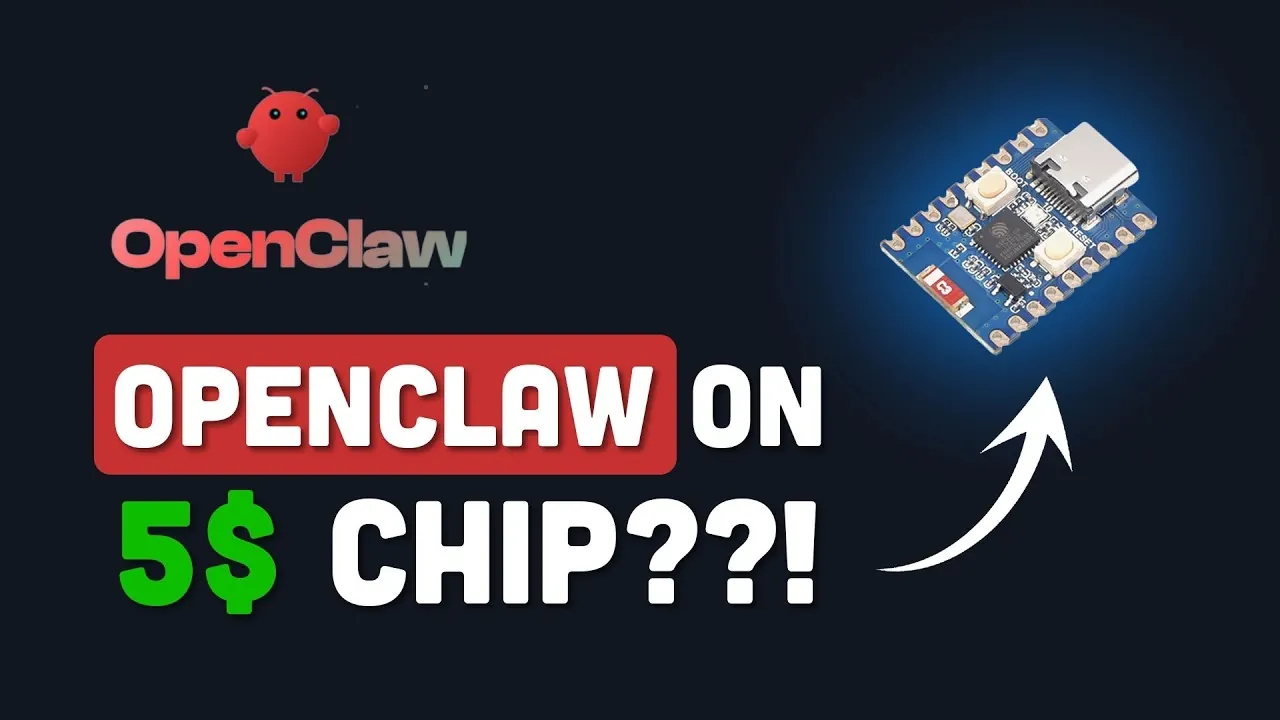
Running a full-fledged AI assistant on a $5 microcontroller might sound improbable, but ZClaw makes it achievable. Designed for the ESP32 microcontroller, ZClaw is an OpenClaw-based AI agent that fits into just 888 kilobytes of firmware. Despite its small size and low cost, it supports features like secure communication, GPIO interaction and task scheduling, allowing AI-driven functionality on resource-limited devices. As highlighted by Better Stack, ZClaw uses the ESP-IDF development framework to offer a practical entry point for hobbyists and developers exploring embedded AI and IoT applications.
This overview will guide you through ZClaw’s capabilities and practical use cases, from automating hardware tasks to integrating AI logic directly on the microcontroller. You’ll learn how to set up the firmware, configure secure communication and even use Telegram bots for device control. Whether you’re interested in prototyping IoT devices or experimenting with AI in constrained environments, this breakdown will provide the insights needed to make the most of ZClaw’s potential.
AI on a $5 Microcontroller
TL;DR Key Takeaways :
- ZClaw is an AI agent optimized for the $5 ESP32 microcontroller, offering advanced features like secure communication, task automation and hardware interaction in a compact 888-kilobyte firmware.
- Key features include built-in Wi-Fi, TLS, HTTPS communication, Telegram bot integration and local storage, making it a versatile platform for AI and IoT experimentation.
- Practical applications range from hardware monitoring and task scheduling to executing AI logic directly on the microcontroller, allowing responsive and intelligent IoT systems.
- The setup process is beginner-friendly, involving firmware flashing, Wi-Fi provisioning and Telegram bot configuration for seamless hardware and AI model interaction.
- While limited in handling complex tasks, ZClaw provides opportunities for customization and serves as an affordable entry point for embedded AI and IoT innovation.
What Is ZClaw?
ZClaw is the smallest OpenClaw-based AI assistant, optimized for the ESP32 microcontroller. Its design focuses on efficiency, allowing AI-powered functionality on devices with limited resources. Built using the ESP-IDF development framework, ZClaw combines affordability with versatility, making it an excellent entry point for experimenting with AI-driven IoT devices.
By using the ESP32’s capabilities, ZClaw supports features such as GPIO interaction, task scheduling and secure communication. Despite its low cost, it provides a robust platform for embedded AI applications, allowing users to explore the potential of AI in resource-constrained environments.
Key Features of ZClaw
ZClaw’s design incorporates a range of essential tools for AI and IoT development. Its core features include:
- Networking Stack: Built-in Wi-Fi, TLS and cryptographic support ensure secure and reliable data transmission.
- HTTPS Communication: Assists interaction with AI models and external endpoints for seamless integration.
- Telegram Bot Integration: Enables device control and task execution through simple messaging commands, enhancing user interaction.
- Local Storage: Retains hardware configurations and settings for consistent operation across sessions.
These features make ZClaw a powerful yet accessible platform for AI experimentation, even within the constraints of embedded systems.
$5 Chip Can Run A Full OpenClaw AI

Here are additional guides from our expansive article library that you may find useful on OpenClaw.
- OpenClaw & OpenAI : Key Security Issues, Token Usage, and Next Steps
- Will OpenClaw Stay Open Source After OpenAI Integrates the Platform?
- Build a Safer OpenClaw Alternative Using Claude Code
- Anthropic Bans OpenClaw : Blocks Agent SDK Apps OAuth Tokens
Practical Applications
ZClaw’s versatility makes it suitable for a wide range of use cases, from simple automation tasks to more complex AI-driven operations. Here are some practical applications:
- Hardware Monitoring: Use ZClaw to read GPIO pins and sensors, allowing real-time tracking of hardware states or environmental conditions.
- Task Scheduling: Automate repetitive actions, such as toggling LEDs or initiating equipment checks at predefined intervals.
- AI Logic Execution: Run AI model logic directly on the microcontroller, allowing for decision-making without relying on external systems.
For example, ZClaw can be programmed to send a Telegram notification when a sensor detects a specific condition, such as a temperature exceeding a set threshold. This capability makes it a valuable tool for creating responsive and intelligent IoT systems.
How to Get Started
Getting started with ZClaw is straightforward, even for those new to embedded systems. The setup process involves the following steps:
- Flashing the ZClaw firmware onto the ESP32 microcontroller using the provided scripts and tools.
- Provisioning the device with Wi-Fi credentials and API keys for your chosen AI provider to enable secure communication.
- Configuring a Telegram bot to assist communication and control of the device.
Once these steps are completed, ZClaw is ready to interact with your hardware and AI models securely. Its user-friendly setup process ensures that even beginners can quickly start exploring its capabilities.
Integrating with Hardware
ZClaw is designed to integrate seamlessly with a variety of hardware setups, from basic circuits to more advanced configurations. For instance, you can connect LEDs to the ESP32’s GPIO pins and control them using Telegram commands. Additionally, ZClaw supports more complex integrations, such as displaying information on a TFT screen or interacting with sensors and actuators.
This flexibility allows users to tailor ZClaw’s functionality to their specific needs. Whether you’re prototyping a new IoT device or experimenting with AI-driven automation, ZClaw provides a reliable and adaptable platform for innovation.
Limitations and Opportunities
While ZClaw offers impressive capabilities for its size and cost, it does have certain limitations. Its built-in tools are relatively basic, which may restrict its use in highly complex or resource-intensive applications. However, these constraints also present opportunities for customization and expansion. Developers can enhance ZClaw’s functionality by:
- Adding new drivers or libraries to support additional hardware components.
- Developing custom web APIs to improve communication efficiency and expand integration options.
- Incorporating advanced AI models to enable more sophisticated decision-making processes.
Despite these limitations, ZClaw demonstrates the potential for low-cost AI integration in embedded systems. It serves as a stepping stone for developers and hobbyists looking to innovate in the fields of IoT and AI development.
The Future of Embedded AI with ZClaw
ZClaw exemplifies what is possible when affordability meets innovation. By combining low cost, versatility and ease of use, it provides an accessible platform for exploring AI and IoT technologies. While it may not yet be suitable for production-grade applications, it excels as a tool for learning, experimentation and prototyping.
Whether you are a hobbyist looking to explore the possibilities of embedded AI or a professional seeking a cost-effective solution for IoT development, ZClaw offers a glimpse into the future of AI-powered devices. Its ability to perform AI-driven tasks on a $5 microcontroller highlights the potential for innovation in embedded systems, inspiring developers to push boundaries and explore new possibilities.
Media Credit: Better Stack
Disclosure: Some of our articles include affiliate links. If you buy something through one of these links, Geeky Gadgets may earn an affiliate commission. Learn about our Disclosure Policy.
