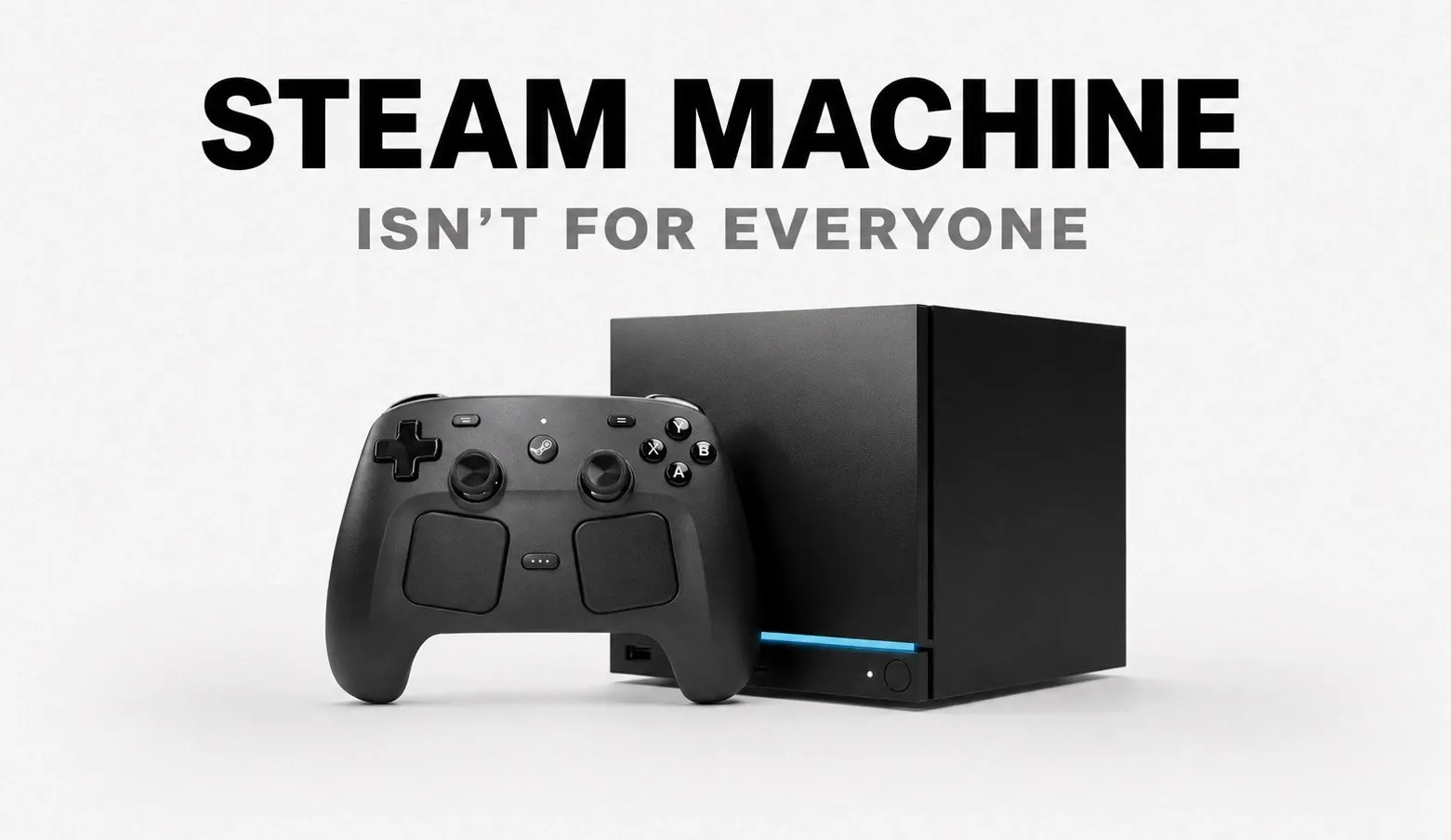
Valve’s Steam Machine offers a compact gaming experience that blends console-like simplicity with PC-level flexibility, running on the Linux-based SteamOS 3.8. Gamers Nexus examines how its hardware, including a six-core Zen 4 processor and a GPU comparable to the Nvidia RTX 3060, balances performance within tight power constraints. With a 30W CPU TDP and 110W GPU TDP, the system is optimized for 1080p gaming but struggles with more demanding tasks like ray tracing or 4K without upscaling technologies such as DLSS or FSR. This analysis also highlights the Steam Machine’s standout thermal design, featuring a dual-chamber layout and a custom 120mm fan that keep temperatures low while maintaining impressively quiet operation.
Explore how the Steam Machine’s compact design and soldered components impact upgradeability, why its reliance on SteamOS introduces both opportunities and limitations and what its pricing means for its niche appeal. You’ll gain insight into its suitability for living room gaming, its potential as a streaming client and the trade-offs involved in choosing this system over traditional PCs. Whether you’re considering it for Linux gaming or as a secondary setup, this breakdown offers a clear look at where the Steam Machine excels and where it falls short.
Performance: Balancing Power and Constraints
TL;DR Key Takeaways :
- The Valve Steam Machine combines the simplicity of consoles with the flexibility of PC hardware, running on the Linux-based SteamOS for a streamlined gaming experience.
- Equipped with mid-range hardware, it supports 1080p gaming but struggles with demanding tasks like ray tracing or 4K gaming without upscaling techniques such as DLSS or FSR.
- Its compact design features excellent thermal management and quiet operation, making it ideal for living room setups, though upgradeability is limited due to soldered components.
- SteamOS offers a controller-friendly interface and Proton compatibility for running Windows games, but it has limitations like capped resolution settings and a lack of advanced BIOS options.
- Priced between $1,150 and $1,350, the Steam Machine targets niche users prioritizing compact design and Linux gaming over raw performance or cost-efficiency, but it faces criticisms for limited upgradeability and software polish.
The Steam Machine is equipped with mid-range hardware, making it suitable for casual to moderate gaming. Its GPU performance is comparable to cards like the Nvidia RTX 3060, AMD RX 6600, and Intel Arc A750, which handle most modern games at 1080p with medium to high settings. However, the system struggles with more demanding tasks, such as ray tracing or 4K gaming, unless upscaling techniques like DLSS or FSR are utilized.
On the CPU side, the Steam Machine features a six-core Zen 4 processor. While its architecture is modern, its performance is closer to older CPUs like the Ryzen 5 3600 or Ryzen 7 3700X. This is primarily due to power constraints, with a 30W CPU TDP and a 110W GPU TDP limiting its overall output. These specifications are sufficient for most games but prevent the Steam Machine from competing with high-performance gaming PCs.
Thermals and Noise: Quiet Efficiency
Despite its compact size, the Steam Machine excels in thermal management. A custom 120mm fan and a dual-chamber airflow design ensure the system remains cool even under heavy loads. Noise levels are impressively low during gaming sessions, making it an excellent choice for quiet environments such as living rooms or shared spaces.
For users seeking customization, 3D-printed panels are available to optimize airflow further. However, these modifications may slightly increase noise levels, which is worth considering if maintaining a quiet setup is a priority. The balance between cooling efficiency and noise control is one of the Steam Machine’s standout features.
SteamOS and Compatibility: A Mixed Bag
The Steam Machine runs on SteamOS 3.8, a Linux-based operating system designed for gaming. Its controller-friendly interface and streamlined design make it accessible for casual users. However, the platform comes with several limitations that may affect its appeal:
- Resolution settings are capped at 1080p by default, requiring manual adjustments for higher resolutions.
- The Proton compatibility layer enables many Windows games to run on Linux, but occasional compatibility issues and performance quirks persist.
- Advanced BIOS options, such as overclocking or memory tuning, are absent, which may deter hardware enthusiasts.
SteamOS retains elements of its handheld gaming origins, which can make it feel less polished for desktop use. While it represents a significant step forward for Linux gaming, these limitations may frustrate users seeking a seamless, high-performance experience.

Advance your skills in SteamOS by reading more of our detailed content.
- Why Valve’s New Steam OS Update Completely Changes How You Use Your Deck
- Why Valve’s Latest SteamOS Update Changes Everything for Your Steam Machine
- Valve Finally Solves Long-Standing SteamOS Bugs in New Update
- Valve Expands SteamOS to Intel Handhelds with the New 3.8.7 Update
- Official SteamOS 3.8 Builds a Powerful Gaming Tablet with 165Hz Display
- Forza Horizon 6 on SteamOS : Steam Deck vs Z2 Go vs Z1 Extreme Tested
- Valve’s 2026 Steam Machine is Almost Here
- Steam Gaming On ROG Flow Z13 13-inch 180 Hz Tablet Running SteamOS
- Don’t Wait for Valve: Build Your Own Steam Machine in 2026
- Why Valve’s New Steam Machine Could Outperform the PS5 in Your Living Room
Hardware and Design: Compact but Limited
The Steam Machine’s compact design is one of its most notable features. Its dual-chamber layout separates components for improved airflow, while DDR5 RAM and NVMe SSD storage ensure fast performance. Storage options range from 512GB to 2TB, but upgradeability is limited to RAM and SSD replacements. The CPU and GPU are soldered, making them non-replaceable, which restricts long-term flexibility.
Connectivity options include USB 3.2, USB-C, HDMI, DisplayPort, and 1Gb Ethernet. However, the absence of discrete audio outputs means users must rely on USB or HDMI for sound. While these design choices make the Steam Machine practical for living room setups, they limit its versatility for other use cases, such as audio-focused configurations or high-end gaming setups.
Pricing and Value: A Niche Offering
The Steam Machine starts at $1,150 for the 512GB model, with the 2TB version priced at $1,350. This pricing places it at a slight premium compared to DIY builds with similar specifications. Pre-built systems like the HP Omen 16L offer better performance but at a higher cost. The Steam Machine’s pricing reflects its niche appeal, targeting users who prioritize its compact design and Linux-based platform over raw performance or cost-efficiency.
Use Cases: Where It Shines
The Steam Machine is best suited for specific scenarios where its unique features can be fully utilized:
- Living room gaming, where its compact design and quiet operation provide a console-like experience.
- Serving as a streaming client for a more powerful gaming PC, allowing remote play of high-end games.
- Appealing to enthusiasts interested in experimenting with Linux gaming or unique hardware configurations.
While it excels in these areas, its limitations make it less suitable for users seeking a high-performance or highly customizable gaming PC.
Criticisms: Room for Improvement
The Steam Machine faces several criticisms that may deter potential buyers:
- Some units ship with single-channel RAM configurations, which can hinder performance.
- SteamOS lacks polish, with limited resolution flexibility and a reliance on online connectivity for initial setup.
- The absence of discrete audio outputs reduces its versatility for audio-focused setups.
- Soldered components restrict upgradeability, limiting its lifespan compared to traditional PCs.
These drawbacks highlight the trade-offs involved in choosing the Steam Machine over more traditional gaming PCs.
Final Thoughts: A Unique but Imperfect Option
The Valve Steam Machine is a niche product that prioritizes compact design and ease of use over raw performance or value. While it cannot compete with DIY PCs in terms of cost-effectiveness, it offers a unique experience for those interested in Linux gaming and compact systems. SteamOS and Proton represent significant advancements for Linux gaming, but the platform requires further refinement to reach its full potential.
For enthusiasts and casual gamers seeking a pre-built, console-like gaming PC, the Steam Machine provides a compelling, albeit imperfect, option. However, its limitations mean it is best suited for specific use cases rather than as a one-size-fits-all gaming solution.
Media Credit: Gamers Nexus
Disclosure: Some of our articles include affiliate links. If you buy something through one of these links, Geeky Gadgets may earn an affiliate commission. Learn about our Disclosure Policy.
