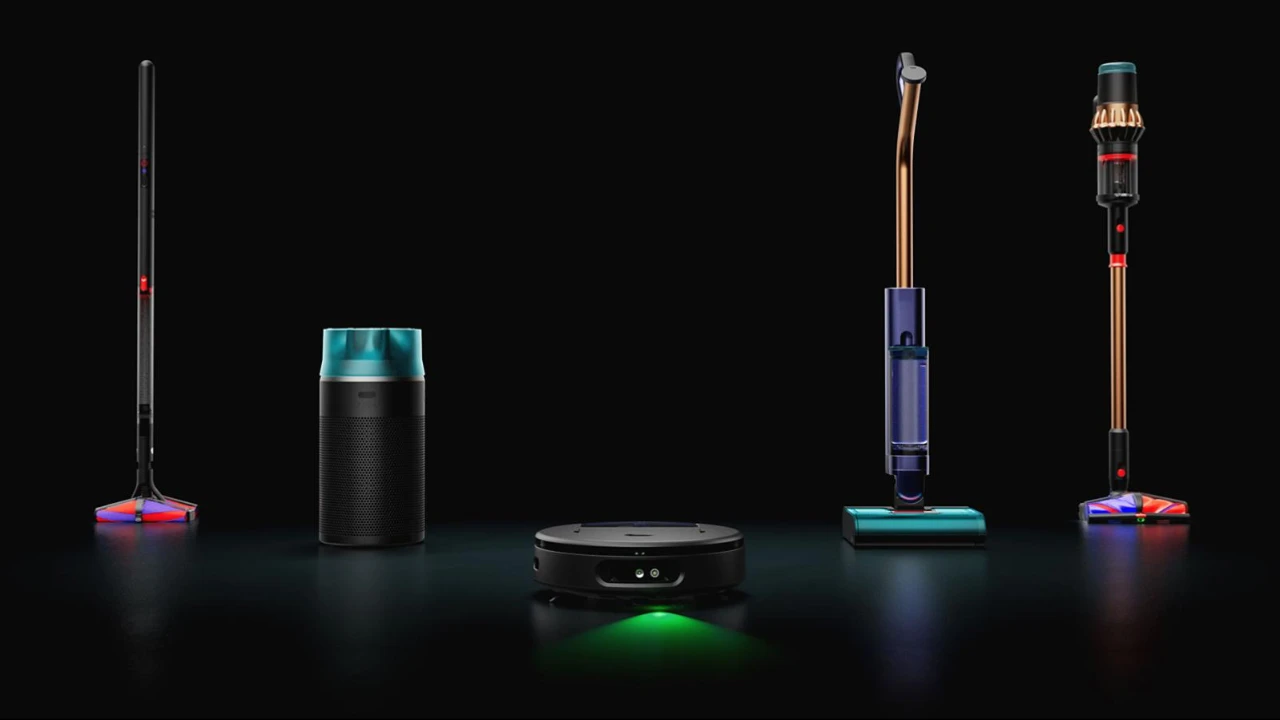
Smart cleaning technologies for the home detect, measure, and respond to indoor conditions. Connected devices monitor air quality, humidity levels, and surface cleanliness to adjust their operation accordingly. The modern air purifier, humidifier, and floor cleaner use hardware components, sensors, and software that work together to precisely manage your home environment.
Air Purifiers: How Smart Systems Manage Indoor Air
From a technical standpoint, air purifiers function as controlled air treatment systems. A fan draws in ambient air, passes it through one or more filters, and then returns the treated air to the room. What distinguishes today’s air purifiers from previous models is not the basic principle of air circulation, but the way in which this flow is regulated. Instead of operating at a fixed speed, newer systems adapt the circulation based on collected data.
Particle Filtration and Sensor Feedback
Modern air purifier filtration relies on components designed to trap particles much smaller than what the eye can detect. Fine particle filters trap dust, pollen, and other particulate matter as air passes through dense, multi- layered structures. In more sophisticated models, additional media absorb gases and airborne compounds that are not removed by particle filters alone.
Optical and chemical sensors analyze the air before and after filtration, generating data that indicates current conditions. Software interprets this information and adjusts the airflow accordingly, increasing its intensity when particle concentration increases and decreasing it when it decreases. Such closed-loop systems allow purifiers to react instantly to variations, transforming raw sensor data into automatic and continuous adjustment, without the need for predefined modes or user intervention.
Humidifiers: Balancing Moisture With Automated Control
Humidifiers address a different aspect of the indoor environment than ventilation systems by regulating the humidity level in enclosed spaces. In smart configurations, this regulation is achieved through continuous measurement rather than a fixed flow rate. Built-in sensors monitor relative humidity and transmit data to control systems that determine when and how much moisture to release into the air.
Thanks to automation, a modern humidifier adapts to actual conditions, gradually adjusting its flow rate to maintain a defined range. This reduces the need for manual adjustments and avoids the sharp fluctuations that can occur with constant-flow devices. Technically, the humidifier becomes part of an environmental control loop, responding to any changes in the indoor climate due to heating, air conditioning, or changes in occupancy.
Different Humidification Technologies
- Humidifiers use proven technical methods to introduce moisture into the air.
- Evaporative systems pass air over a damp medium, allowing water to evaporate naturally as airflow moves through the device.
- Ultrasonic models use high-frequency vibrations to transform water into fine droplets, which are dispersed as a cool mist.
- Steam humidifiers heat water until it vaporizes, then disperse it into the room.
Floor Cleaners: From Manual Cleaning To Smart Floor Care
Floor cleaning was traditionally a manual task, involving repeated passes, visual checks, and manual management of water and tools. Smart cleaning systems are revolutionizing the task by automating and controlling cleaning. Instead of simply pushing dirt around, modern devices are designed to collect, separate, and contain debris. Sensors and internal mechanisms determine the optimal treatment for surfaces to achieve flawless results.
A major difference between newer systems and older ones lies in the management of materials. Liquids, solid particles, and residues are treated by separate internal circuits in the floor cleaner, without being mixed. Water application is measured and controlled, thus avoiding the excess moisture often associated with manual methods. Automation also reduces the number of passes required in the same area, as contact with the surface and movements are regulated mechanically.
Wet Cleaning Versus Dry Cleaning Systems
Dry and wet floor cleaning systems target different physical states of dirt and require distinct technical approaches. Dry cleaning involves collecting loose particles, such as dust and debris, through direct contact, airflow, or mechanical agitation. Wet cleaning, on the other hand, uses a liquid to dissolve or soften materials encrusted on the surface before removing them.
Modern systems manage these methods through controlled interaction with the floor. In wet cleaning, the water flow is regulated to ensure optimal contact without excessive saturation, and debris is separated from the liquid instead of being redistributed over the surface. Dry systems prioritize precise contact and effective containment to prevent particles from just being displaced. Interaction with the surface is designed to remain constant, allowing the device to adapt to minor variations without relying on pressure or user technique.
How Humidification and Air Purification Reduce Dust and Static Buildup
Indoor air quality directly affects dust behavior in the home. When humidity levels drop, static electricity builds up more easily on surfaces and materials. This static charge causes light particles to stick to furniture and walls instead of settling on the floor, where they could be easily removed. Humidification reduces this static effect by maintaining a balanced humidity level.
Air purification tackles the problem from a different angle. By continuously removing airborne particles before they have time to settle, the total amount of dust in a room is reduced. Fewer particles in circulation means lessmaterial that can accumulate on floors. This has a positive indirect effect: when the concentration of dust in the air is lower, furniture and floors stay clean longer.
Disclosure: Some of our articles include affiliate links. If you buy something through one of these links, Geeky Gadgets may earn an affiliate commission. Learn about our Disclosure Policy.
