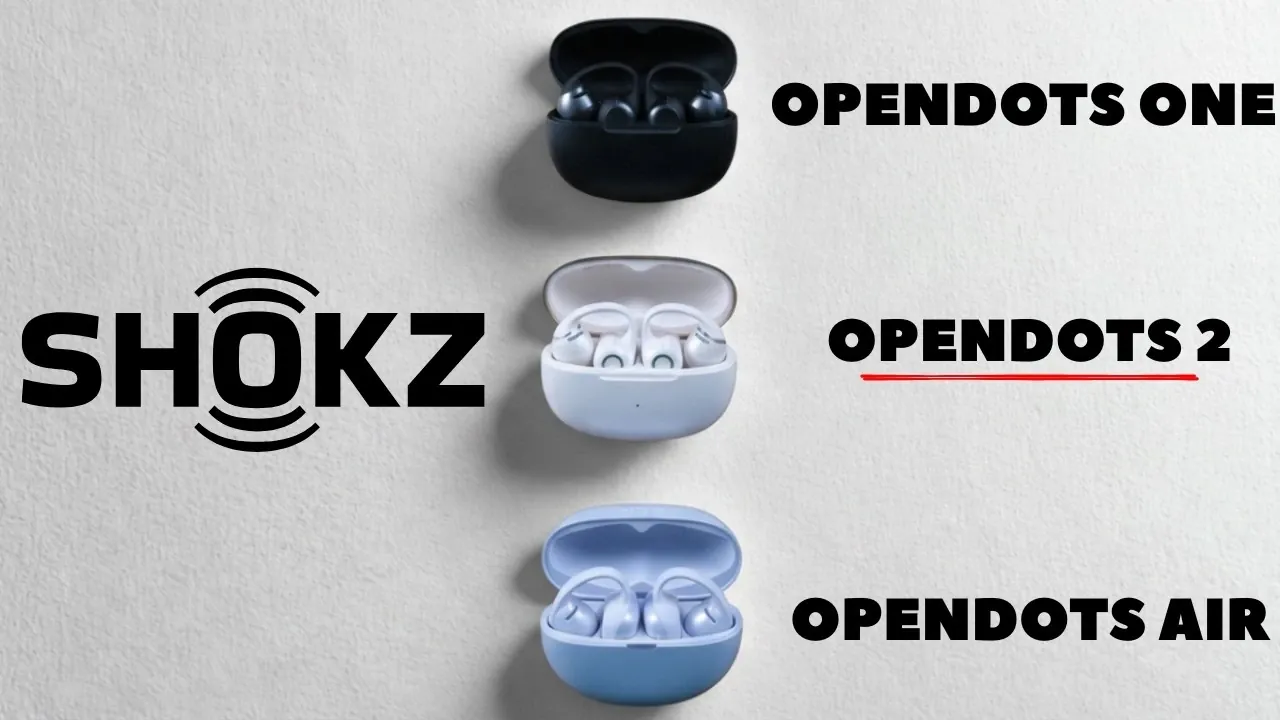
Comparing the Shokz OpenDots 2, OpenDots Air and OpenDots 1 reveals distinct differences in design, performance and features that cater to varying user needs. DHRME explores how each model balances comfort, sound quality and durability, with the OpenDots 2 standing out for its advanced Bass Sphere 2.0 technology, IP57 water resistance and customizable controls via the Shokz app. Meanwhile, the OpenDots Air offers a more streamlined experience with moderate durability and sound capabilities, while the OpenDots 1 provides a simpler, budget-friendly option with fewer features.
Discover how these earbuds stack up in key areas like battery life, microphone quality and additional features. You’ll gain insight into which model suits specific scenarios, whether you prioritize premium sound, extended playback, or affordability. This breakdown will help you navigate the trade-offs and choose the earbuds that align best with your daily habits and preferences.
Shokz OpenDots 2 vs Air vs One
TL;DR Key Takeaways :
- The Shokz OpenDots 2 offers premium features like advanced sound technology, superior durability (IP57 rating), and innovative controls, making it the top-tier choice at €199.
- The OpenDots Air provides a mid-range option with ergonomic design, decent sound quality and moderate durability (IP55 rating), priced at €139 but lacking advanced features like wireless charging.
- The OpenDots 1 is the most budget-friendly model, offering basic functionality, limited durability and simpler sound quality, making it suitable for casual users with minimal needs.
- Key differentiators include battery life (OpenDots 2: 10 hours + fast charging), microphone technology (OpenDots 2: bone conduction for superior clarity), and additional features like low latency mode and app customization in the OpenDots 2.
- Choosing the right model depends on user priorities: OpenDots 2 for premium performance, OpenDots Air for balanced affordability and OpenDots 1 for basic, budget-conscious use.
Comfort and Design
The Shokz OpenDots series prioritizes comfort and portability, but the design and usability vary across the models:
- OpenDots 2: Designed with a lightweight, ergonomic structure and a soft silicone finish, this model ensures extended comfort during prolonged use. It also features a compact wireless charging case and interchangeable left and right earbuds for added flexibility.
- OpenDots Air: While maintaining a similar ergonomic design and interchangeable earbuds, this model does not include wireless charging, which may be a drawback for some users.
- OpenDots 1: Offers a more basic design without interchangeable components or wireless charging. This simplicity makes it less versatile compared to the other models.
Durability
Durability is a key consideration, particularly for users with active lifestyles or those exposed to challenging environments:
- OpenDots 2: Features an IP57 rating for dust and water resistance, making sure protection against sweat and light rain. Its charging case is IP54-rated, offering splash resistance for added durability.
- OpenDots Air: Features an IP55 rating for the earbuds, providing moderate resistance to dust and water. However, the charging case lacks an IP rating, which may limit its resilience in wet conditions.
- OpenDots 1: Offers minimal water resistance, making it less suitable for outdoor activities or rigorous use.

Discover other guides from our vast content that could be of interest earbuds.
- Samsung Galaxy Buds 4 Pro: Launching with the S26 in Early 2026?
- Revolutionary Features of Samsung Galaxy Buds 4 Pro You Need to Know
- GPods Bluetooth 5.2 RGB wireless earbuds
- Unlock the Full Potential: Hidden Galaxy Buds 4 Pro Settings You Need to Change
- iFLYTEK AI Translation Earbuds Break the Language Barrier with 2-Second Low-Latency Interpretation
- Timekettle W4 vs W4 Pro: Which AI Translation Earbuds Should You Buy?
- Steve Jobs Said No, but macOS 27 Says Yes: The Touchscreen Mac Finally Arrives in 2027
- iOS 26.5 RC is Here: Apple Finally Adds the One Feature Android Users Have Been Waiting For
- The iPhone Ultra Fold’s Invisible Crease Could End the Fold Wars
- iOS 27 Leaks Reveal the End of an Era: Apple’s New Priorities Confirmed
Sound Quality
Sound performance is a critical factor and the three models deliver varying levels of audio quality:
- OpenDots 2: Equipped with advanced Bass Sphere 2.0 technology, Dolby Audio integration and a five-band EQ, this model delivers immersive and customizable sound tailored to different preferences.
- OpenDots Air: Features older Bass Sphere and Direct Pitch technologies, which provide decent audio quality but lack the refinement and depth of the OpenDots 2.
- OpenDots 1: Offers basic sound capabilities, making it suitable for casual listeners who do not require high-fidelity audio.
Battery Life
Battery performance is another area where these models differ significantly:
- OpenDots 2: Provides up to 10 hours of playback on a single charge, with an additional 40 hours available through the charging case. A 5-minute fast charge offers 2 hours of playback, making it ideal for users on the go.
- OpenDots Air: Delivers slightly less battery life, with 9 hours per charge and 36 hours with the case. It includes a 10-minute fast charge for 2 hours of use, offering convenience despite the shorter overall battery life.
- OpenDots 1: Has a shorter battery life and lacks fast-charging capabilities, which may be a limitation for users requiring extended playback times.
Controls and Features
The control options and additional features vary in sophistication across the models:
- OpenDots 2: Introduces force touch controls with tactile feedback, customizable through the Shokz app. It also supports multipoint connectivity, wear sensors for automatic playback pause and advanced gestures like pinch-and-hold for volume control.
- OpenDots Air: Retains multipoint connectivity and wear sensors but lacks advanced gestures and app customization, offering a more straightforward user experience.
- OpenDots 1: Provides only basic touch controls, with no advanced features or app integration, making it the simplest option in the lineup.
Microphone Technology
Microphone quality is essential for clear communication, particularly in noisy environments:
- OpenDots 2: Combines air conduction and bone conduction microphones, making sure superior voice clarity during calls, even in challenging conditions.
- OpenDots Air: Utilizes dual air conduction microphones, which perform well but do not match the clarity and noise isolation of the OpenDots 2.
- OpenDots 1: Lacks bone conduction technology, resulting in less effective call quality in noisy settings.
Additional Features
The inclusion of advanced features enhances the overall user experience:
- OpenDots 2: Offers a range of innovative features, including a beta drop alert system, low latency mode for gaming, high stability mode for seamless connectivity and customizable voice prompts.
- OpenDots Air: Focuses on core functionality, omitting the advanced features found in the OpenDots 2 but still providing reliable performance.
- OpenDots 1: Limited to basic functionality, with no additional features to enhance the user experience.
Pricing
The price points of these models reflect their features and performance:
- OpenDots 2: Priced at €199, this model offers premium features, advanced technology and robust durability, making it a top-tier choice.
- OpenDots Air: Available at €139, it strikes a balance between affordability and functionality, appealing to mid-range users.
- OpenDots 1: The most budget-friendly option, but its limited features may not justify the savings for users seeking more versatility and performance.
Making the Right Choice
The Shokz OpenDots 2 stands out as the optimal choice for users seeking premium performance, advanced features and exceptional durability. It is particularly suited for those who value high-quality sound and innovative technology. The OpenDots Air serves as a reliable mid-range option, offering a practical balance of affordability and functionality. Meanwhile, the OpenDots 1 caters to budget-conscious users with basic needs, though its limitations may deter those seeking more advanced capabilities. By carefully evaluating the strengths and weaknesses of each model, you can confidently select the earbuds that best align with your lifestyle and preferences.
Media Credit: DHRME
Disclosure: Some of our articles include affiliate links. If you buy something through one of these links, Geeky Gadgets may earn an affiliate commission. Learn about our Disclosure Policy.
