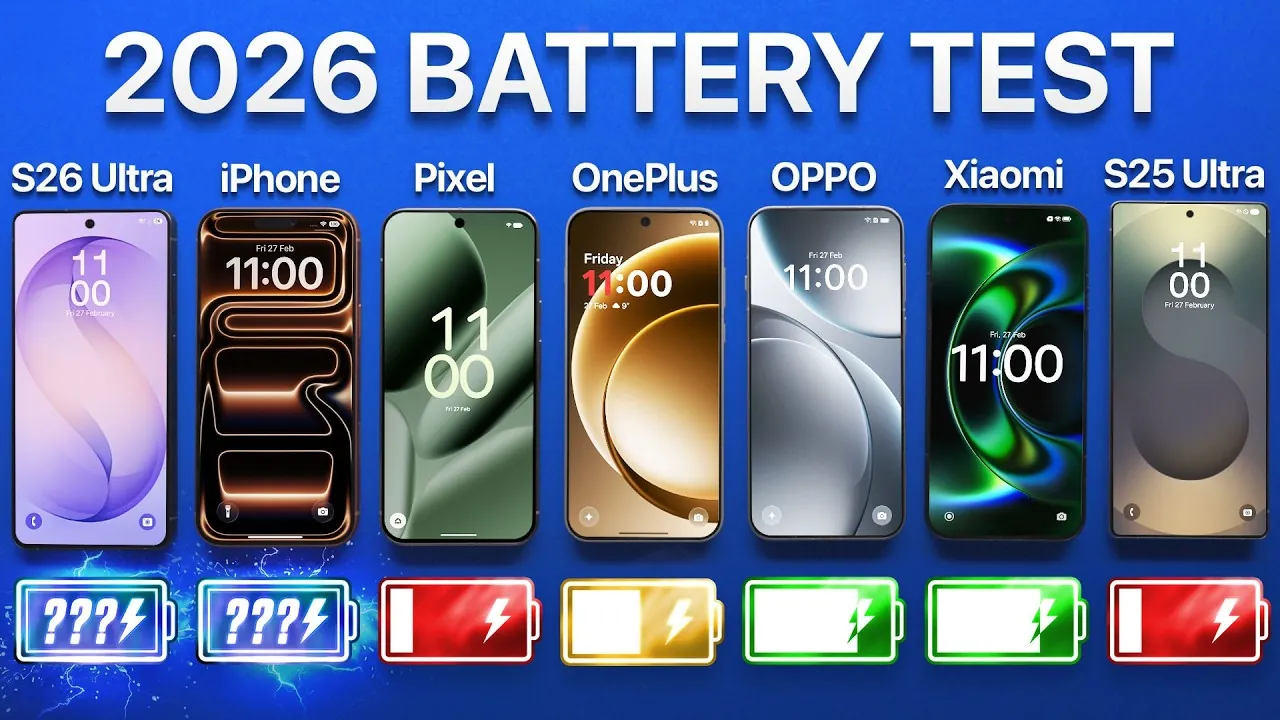
When choosing a flagship smartphone, factors such as battery life, thermal performance, and processing power play a pivotal role. This detailed video from Mrwhosetheboss compares the Samsung S26 Ultra with its competitors—the iPhone 17 Pro Max, Google Pixel 10 Pro XL, OnePlus 15, Oppo FindX 9 Pro, Xiaomi 17 Ultra, and last year’s Samsung Galaxy S25 Ultra. By examining design choices, battery technologies, and the impact of global regulations, this evaluation sheds light on how these elements influence performance and endurance in modern smartphones.

Battery Capacities and Technologies
Flagship smartphones differ significantly in their battery capacities and underlying technologies. The Samsung S26 Ultra, iPhone 17 Pro Max, and Google Pixel 10 Pro XL are equipped with batteries in the 5,000 mAh range, offering a balance between compact design and reasonable endurance. In contrast, the OnePlus 15, Oppo FindX 9 Pro, and Xiaomi 17 Ultra use larger silicon-carbon batteries, with capacities ranging from 6,800 to 7,500 mAh. These larger batteries promise extended usage times but face challenges due to global shipping regulations, which impose restrictions on single-cell battery capacities in certain regions.
To navigate these limitations, manufacturers such as Oppo and OnePlus have adopted dual-cell battery designs. This innovative approach allows them to maintain high capacities while adhering to international standards. However, this solution introduces trade-offs, including increased production costs and potential design complexities, highlighting the delicate balance between battery size, regulatory compliance, and manufacturing efficiency.
Performance and Efficiency
Battery efficiency is influenced by more than just capacity. The Samsung S26 Ultra demonstrates this by achieving longer battery life than its predecessor, the S25 Ultra, without increasing battery size. This improvement is attributed to advanced processing chips and enhanced thermal management systems. Similarly, the iPhone 17 Pro Max delivers strong performance despite having the smallest battery among the devices tested, showcasing the importance of software optimization and efficient hardware integration.
On the other hand, the Google Pixel 10 Pro XL struggles in both battery life and processing power, underperforming even when compared to older models like the Samsung S25 Ultra. In contrast, the Oppo FindX 9 Pro and OnePlus 15 excel in endurance, with the Oppo FindX 9 Pro lasting over 14 hours during intensive testing, thanks to its larger battery and effective power-saving modes.
Thermal Management and Its Impact
Effective thermal management is essential for maintaining consistent performance and prolonging battery life. Devices such as the Samsung S26 Ultra and iPhone 17 Pro Max incorporate aluminum frames to efficiently dissipate heat, making sure stable performance during demanding tasks. This design choice not only enhances user experience but also prevents overheating, which can degrade battery health over time.
In contrast, the Oppo FindX 9 Pro exhibits significant overheating during stress tests, which negatively impacts both its performance and battery life. The Google Pixel 10 Pro XL fares even worse in this category, with excessive heat generation accelerating battery depletion and reducing overall reliability for intensive applications. These findings underscore the critical role of thermal management in modern smartphone design.
Global Battery Restrictions and Their Influence
Global regulations governing battery shipping and design significantly affect smartphone performance. For example, the global variant of Xiaomi’s 17 Ultra is limited by restrictions on single-cell battery capacity, resulting in reduced performance compared to its regional counterparts. However, manufacturers like Oppo and OnePlus have successfully mitigated these challenges by implementing dual-cell battery solutions, which allow them to maintain high capacities while complying with international standards.
These restrictions highlight the challenges manufacturers face in balancing battery size, safety, and regulatory compliance, particularly for devices intended for global markets. At the same time, they serve as a fantastic option for innovation, driving advancements in battery technology and design.
Performance Benchmarks and Rankings
Processing power is another critical factor influencing smartphone performance. Devices like the Samsung S26 Ultra, powered by Snapdragon processors, continue to lead in speed and efficiency, offering smooth multitasking and superior performance in demanding applications. In contrast, MediaTek chips, as seen in the Oppo FindX 9 Pro, lag behind in CPU performance, particularly during resource-intensive tasks such as gaming or video editing.
The Google Pixel 10 Pro XL further illustrates the importance of up-to-date hardware. Its outdated processing chip results in slower app loading times and lower benchmark scores, placing it at a disadvantage compared to its competitors. These disparities emphasize the need for innovative hardware to deliver optimal user experiences.
Based on battery endurance tests, the following rankings emerge:
- Oppo FindX 9 Pro: 14 hours 16 minutes, leading in endurance with its efficient power-saving modes.
- OnePlus 15: Nearly 13 hours, offering a balance of capacity and efficiency.
- Samsung S26 Ultra: 12 hours, showcasing improved efficiency over its predecessor.
- iPhone 17 Pro Max: Strong performance despite its smaller battery size.
- Xiaomi 17 Ultra: Limited by global battery restrictions, which affect its overall endurance.
- Samsung S25 Ultra: Outperformed by newer models in both battery life and efficiency.
- Google Pixel 10 Pro XL: Poor battery life and underwhelming performance.
Key Insights
This analysis reveals several critical insights into the interplay between battery technology, thermal management, and processing power in flagship smartphones:
- Battery capacity alone does not determine endurance; efficiency and thermal management are equally important.
- Devices with advanced thermal management systems, such as aluminum frames, deliver more consistent performance and longer battery life.
- Snapdragon processors continue to dominate in Android devices, offering superior speed and efficiency compared to MediaTek chips.
- Global regulations on battery design present challenges but also drive innovation, as seen in the adoption of dual-cell battery solutions.
Overall Assessment
The Samsung S26 Ultra strikes a commendable balance between battery life, thermal management, and processing power, making it a strong contender in the flagship smartphone market. While the Oppo FindX 9 Pro and OnePlus 15 excel in battery endurance, the iPhone 17 Pro Max demonstrates the value of efficient design and optimization despite its smaller battery. Conversely, the Google Pixel 10 Pro XL highlights the drawbacks of outdated hardware and insufficient thermal management, serving as a reminder of the importance of innovation and efficiency in modern smartphone design. This comparison underscores the intricate relationship between battery technology, performance optimization, and regulatory compliance in shaping the future of flagship smartphones.
Uncover more insights about Samsung S26 Ultra battery performance in the previous articles we have written.
- Samsung Galaxy S26 Ultra: Prepare for the Next Level
- Privacy Display: Why the Samsung Galaxy S26 Ultra Stands Out
- Samsung’s Galaxy S26 Ultra: A Fantastic option in 2026
- Samsung Galaxy S26 Ultra: Features, Specs, and Release Date
- Samsung Galaxy S26 Ultra: Pros, Cons, and Key Features
Source & Image Credit: Mrwhosetheboss
Disclosure: Some of our articles include affiliate links. If you buy something through one of these links, Geeky Gadgets may earn an affiliate commission. Learn about our Disclosure Policy.
