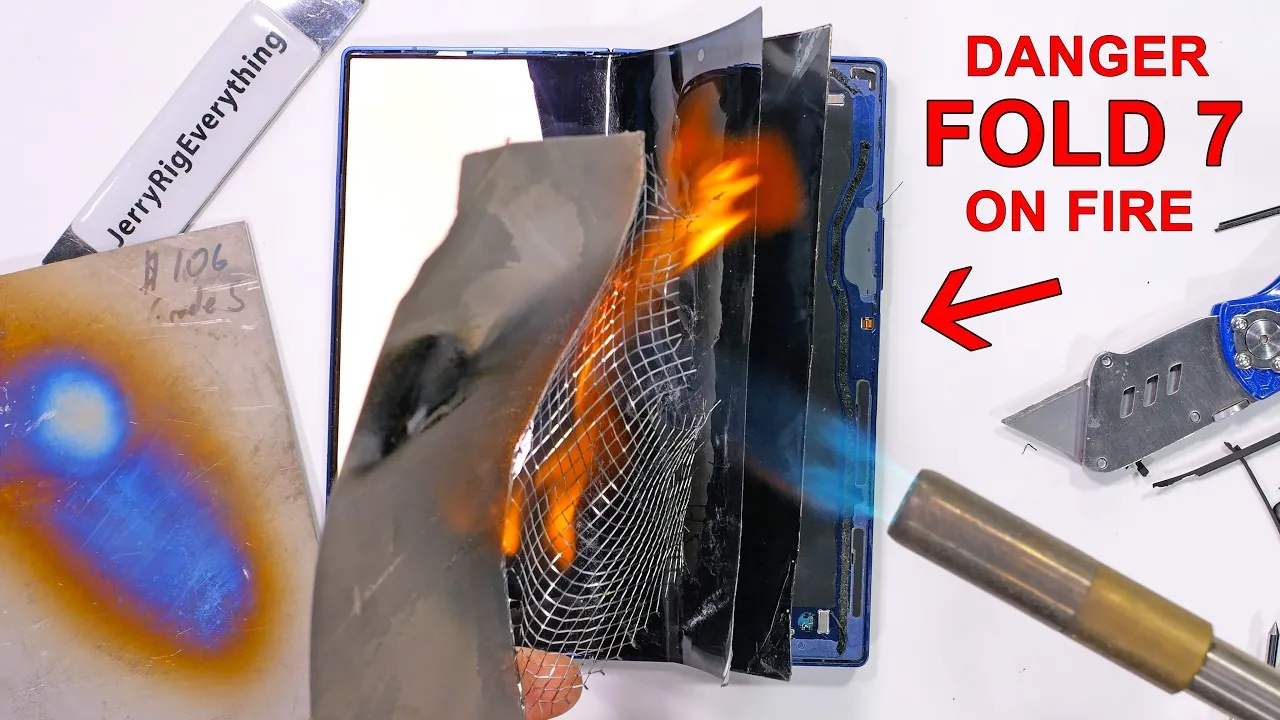
The Samsung Galaxy Z Fold 7 represents a significant milestone in smartphone engineering, merging advanced technology with a sleek folding design. This device showcases a blend of innovation and practicality, but it also presents challenges in areas such as repairability and thermal management. By examining its internal components, material choices, and engineering advancements, this analysis provides a detailed look at the Fold7’s strengths and limitations, offering insights into the trade-offs inherent in innovative devices. In the video below from JerryRigEverything, we get to find out what is inside the device, and it also gets set on fire.

Folding Screen Durability: Balancing Flexibility and Fragility
At the heart of the Galaxy Z Fold7 lies its folding screen, a technological achievement that combines flexibility with inherent fragility. The screen features an ultra-thin glass layer beneath a protective plastic coating, which enhances its usability but makes it vulnerable to damage, particularly along the edges. To address this, Samsung has incorporated a titanium backplate in non-flexible areas, ensuring structural integrity without hindering the screen’s ability to fold. Surrounding the screen are plastic bezels designed to shield the edges, though these components are notoriously difficult to remove during repairs. This combination of materials underscores the complexity of creating a durable yet foldable display.
Material Composition: Strength Meets Portability
The Fold7’s construction reflects a meticulous balance between durability and portability. Key structural elements, such as the titanium backplate and metal mesh, provide enhanced strength while maintaining a lightweight design. The aluminum chassis, crafted with precision, reveals subtle manufacturing marks that highlight the intricate engineering involved. An anodized aluminum frame adds further reinforcement, but its limited thermal conductivity poses challenges for heat dissipation during extended use. These material choices demonstrate Samsung’s commitment to creating a device that is both robust and portable, though not without compromises.
Repairability: Navigating Complexity
Repairing the Galaxy Fold7 is a challenging endeavor due to its intricate design and the extensive use of strong adhesives. The folding screen, in particular, requires exceptional care to remove without causing damage, making repairs difficult for non-professionals. While the dual battery system, with a combined capacity of 4,400 mAh, includes pull tabs for easier removal, other components—such as the hinge mechanism—demand specialized tools and expertise. Samsung’s focus on durability and compactness comes at the expense of repairability, highlighting the trade-offs involved in creating advanced devices.
Internal Components: Features and Functional Trade-Offs
The Fold7 integrates several advanced features that enhance its functionality, showcasing Samsung’s engineering prowess. Key highlights include:
- Dual batteries strategically placed for balance, equipped with pull tabs for easier removal.
- A sophisticated camera system featuring optical image stabilization on select lenses for sharp, stable images.
- Water resistance is achieved through rubber seals and protective tape to safeguard internal components.
Despite these innovations, the device lacks an external cooling system, relying instead on air gaps for heat dissipation. This design choice, while space-efficient, raises concerns about thermal performance during intensive tasks. The absence of robust cooling solutions limits the device’s ability to maintain optimal performance under heavy workloads, reflecting a trade-off between compact design and effective thermal management.
Engineering Innovations: Refining the Foldable Experience
Samsung has introduced several refinements to the Fold7’s design, particularly in its hinge mechanism. The updated hinge is thinner and lighter than its predecessor, the Fold6, enhancing both portability and usability without compromising durability. The device also incorporates reverse wireless charging and 5G millimeter-wave antennas, demonstrating Samsung’s commitment to integrating the latest technologies. However, the lack of advanced thermal management solutions, such as dedicated cooling systems, continues to be a limitation. These engineering choices highlight the challenges of balancing innovation with practical performance in folding smartphones.
Thermal Management: A Persistent Challenge
The Fold7’s thermal management strategy relies heavily on air gaps, which are less effective than dedicated cooling systems. While the anodized aluminum frame adds durability, its limited thermal conductivity restricts heat dissipation, particularly during resource-intensive tasks. This design limitation may affect the device’s ability to sustain optimal performance under prolonged use. The trade-off between compact design and efficient heat management remains a key challenge for folding smartphones, underscoring the need for further advancements in this area.
Advancing Smartphone Design with Trade-Offs
The Samsung Galaxy Fold7 exemplifies the possibilities of modern engineering, combining innovative folding screen technology with advanced materials and features. Its design reflects a commitment to durability and sophistication, but it also highlights significant challenges in repairability and thermal management. For users, the Fold7 offers a glimpse into the future of mobile technology, showcasing the potential of foldable devices while emphasizing the need for careful handling and professional maintenance. As folding screen technology continues to evolve, the Fold7 sets a high benchmark for innovation, paving the way for future advancements in the smartphone industry.
Take a look at other insightful guides from our broad collection that might capture your interest in Folding Screen Durability.
- Samsung Z Fold 7 Durability Test: Strengths and Weaknesses
- Huawei Mate XT Durability Tested – Use Carefully!!
- Samsung Galaxy Z Fold 7 vs. Z Fold 6
- How Durable is the Google Pixle 9 Pro Fold? (Video)
- Samsung Galaxy Z Flip7: Specs, Camera, and Performance
Source & Image Credit: JerryRigEverything
Disclosure: Some of our articles include affiliate links. If you buy something through one of these links, Geeky Gadgets may earn an affiliate commission. Learn about our Disclosure Policy.
