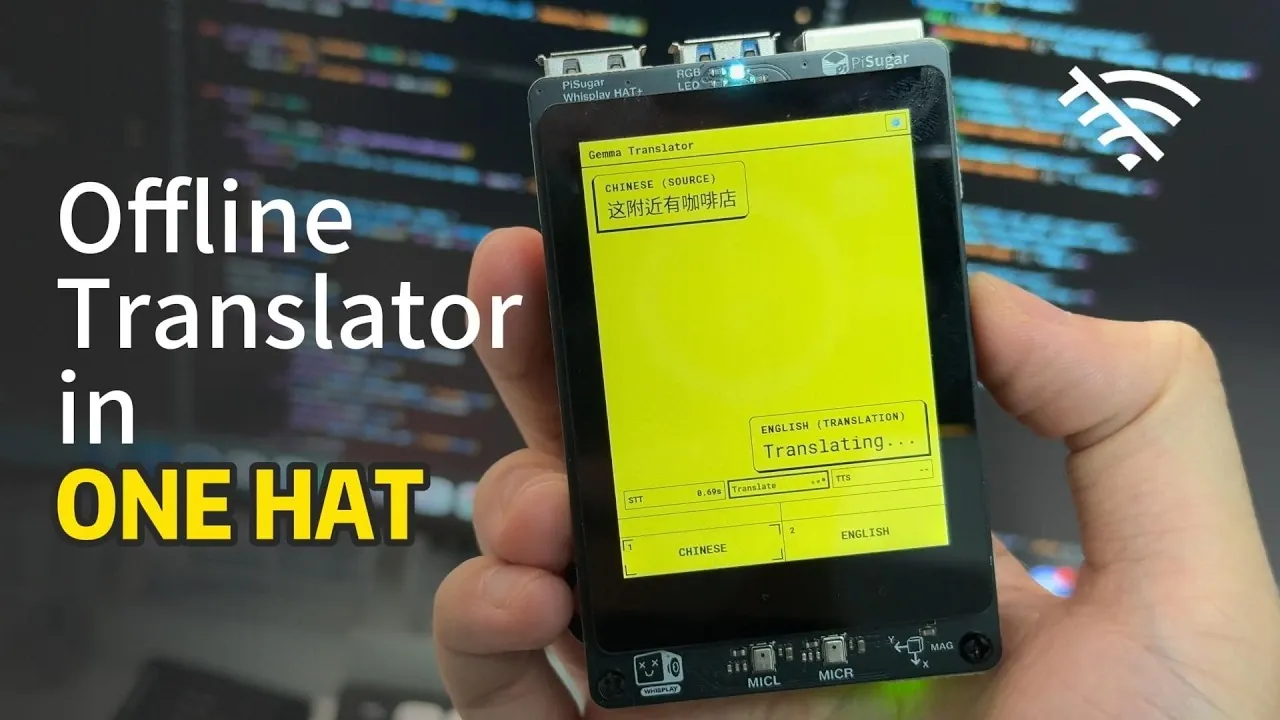
Google’s offline translator has undergone a significant redesign, now incorporating the Raspberry Pi Hat+ to streamline its functionality. This compact hardware solution integrates components like a touchscreen, dual microphones and onboard speakers into a single board, replacing the bulkier original setup that relied on separate devices. Jdaie Lin explores how this updated design not only reduces the hardware footprint but also simplifies assembly, making offline translation more accessible and portable for various use cases.
Gain insight into how the Raspberry Pi Hat+ enhances usability with features like a multi-touch interface for intuitive navigation and real-time feedback for translation tasks. Discover how the device’s offline capabilities address connectivity challenges, making it ideal for travelers and language learners. The analysis also highlights the broader potential of this compact design, from allowing voice-controlled systems to supporting custom audio-based projects.
What’s New in the Updated Design?
TL;DR Key Takeaways :
- The updated Google offline translator now uses the Raspberry Pi Hat+, integrating all essential components into a single compact board for improved portability and functionality.
- Key features include a 2.8-inch touchscreen, dual onboard microphones, integrated speakers and a design that aligns with the Raspberry Pi 4, eliminating the need for external devices.
- The touchscreen interface and real-time feedback enhance user experience, making language switching and translation tasks more intuitive and efficient.
- The device performs translations entirely offline, making it ideal for use in areas with limited or no internet connectivity, benefiting travelers, language learners and secure environments.
- The compact design supports a variety of applications beyond translation, such as voice-controlled assistants, educational tools and custom audio projects for developers and hobbyists.
The original version of Google’s offline translator relied on a collection of separate components, including a display, buttons, rotary encoder, USB microphone and external speakers. While functional, this setup was bulky and required multiple connections, making it less practical for portable or compact use.
The updated design, featuring the Raspberry Pi Hat Plus, consolidates all these elements into a single, compact board. This integration not only reduces the hardware footprint but also simplifies the assembly process. By eliminating the need for multiple external devices, the new design ensures a more seamless and accessible experience for users.
Key Features of the Raspberry Pi Hat Plus
The Raspberry Pi Hat Plus introduces several advanced features that enhance usability and performance. These include:
- A 2.8-inch 640×480 DSI touchscreen with multi-touch capability, replacing traditional physical controls like buttons and rotary encoders for a modern, intuitive interface.
- Dual onboard microphones for precise and clear audio input, removing the need for an external USB microphone.
- Integrated speakers for direct audio output, eliminating the requirement for additional external speaker hardware.
- A compact design that aligns perfectly with the Raspberry Pi 4’s dimensions, making sure a seamless fit and reducing overall bulk.
These features make the Raspberry Pi Hat Plus an all-in-one solution, ideal for projects requiring audio input and output, such as offline translation. The integration of these components into a single board simplifies the setup process and enhances the device’s portability.

Explore further guides and articles from our vast library that you may find relevant to your interests in translation.
- What It’s Actually Like to Wear the New Rokid AI Glasses
- The Smart Glasses Feature Meta Ray-Bans Missed That Inmo Nailed
- iFLYTEK AI Translation Earbuds Break the Language Barrier with 2-Second Low-Latency Interpretation
- Shokz OpenDots 2 vs Air vs One : Are OpenDots 2 Actually Worth €199?
- Google Antigravity Builds Gemma Translator on Raspberry Pi 5
- The Biggest Surprises Coming to Apple’s June 8 WWDC 2026 Event
Improved User Experience
The updated translator design focuses on delivering a more intuitive and efficient user experience. The touchscreen interface replaces traditional physical controls, allowing you to navigate settings, switch languages and manage translation functions with ease. This modern interface enhances usability, making the device accessible to users of all technical skill levels.
Another key improvement is the inclusion of real-time feedback for translation steps. This feature enables you to monitor the system’s progress as it processes audio input and generates translations. Additionally, language switching has been integrated into the settings panel, allowing you to toggle between languages effortlessly. These enhancements are particularly valuable for real-time translation tasks, where speed and ease of use are critical.
Offline Translation: A Practical Advantage
One of the most compelling features of this rebuild is its ability to perform translations entirely offline. By using the processing power of the Raspberry Pi and the integrated hardware of the Hat Plus, the device can handle audio input and output without requiring an internet connection.
This offline capability is especially beneficial in scenarios where connectivity is limited or unavailable. Whether you’re traveling in remote areas, working in secure environments, or simply seeking a reliable translation tool without relying on the internet, this device offers a practical solution. The dual microphones ensure accurate audio capture, while the onboard speakers provide clear playback of translated content. This functionality makes the device an invaluable tool for language learners, travelers and anyone facilitating cross-cultural communication.
Compact Design for Enhanced Portability
The integration of all necessary components into the Raspberry Pi Hat Plus significantly reduces the complexity of the hardware setup. Unlike the original build, which required multiple external devices, the new design only requires the Raspberry Pi and the Hat Plus. This compact configuration saves space and enhances portability, making it easier to use the device in a variety of settings.
Whether you’re working at home, in the field, or on the go, the streamlined design ensures convenience without compromising functionality. The reduced hardware footprint also makes the device more practical for developers and hobbyists who want to experiment with offline translation technology or integrate it into other projects.
Expanding Applications and Future Potential
The versatility of the Raspberry Pi Hat Plus extends beyond offline translation. Its compact design and integrated features make it suitable for a wide range of applications, including:
- Voice-controlled assistants for smart home or personal use
- Portable media devices with audio input and output capabilities
- Educational tools for language learning and interactive teaching
- Custom audio-based projects for developers, hobbyists and innovators
This rebuild demonstrates how compact hardware integration can simplify complex projects while maintaining high functionality. By reimagining Google’s offline translator with the Raspberry Pi Hat Plus, this project highlights the potential of streamlined hardware solutions in advancing technology.
Whether you’re a developer, educator, or tech enthusiast, this innovative approach offers valuable insights into the future of offline translation and other audio-based applications. The combination of portability, efficiency and offline capabilities ensures that this device remains a practical and versatile tool for a wide range of users.
Media Credit: Jdaie Lin
Disclosure: Some of our articles include affiliate links. If you buy something through one of these links, Geeky Gadgets may earn an affiliate commission. Learn about our Disclosure Policy.
