Smart irrigation has evolved well beyond programmable hose timers. Today’s systems can monitor soil moisture, detect rainfall, and adjust watering schedules remotely, helping homeowners respond to changing conditions instead of relying on fixed routines. Yet many of these capabilities still exist as standalone features rather than parts of a coordinated system.
RainPoint’s Smart Watering Ecosystem is built around a different idea. Instead of treating a timer, rain sensor, soil-moisture sensor, and mobile app as separate smart gadgets, it connects them through a shared platform where each component contributes different data and responsibilities. That gives homeowners one place to manage irrigation while allowing the different devices to work together behind the scenes.
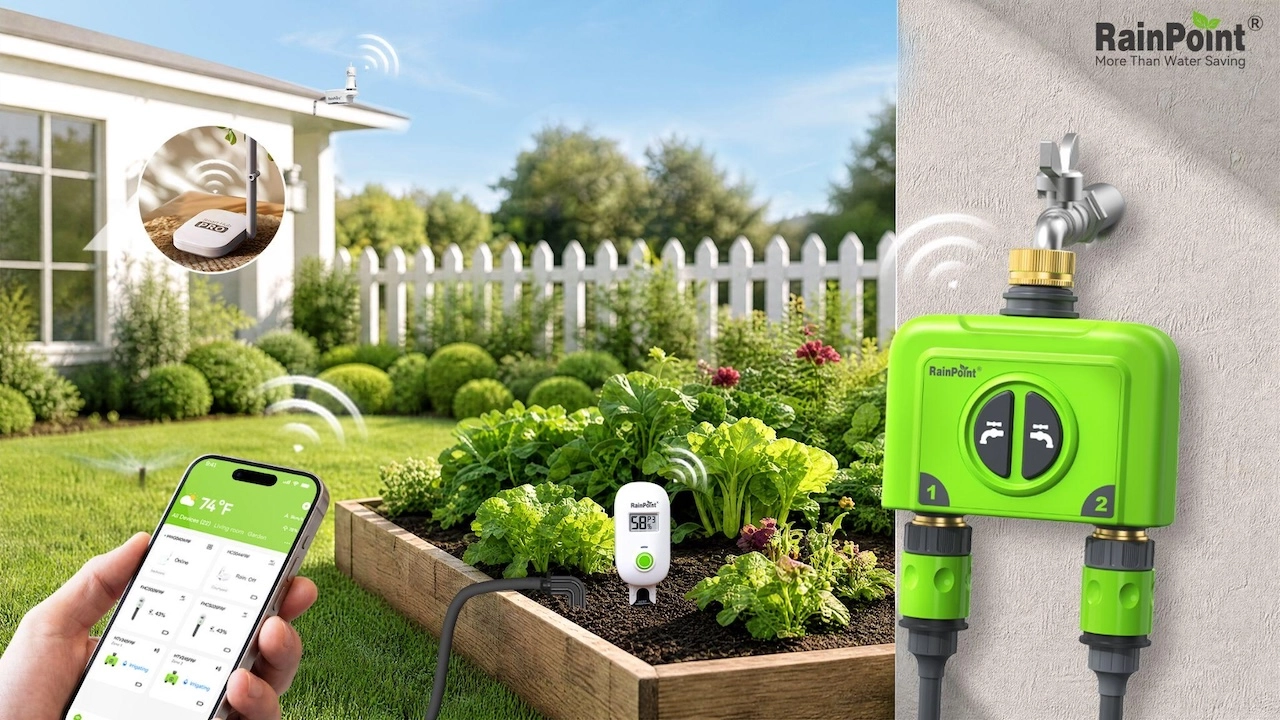
Building a Connected System for Smarter Irrigation
The RainPoint Smart Watering Ecosystem is built around several connected components, including a gateway, dual-zone smart water timer, soil-moisture sensor, rain sensor, and the RainPoint Home app.
Each component has a specific role within the system.
At the center of the system is a dual-zone smart water timer that lets homeowners manage different parts of the yard independently. Instead of applying the same schedule across the entire landscape, each zone can be watered according to its own needs. For example, a lawn can follow a more frequent watering routine while flower beds, vegetable gardens, or raised beds operate on completely different schedules.
The gateway connects the system’s devices and helps coordinate communication between hardware components and the mobile app. This creates a unified experience where users can manage irrigation settings from one place rather than adjusting each device separately.
The ecosystem also incorporates environmental sensors that help irrigation respond to changing outdoor conditions. The soil-moisture sensor monitors conditions around plants, while the rain sensor detects rainfall to help prevent unnecessary watering. Together, they give the system a better understanding of when irrigation is actually needed, instead of relying solely on preset schedules.
Through the RainPoint Home app, users can create schedules, adjust watering plans remotely, review historical data, and manage irrigation from anywhere. The system also supports multiple watering modes, giving users more flexibility as seasons and planting needs change.
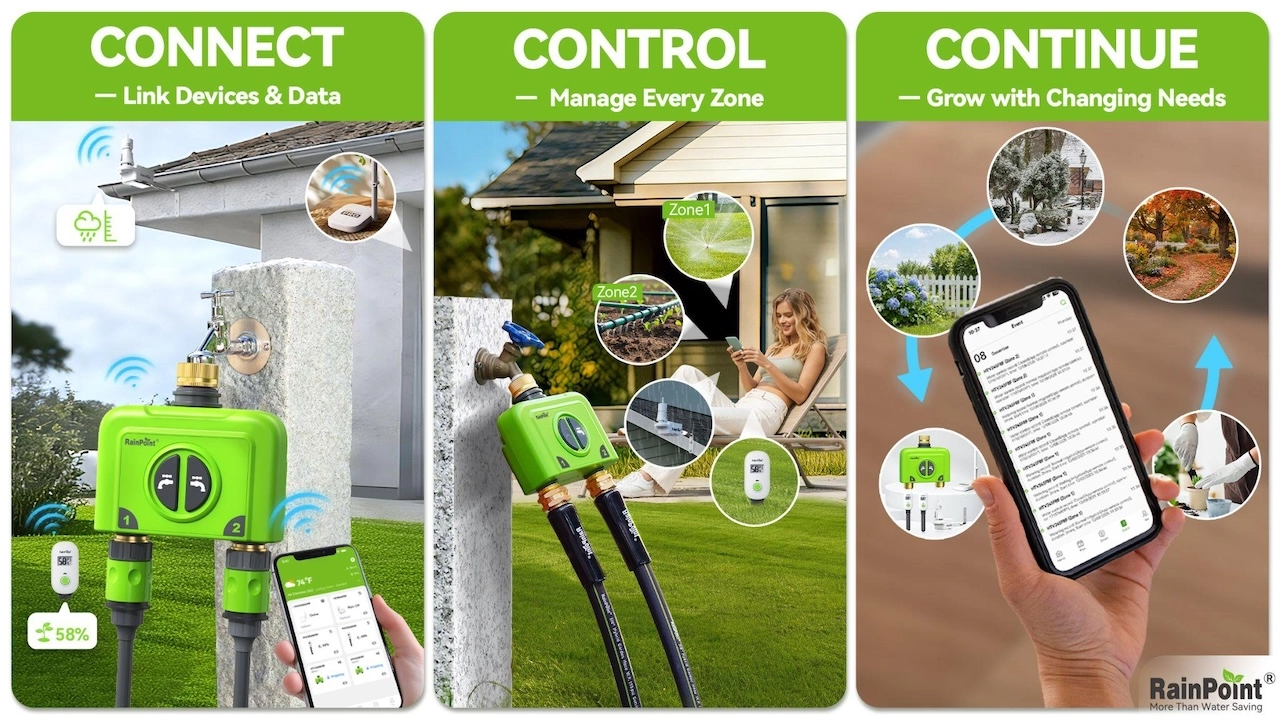
Connect, Control, Continue: A Smart Garden Approach
RainPoint organizes its smart irrigation philosophy around three ideas: Connect, Control, and Continue.
Connect represents the foundation of the ecosystem. By linking water sources, irrigation hardware, environmental sensors, plant conditions, and user input, RainPoint creates a connected network instead of a collection of separate devices. This connection allows different parts of the system to work together and provide more useful information for daily plant care.
Control focuses on giving homeowners clearer management over their outdoor spaces. Through independent zones, customizable schedules, remote access, and environmental monitoring, users can adjust watering routines with less guesswork. For example, a homeowner preparing for a vacation can check irrigation status remotely, while someone maintaining a vegetable garden can fine-tune watering based on changing conditions.
Continue highlights the long-term value of an expandable smart garden system. Outdoor care is not a one-time task. Plants require ongoing attention through different seasons, weather patterns, and growth stages. By supporting additional RainPoint devices over time, the ecosystem provides a foundation for continued improvement and easier maintenance.
Practical Smart Irrigation for Everyday Outdoor Spaces
The value of connected irrigation becomes clearer in real-world situations.
For homeowners managing multiple outdoor areas, RainPoint can simplify the challenge of balancing different watering requirements. A front lawn, backyard garden, flower bed, and vegetable area may all need different schedules. Instead of manually changing settings throughout the week, users can create separate plans based on each zone’s needs.
The system can also help during unpredictable weather. Traditional irrigation schedules often continue running even after rainfall, potentially using water unnecessarily. With rain detection and soil monitoring, homeowners have additional information to make better watering decisions.
For frequent travelers or busy families, remote control adds convenience. Users can check their garden conditions, adjust schedules, and respond to changing situations without needing to be physically present.
Making Smart Gardens More Accessible
As water conservation and sustainable living become increasingly important, outdoor automation is becoming a growing part of the connected home ecosystem. Smart irrigation systems offer homeowners a way to combine convenience with more responsible water use.
RainPoint’s approach focuses on creating an accessible smart garden ecosystem where technology supports everyday plant care without adding unnecessary complexity. By combining connected hardware, environmental awareness, and flexible control, the system helps transform irrigation from a repetitive household task into a more intelligent and manageable part of modern outdoor living.
For homeowners looking to bring smart-home technology beyond the walls of their house, the RainPoint Smart Watering Ecosystem provides a connected foundation for building a more efficient and sustainable garden.
Disclosure: Some of our articles include affiliate links. If you buy something through one of these links, Geeky Gadgets may earn an affiliate commission. Learn about our Disclosure Policy.
