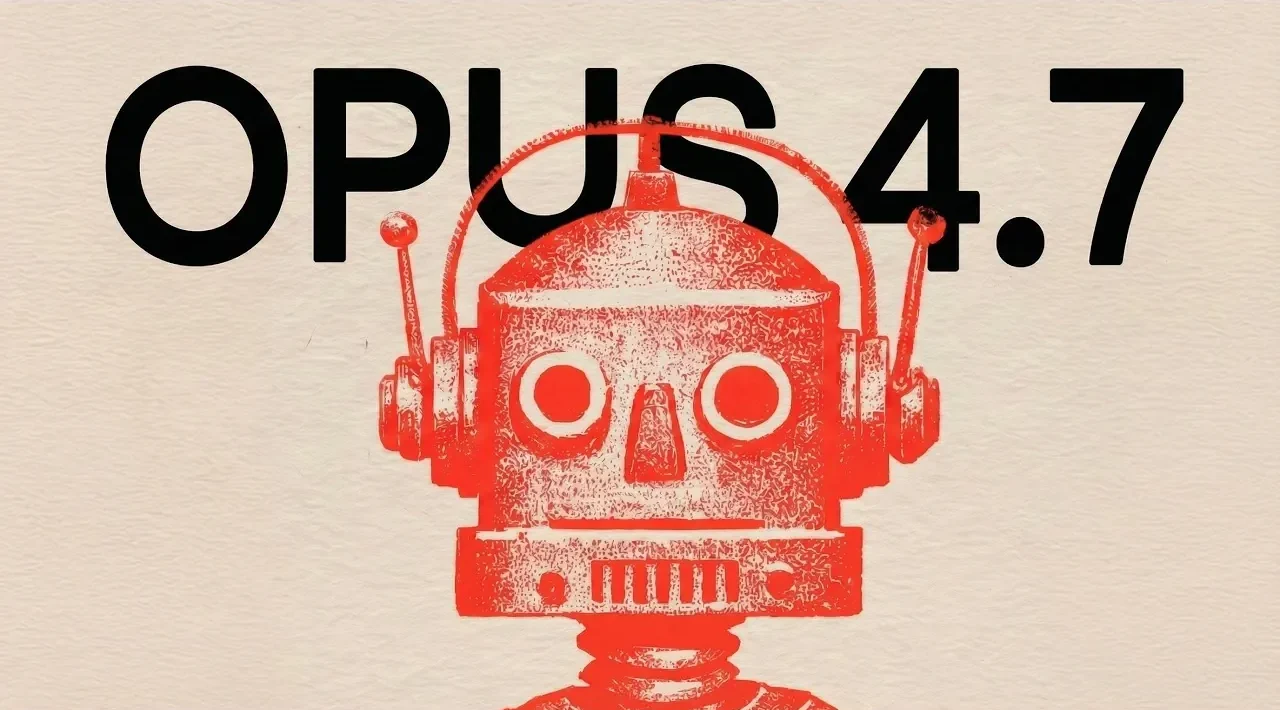
Anthropic’s Opus 4.7 and Claude Code combine to create a sophisticated coding and automation framework, as explored by David Ondrej. This pairing uses Opus 4.7’s enhanced capabilities, such as its redesigned tokenizer, which improves contextual understanding and reasoning efficiency. For example, the model’s ability to autonomously manage multi-step workflows makes it particularly effective for complex tasks like debugging intricate codebases or analyzing financial data. However, these advancements come with trade-offs, including increased token usage that may impact cost efficiency for large-scale projects.
In this overview, you’ll gain insight into how Opus 4.7’s features, such as its improved visual reasoning and command-based customization options, can address specific challenges in software development and automation. Explore its real-world applications, from creating scalable web applications to streamlining operations in creative industries. Additionally, understand the limitations, including verbosity and cost considerations, to help you evaluate whether this system aligns with your technical and organizational needs.
New Performance Enhancements
TL;DR Key Takeaways :
- Opus 4.7 introduces significant advancements in coding, automation and complex reasoning, outperforming competitors like GPT-5.4 and Gemini 3.1 in key areas such as web development, financial data analysis and multi-step workflows.
- The redesigned tokenizer enhances contextual understanding, reasoning efficiency and input handling but increases token usage by 20-60%, potentially raising operational costs for large-scale projects.
- New features include improved visual reasoning, command-based tools for customization and enhanced security measures, making the model versatile and reliable for diverse applications.
- Real-world applications span game development, automation and creative industries, showcasing the model’s ability to streamline operations and drive innovation across sectors.
- Challenges include increased verbosity, variability in specific benchmarks and ethical concerns over lifecycle management, requiring careful evaluation of its suitability for specific projects and budgets.
Opus 4.7 delivers substantial improvements in performance, surpassing competitors like GPT-5.4 and Gemini 3.1 in critical areas. Its advancements are particularly evident in:
- Web Application Development: The model excels in generating efficient, scalable code for modern web platforms.
- Financial Data Analysis: Enhanced analytical capabilities allow for more accurate and nuanced insights into complex datasets.
- Tool Integration and Multi-Step Workflows: Its ability to autonomously manage intricate workflows makes it a preferred choice for automation-heavy tasks.
The model achieved a 10% improvement in SWE Pro benchmarks and a 13% gain in visual reasoning tasks, solidifying its position as a leader in precision-driven projects. Its enhanced ability to autonomously handle complex workflows, such as financial modeling or intricate problem-solving, underscores its potential to drive productivity and innovation.
Tokenizer Overhaul: A Double-Edged Sword
One of the most fantastic updates in Opus 4.7 is its redesigned tokenizer. Unlike the incremental refinements seen in Opus 4.6, this tokenizer was rebuilt from the ground up, resulting in:
- Improved Contextual Understanding: The model can now interpret nuanced instructions with greater accuracy.
- Greater Reasoning Efficiency: Enhanced processing allows for faster and more reliable outputs.
- Enhanced Input Handling: It is better equipped to process intricate codebases and detailed prompts.
These advancements make the model particularly effective for tasks requiring high levels of precision, such as debugging complex software or interpreting detailed instructions. However, the redesigned tokenizer increases token usage by 20-60%, which could lead to higher operational costs for large-scale projects. Users must carefully evaluate these costs against the benefits of improved performance.
Take a look at other insightful guides from our broad collection that might capture your interest in Anthropic Opus 4.7.
- Claude Opus 4.7 Leaks & Anthropic’s Full-Stack AI Studio
- Opus 4.7 Leak: Anthropic’s Answer to Google Stitch
- Gemma 4 and Falcon Perception: A New Agentic Loop System
New Features and Functionalities
Opus 4.7 introduces a range of new features aimed at enhancing its versatility and user control. These include:
- Visual Reasoning: The model’s improved ability to interpret screenshots and user interface elements makes it an invaluable tool for UI testing and design validation.
- Command-Based Tools: New commands, such as
/ultra reviewfor detailed code analysis and/effortfor adjusting reasoning levels, provide users with greater customization and control. - Security Enhancements: Increased resistance to prompt injection attacks and reduced refusals on sensitive prompts improve reliability in secure environments.
These features significantly expand the model’s utility, making it a powerful tool for tasks that demand precision, adaptability and security. Whether you’re a developer, analyst, or creative professional, these functionalities offer practical solutions to complex challenges.
Real-World Applications
The practical applications of Opus 4.7 are vast, demonstrating its versatility across a wide range of industries. Key use cases include:
- Game Development: The model has successfully created complex projects, such as a fully functional first-person shooter (FPS) game within a single HTML file, showcasing its potential in creative and technical fields.
- Automation: Its autonomy and long-term reasoning capabilities make it ideal for managing intricate workflows with minimal human intervention, streamlining operations across sectors.
- Creative Industries: From design to content creation, Opus 4.7’s innovative potential extends to areas requiring both technical expertise and creative problem-solving.
These capabilities highlight the model’s ability to streamline operations, enhance productivity and drive innovation across diverse fields, making it a valuable asset for organizations seeking to use AI effectively.
Challenges and Limitations
Despite its numerous advancements, Opus 4.7 is not without challenges. Key limitations include:
- Increased Verbosity: The model’s tendency to follow instructions literally may require users to refine their prompts for optimal results, adding a layer of complexity to its usage.
- Benchmark Variability: While it excels in most tasks, its performance on “needle in a haystack” problems, those requiring highly specific information retrieval, remains slightly less impressive.
- Lifecycle Management Concerns: The pre-launch nerfing of older models raises ethical questions, as users relying on previous versions may feel pressured to upgrade, potentially disrupting workflows.
These factors underscore the importance of understanding the model’s strengths and limitations before deployment, making sure that it aligns with specific project requirements and organizational goals.
Cost Considerations
The increased token usage in Opus 4.7 has direct cost implications. While the per-token pricing remains unchanged, the higher token consumption can lead to elevated expenses for users, particularly in large-scale applications. However, the model’s adaptive reasoning feature helps optimize token usage for simpler tasks, offering some degree of cost efficiency. Organizations must carefully assess their budgetary constraints and usage needs to determine whether the model’s capabilities justify the associated costs.
Competitive Landscape
Anthropic’s advancements with Opus 4.7 have intensified competition within the AI market. The model’s superior performance challenges established players like OpenAI, which is rumored to be preparing a new release to maintain its market position. Speculation about Anthropic surpassing OpenAI in revenue further highlights the shifting dynamics of the AI industry. This competitive environment is likely to drive further innovation, benefiting users by expanding the range of available tools and technologies.
Future Prospects
Anthropic’s commitment to scaling and refining its models suggests a promising trajectory for AI innovation. Potential updates to fast mode and further standardization of the tokenizer are expected to enhance usability and performance. As the company continues to push the boundaries of AI technology, Opus 4.7 stands as a testament to the rapid evolution of the field, offering a glimpse into the future of intelligent automation and reasoning systems.
Media Credit: David Ondrej
Disclosure: Some of our articles include affiliate links. If you buy something through one of these links, Geeky Gadgets may earn an affiliate commission. Learn about our Disclosure Policy.
