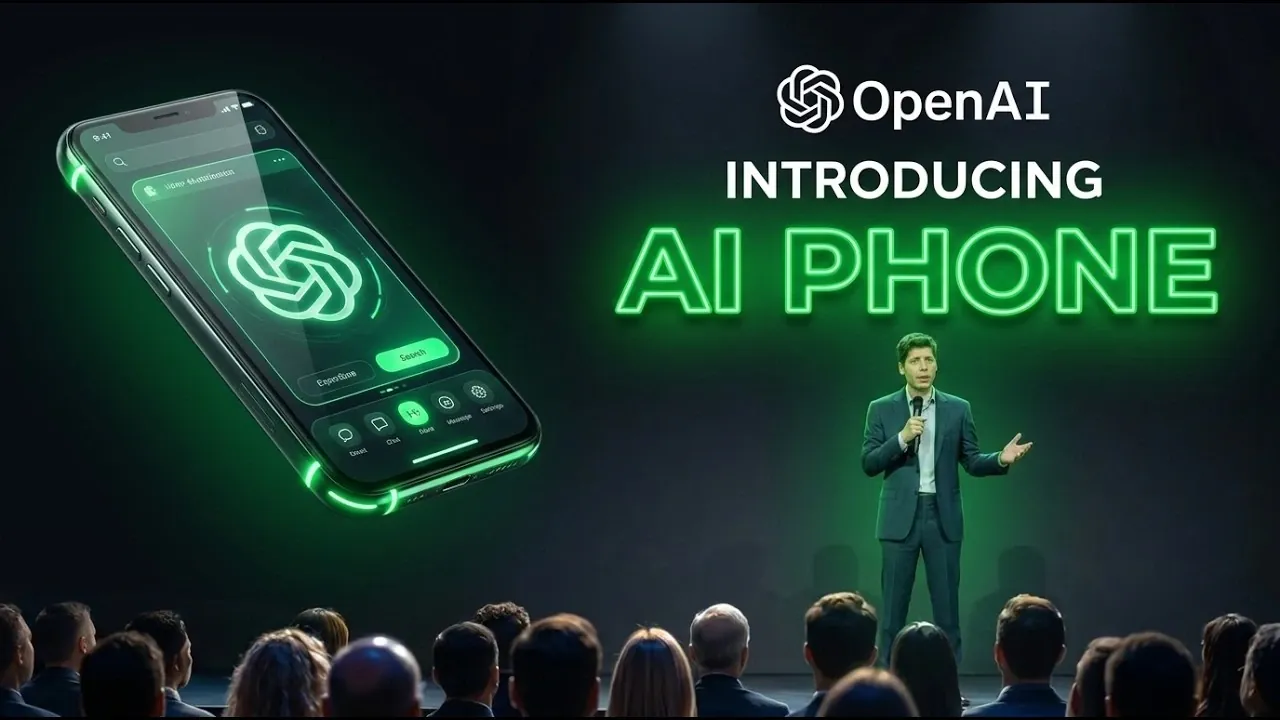
OpenAI is reportedly working on an AI-first smartphone, a device that aims to integrate artificial intelligence directly into its hardware rather than relying on conventional app-based systems. According to AI Grid, one notable detail is OpenAI’s 2025 acquisition of a hardware startup co-founded by Jony Ive, the designer behind the iPhone. This move suggests a focus on combining advanced AI capabilities with a design philosophy that emphasizes simplicity and functionality. Early concepts hint at two possible directions: a fully integrated smartphone or a minimalist, wearable companion.
Dive into how OpenAI might tackle key challenges such as privacy safeguards and the technical requirements of AI-focused hardware. Gain insight into potential design considerations, including battery optimization, streamlined user interfaces and the integration of high-performance processors for AI workloads. This feature also examines lessons from previous AI hardware projects to explore how OpenAI could balance usability, security and performance in its approach.
What’s the Vision? Seamless AI Integration
TL;DR Key Takeaways :
- OpenAI is reportedly developing an AI-first smartphone, aiming to embed AI capabilities directly into hardware for a seamless and intuitive user experience.
- The device could take the form of a screenless AI companion or a fully functional smartphone, focusing on real-time personalization and context-aware interactions.
- OpenAI acquired a hardware startup co-founded by Jony Ive, signaling a commitment to innovative design and advanced AI-driven functionality, with potential mass production by 2028.
- Privacy concerns are a major challenge, requiring robust data protection measures to balance functionality with user trust and security.
- By learning from past AI hardware failures, OpenAI aims to address issues like battery life, usability and reliability, potentially transforming the AI ecosystem and redefining human-computer interaction.
OpenAI’s vision is to make AI an integral part of your daily life, no longer confined to apps or software interfaces. Unlike traditional smartphones that rely on apps to deliver AI-driven features, this initiative seeks to embed AI into the very core of the device. The goal is to create a system that is not only more intuitive but also highly personalized and context-aware.
The concept could manifest as either a screenless AI companion or a fully functional AI-first smartphone. In either case, the focus is on delivering a device that adapts to your needs in real time, offering a highly personalized experience. This approach has the potential to fundamentally change how you interact with technology, making it more natural and less reliant on manual input.
Designing the Future: Hardware and Innovation
In 2025, OpenAI made headlines with its $6 billion acquisition of a hardware startup co-founded by Jony Ive, the legendary designer behind Apple’s iPhone. This move underscores OpenAI’s commitment to combining innovative design with innovative functionality. Early reports suggest that the company is exploring minimalist, wearable designs that prioritize simplicity while delivering essential AI-driven features.
The rumored AI-first smartphone, which could enter mass production by 2028, is expected to feature advanced processors from leading manufacturers like Qualcomm and MediaTek. These processors are specifically designed to handle the intensive computational demands of AI, making sure that the device delivers smooth and responsive performance. By focusing on both design and technical innovation, OpenAI aims to create a device that is not only functional but also aesthetically appealing and user-friendly.

Become an expert in OpenAI with the help of our in-depth articles and helpful guides.
- OpenAI Spud Leak: Everything We Know About ChatGPT 5.5 Pro
- OpenAI Prepares ChatGPT 5.5 Release
- ChatGPT 5.3 Codex vs Claude Opus 4.6 : Best Fit for Coding, Tasks & More
- Everything Revealed in the OpenAI GPT-5.5 Spud Leak
- OpenAI Spud ChatGPT 6 News & Claude Conway Agent Explained
- ChatGPT “Spud” : Unpacking OpenAI’s Next Big GPT Evolution
- Why Did OpenAI Shut Down Sora? The Real Reason Explained
- OpenClaw & OpenAI : Key Security Issues, Token Usage and Next Steps
- OpenAI’s New $100 Pro Plan and ChatGPT 6 Details
- Claude Opus 4.7 Leaks & Anthropic’s Full-Stack AI Studio
Privacy vs Functionality: A Delicate Balance
One of the most significant challenges OpenAI faces is addressing the privacy concerns inherent in AI-driven devices. For these devices to function effectively, they require access to a substantial amount of contextual data, which raises important questions about how your data is collected, stored and used. Additionally, the potential for these devices to inadvertently capture information about those around you adds another layer of complexity to the privacy debate.
To gain your trust, OpenAI will need to implement robust privacy measures. This could include transparent data practices, secure storage solutions and advanced encryption technologies to ensure that your information remains protected. Striking the right balance between functionality and privacy will be critical for the widespread adoption of this technology. Without clear and effective safeguards, even the most innovative device could struggle to gain acceptance.
Learning from Past Failures
The AI hardware market is littered with examples of ambitious projects that failed to deliver on their promises. Devices like the Humane AI Pin and Rabbit R1 faced issues such as poor functionality, limited battery life and a lack of user convenience. These shortcomings serve as cautionary tales for OpenAI, highlighting the importance of addressing key challenges to create a product that is both reliable and user-friendly.
Battery life, in particular, will be a critical focus area. To meet your expectations, the device must offer long-lasting performance without compromising its compact design. Additionally, the user interface must be intuitive, allowing you to interact with the device effortlessly. By learning from the mistakes of its predecessors, OpenAI has the opportunity to set a new standard for AI hardware.
Potential Impact on the AI Ecosystem
If successful, OpenAI’s hardware initiative could have a fantastic impact on the broader AI ecosystem. By creating a unified platform, the device could integrate functionalities such as reminders, search, communication and more into a single, cohesive experience. This shift from software to hardware could give AI a tangible presence, much like how the iPhone transformed the way people accessed the internet.
However, the path to success is fraught with challenges. OpenAI must navigate a complex landscape of technical, social and market barriers to deliver a product that meets your needs while addressing broader concerns about privacy and usability. The stakes are high, but the potential rewards could be equally significant, paving the way for a future where AI is seamlessly integrated into every aspect of your life.
What Lies Ahead?
OpenAI’s hardware plans remain in development, with multiple devices reportedly in the works. While product launches are rumored to occur between 2026 and 2028, the exact timeline and scope of these devices remain uncertain. Whether the final product takes the form of a screenless AI companion or a fully realized AI-first smartphone, OpenAI’s efforts represent a bold step toward redefining how you interact with technology.
The ultimate question is whether OpenAI can deliver a device that is functional, private and unobtrusive enough to transform your relationship with AI. If successful, this initiative could set a new benchmark for human-computer interaction, offering a glimpse into a future where AI is not just a tool but an integral part of your everyday life.
Media Credit: TheAIGRID
Disclosure: Some of our articles include affiliate links. If you buy something through one of these links, Geeky Gadgets may earn an affiliate commission. Learn about our Disclosure Policy.
