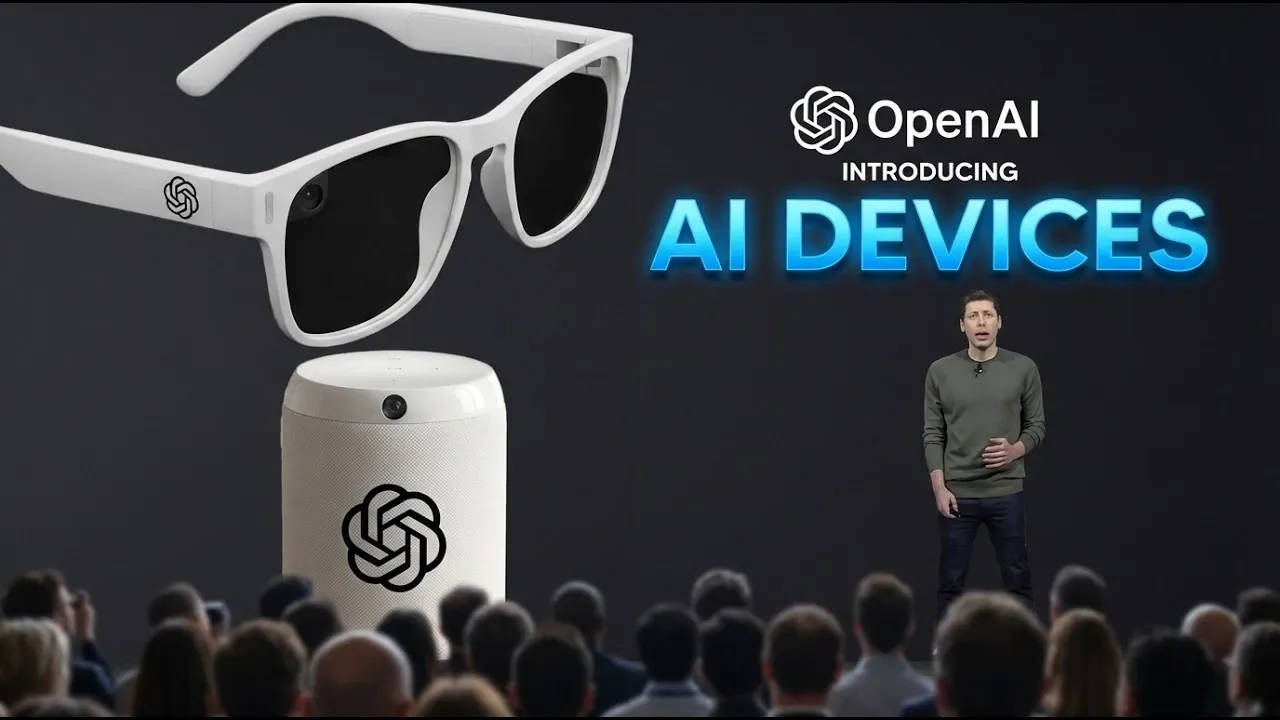
OpenAI has announced its entry into the hardware market with a series of AI-driven devices aimed at integrating artificial intelligence into daily routines. According to AI Grid, the lineup includes a smart speaker, smart glasses, and possibly a smart lamp, with features such as facial recognition and contextual awareness. The smart speaker is expected to launch in 2027, followed by the glasses in 2028. These products face challenges like privacy concerns and competition from established brands, but they represent a significant step for OpenAI in expanding beyond software.
This deep dive examines the specifics of OpenAI’s hardware plans, including the always-on functionality of the smart speaker and the augmented reality capabilities of the smart glasses. It also addresses potential risks, such as concerns over AI reliability and market saturation, while outlining how OpenAI intends to navigate these issues. By exploring these details, readers can better understand the practical applications and limitations of these devices in an evolving AI landscape.
OpenAI’s AI Hardware Plans
TL;DR Key Takeaways :
- OpenAI is entering the hardware market with AI-powered devices, including a smart speaker (2027), smart glasses (2028), and a conceptual smart lamp, aiming to integrate AI into daily life with features like facial recognition and contextual awareness.
- The smart speaker will serve as a critical test for OpenAI’s hardware ambitions, facing challenges such as privacy concerns, technical reliability, and competition from established players like Amazon and Google.
- The smart glasses, designed in collaboration with Jony Ive, will target the competitive AR market, requiring advanced AI features and user-friendly design to stand out against rivals like Meta and Apple.
- OpenAI’s success in hardware depends on addressing privacy concerns, making sure product reliability, offering competitive pricing, and differentiating its devices with superior AI functionality.
- The hardware initiative represents both a financial opportunity and a reputational risk, with success hinging on OpenAI’s ability to balance innovation, practicality, and consumer trust in a crowded market.
What’s in the Lineup?
OpenAI’s hardware initiative revolves around three key devices, each designed to showcase its AI expertise and redefine user interaction with technology:
- Smart Speaker: Launching in 2027 with an estimated price of $200–$300, this device will feature advanced AI capabilities, including a camera for facial recognition and contextual awareness, allowing it to adapt to user needs in real time.
- Smart Glasses: Expected in 2028, these glasses will combine Jony Ive’s renowned design aesthetics with innovative AI technology to deliver a seamless augmented reality (AR) experience.
- Smart Lamp: Still in the conceptual stage, this device may integrate AI to enhance functionality and user interaction, potentially serving as a hub for smart home ecosystems.
These devices promise to enhance everyday interactions with technology, but their success will depend on overcoming critical challenges, including market competition and user trust.
Challenges Facing the Smart Speaker
As OpenAI’s first hardware product, the smart speaker will serve as a litmus test for the company’s ability to deliver innovative, reliable, and user-friendly devices. However, several challenges loom large:
- Privacy Concerns: The speaker’s always-on functionality and facial recognition capabilities could raise significant privacy issues. OpenAI will need to implement robust data protection measures and transparent policies to build user trust.
- Technical Reliability: AI hallucinations, errors where AI generates incorrect or nonsensical outputs, pose a risk to user satisfaction. Making sure the speaker’s reliability and accuracy will be critical to its success.
- Market Competition: The smart speaker market is already dominated by established players like Amazon Alexa and Google Nest. OpenAI will need to offer unique features and superior performance to carve out a niche.
- Cost and Monetization: Striking the right balance between affordability and profitability will be essential. OpenAI may also explore a subscription-based model for its AI services, which could add value but must be priced competitively.
The smart speaker’s performance in the market will set the tone for OpenAI’s broader hardware strategy, making its success a critical priority.
OpenAI’S New AI Devices : AI Glasses, Speakers & More

Take a look at other insightful guides from our broad collection that might capture your interest in OpenAI.
- OpenAI Gumdrop Pen, Local AI, Voice and Handwriting Capture
- ChatGPT 5.3 Codex vs Claude Opus 4.6 : Best Fit for Coding, Tasks & More
- OpenClaw & OpenAI : Key Security Issues, Token Usage, and Next Steps
- OpenAI vs Google AI : Sam Altman’s Code Red Plan Explained
- ChatGPT 5.2 Garlic : Release Window, Features & OpenAI Code Red
- OpenAI Code-Red Plan vs Google Gemini 3 Benchmarks & Performance
- OpenAI Dime Leak: What the Ad Showed and Why OpenAI Denied It
- ChatGPT 5.2 vs Gemini 3 vs Claude : Which AI Fits Your Needs
- Will OpenClaw Stay Open Source After OpenAI Integrates the Platform?
- OpenAI Revenue Outlook for 2026 & the $8 ChatGPT Option
Smart Glasses: A High-Stakes Market
The smart glasses, slated for release in 2028, represent OpenAI’s entry into the competitive and rapidly evolving AR market. To succeed, the company must navigate several challenges:
- Market Saturation: By 2028, the AR glasses market will be crowded with offerings from tech giants like Meta, Apple, and Google. Differentiation will be key to capturing consumer interest.
- Design and Functionality: Partnering with Jony Ive positions OpenAI to deliver a visually appealing product, but the glasses must also be intuitive and functional to compete with established products like Meta’s Ray-Ban glasses and Apple’s AR devices.
- AI Superiority: OpenAI’s glasses will need to use advanced AI features, such as contextual awareness and seamless AR integration, to stand out in a crowded market.
The smart glasses will test OpenAI’s ability to combine innovative technology with user-centric design, a balance that will be crucial for success in this high-stakes market.
Financial and Market Implications
OpenAI’s foray into hardware is part of a broader strategy to diversify its revenue streams and justify its high valuation. However, this move comes with both opportunities and risks:
- Revenue Potential: The AR glasses market is projected to grow significantly, offering substantial revenue opportunities. However, OpenAI’s late entry and lack of an established hardware ecosystem could limit its market share.
- Reputational Stakes: A poorly executed product launch could damage OpenAI’s reputation, undermining its credibility in both hardware and AI innovation. Conversely, a successful launch could enhance its standing as a leader in AI-driven technology.
The financial success of these products will depend on OpenAI’s ability to balance innovation with practicality, making sure that its devices meet consumer expectations while remaining cost-effective.
Strategic Priorities for Success
To thrive in the competitive hardware market, OpenAI must focus on several strategic priorities:
- Building Consumer Trust: Addressing privacy concerns and making sure the reliability of its AI systems will be essential to gaining user confidence.
- Pricing and Accessibility: Competitive pricing, potentially combined with AI subscription services, could make OpenAI’s products more appealing while generating recurring revenue.
- Product Differentiation: Delivering user-friendly devices with superior AI functionality will be critical to standing out in a crowded market.
- Partnerships and Ecosystem Development: Collaborating with established brands and integrating with existing smart home ecosystems could enhance the appeal and functionality of OpenAI’s devices.
By addressing these priorities, OpenAI can position itself as a serious contender in the hardware market, using its AI expertise to deliver innovative and practical solutions.
Opportunities Amid Challenges
Despite the challenges, OpenAI’s entry into the hardware market presents significant opportunities. If the company can overcome obstacles such as privacy concerns, technical reliability, and market competition, it has the potential to disrupt the industry. OpenAI’s focus on AI innovation could provide a unique advantage, particularly if its models outperform those of competitors. Additionally, the dissatisfaction of some users with existing products like Amazon Echo and Google Nest could create an opening for OpenAI to capture market share.
The success of OpenAI’s hardware initiative will depend on its ability to deliver innovative technology that meets consumer needs while addressing the inherent challenges of entering a competitive and complex market.
Media Credit: TheAIGRID
Disclosure: Some of our articles include affiliate links. If you buy something through one of these links, Geeky Gadgets may earn an affiliate commission. Learn about our Disclosure Policy.
