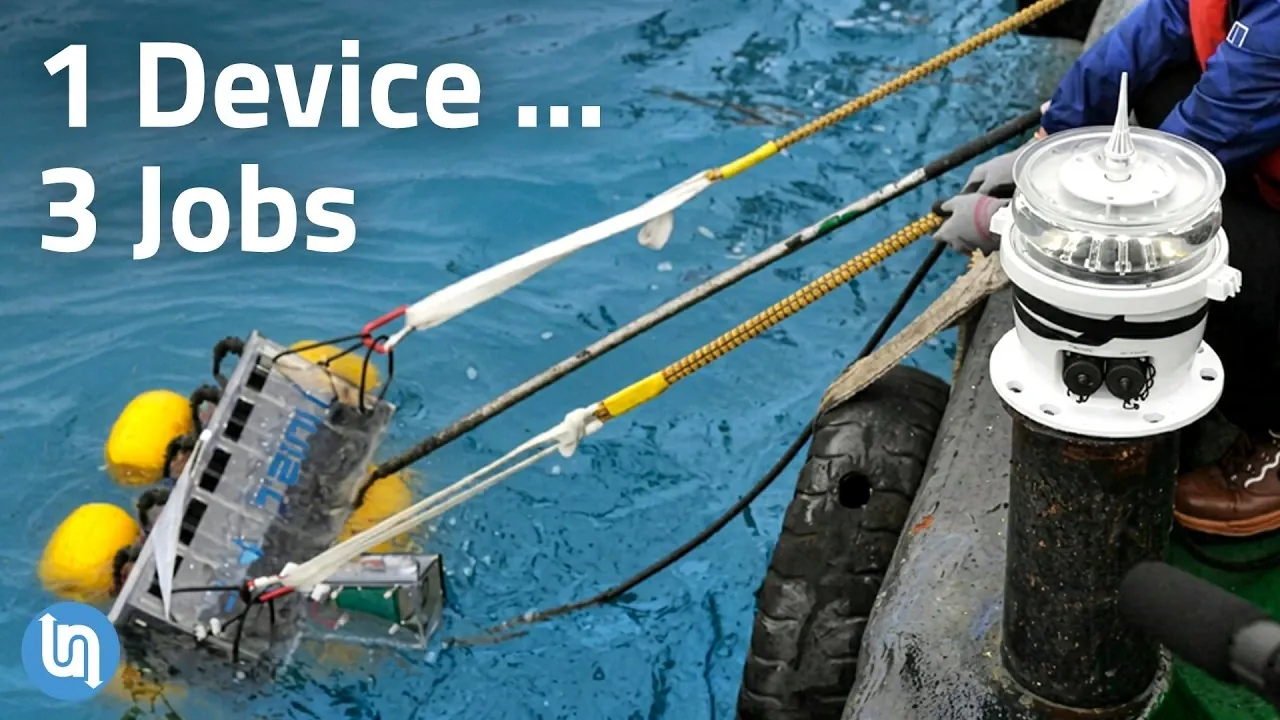
The seawater battery, developed by Professor Kim Young-sik and his team at Korea’s Ulsan National Institute of Science and Technology, is a multifunctional system that integrates energy storage, desalination and carbon capture into a single framework. Unlike conventional batteries, it uses seawater as both a medium and a resource, separating sodium and chloride ions during charging to partially desalinate water while storing energy. This process not only addresses energy storage needs but also reduces the energy required for desalination by approximately 40% compared to traditional methods. As highlighted by Undecided with Matt Ferrell, this technology represents a promising step toward tackling interconnected challenges like water scarcity and carbon emissions.
Learn how the seawater battery’s dual functionality could complement renewable energy systems and enhance industrial carbon capture efforts. Gain insight into the economic and material considerations that influence its scalability, including the reliance on ceramic membranes and the associated cost barriers. You’ll also learn about its potential applications, from powering off-grid marine systems to supporting desalination plants with improved energy efficiency. By understanding these aspects, you’ll see how this system fits into broader sustainability goals while recognizing the hurdles it must overcome to achieve widespread adoption.
How the Seawater Battery Operates
TL;DR Key Takeaways :
- The UNIST seawater battery integrates energy storage, desalination and carbon capture into a single system, addressing multiple sustainability challenges simultaneously.
- It partially desalinated seawater during energy storage, consuming 40% less energy than traditional reverse osmosis systems, but requires additional treatment for potable water.
- Its carbon capture process converts CO2 into solid carbonates, potentially capturing 640–1,280 kilograms of CO2 daily while treating 150 cubic meters of seawater.
- The system is cost-effective, reducing energy storage costs to $0.10 per kilowatt-hour, but faces challenges with the durability and cost of ceramic NASICON membranes.
- Applications include renewable energy integration, marine environments and industrial carbon emission reduction, though scalability and real-world performance remain hurdles to overcome.
The seawater battery is a multifunctional system that uses seawater as a medium for energy storage, desalination and carbon capture. Its operation involves two primary processes:
- Energy Storage and Desalination: During the charging phase, sodium and chloride ions are separated, partially desalinating the seawater. When discharging, these ions recombine, generating electricity while maintaining the system’s energy cycle.
- Carbon Capture: During the discharge process, the system absorbs carbon dioxide from the surrounding environment, converting it into solid carbonates through chemical reactions.
This dual functionality allows the seawater battery to address multiple sustainability challenges simultaneously, making it a unique and versatile tool for renewable energy systems.
Carbon Capture: A Novel Approach
The seawater battery introduces an innovative method for carbon capture. During its discharge cycle, it absorbs carbon dioxide into alkaline water, where it reacts to form solid carbonates. This process not only removes CO2 from the atmosphere but also provides a stable form of carbon storage.
Preliminary estimates suggest that the system could capture between 640 and 1,280 kilograms of CO2 daily while treating 150 cubic meters of seawater. This capability positions the seawater battery as a promising tool for reducing carbon emissions, particularly in industrial and marine applications where CO2 mitigation is a priority.
Desalination: A Complementary Technology
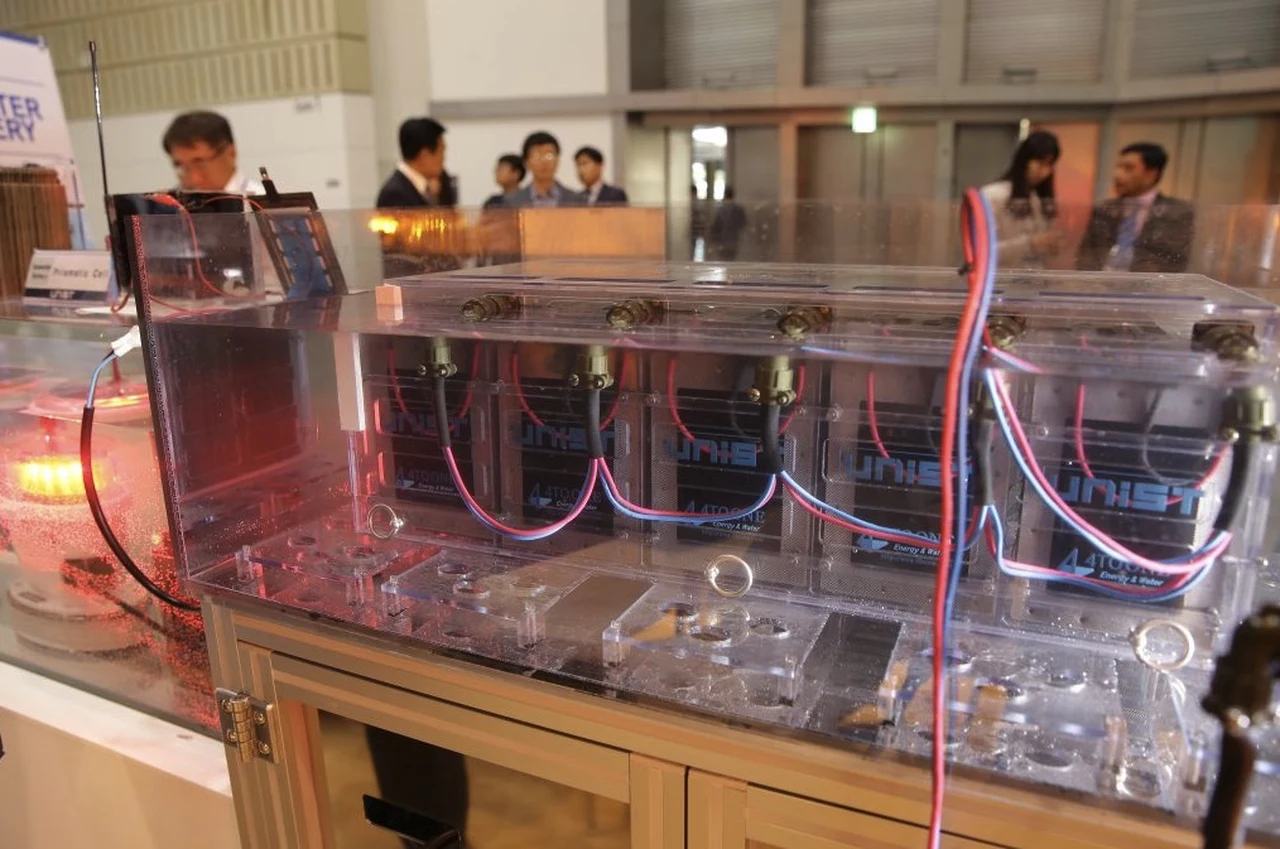
One of the battery’s most notable features is its ability to desalinate water while storing energy. Compared to traditional reverse osmosis systems, it consumes approximately 40% less energy for sodium chloride removal. However, the process produces only brackish water, which requires additional treatment to meet potable water standards.
This limitation suggests that the seawater battery is not a standalone solution for desalination but rather a complementary technology. It could enhance the efficiency and sustainability of existing desalination plants by reducing energy consumption and partially treating seawater before further processing.

Below are more guides on energy from our extensive range of articles.
- Solar Energy S 40,000 mAh retractable solar panel and power bank
- The Island is Shrinking: iPhone 18 Pro Max Leaks Confirm Apple’s Cleanest Display Ever
- The Best Camera Ever: Why the iPhone 18 Pro’s Variable Aperture is the Real Star of 2026
- Ultimate Apple Watch Accessory: EnergyLink Charging Watch Band
- Why NASA’s Mechanical Battery Could Be the Future of Energy Storage
- iPhone 18 Pro: What Apple Isn’t Telling You Yet
- Best Phone Battery Life 2025: OnePlus 15, vivo X300 Pro, & iPhone 17 Pro Max
- The Battery BATTLE ROYALE – iPhone, Pixel, Galaxy, Xiaomi – Who Wins the Drain Test
- Airnergy Havester Battery Charges From Thin Air
- What Donut Labs Data Shows on Solid-State Battery Energy Density
Economic and Material Considerations
The seawater battery is designed to be more cost-effective than conventional batteries, which often rely on expensive materials such as cobalt and nickel. By using more affordable alternatives, the system reduces energy storage costs to approximately $0.10 per kilowatt-hour.
However, the reliance on ceramic NASICON membranes presents a significant challenge. These membranes are critical to the battery’s performance but are currently expensive and susceptible to fouling from seawater impurities. Improving the durability and cost-efficiency of these membranes will be essential for the technology’s scalability and long-term viability.
Challenges to Widespread Adoption
Despite its potential, the seawater battery faces several barriers to real-world implementation:
- Durability: The ceramic membranes must withstand prolonged exposure to seawater impurities without degrading, which remains a technical hurdle.
- Desalination Limitations: The partial desalination process restricts its standalone utility for water treatment, necessitating integration with other technologies like reverse osmosis.
- Scalability: While the system has demonstrated promise in controlled environments, its performance in large-scale, real-world conditions is yet to be proven.
Addressing these challenges will be critical for the seawater battery to transition from experimental stages to practical, widespread use.
Applications and Future Potential
The seawater battery offers a range of potential applications across various sectors:
- Renewable Energy Integration: It could complement renewable energy-powered desalination plants, providing both energy storage and partial water treatment to improve overall efficiency.
- Marine Environments: The battery has already been deployed to power buoys, showcasing its potential for off-grid energy solutions in remote or oceanic locations.
- Carbon Emission Reduction: Its carbon capture capabilities could support industrial efforts to reduce greenhouse gas emissions, particularly in sectors with high CO2 output.
The readiness of the technology varies across its functions. While the energy storage component has reached a higher technology readiness level (TRL 5–6), the desalination and carbon capture features are still in earlier stages of development (TRL 3–4). Continued research and development will be essential to bring all components to maturity and unlock the full potential of this innovative system.
A Multifunctional Solution for Sustainability
The seawater battery represents a significant step forward in addressing global challenges related to energy, water and climate. By combining energy storage, desalination and carbon capture into a single system, it offers a multifunctional approach to sustainability.
However, its success depends on overcoming key challenges, including cost reduction, material durability and scalability. With further advancements, the seawater battery could become a cornerstone technology in the transition to a more sustainable future, offering practical solutions for some of the planet’s most pressing issues.
Media Credit: Undecided with Matt Ferrell
Disclosure: Some of our articles include affiliate links. If you buy something through one of these links, Geeky Gadgets may earn an affiliate commission. Learn about our Disclosure Policy.
