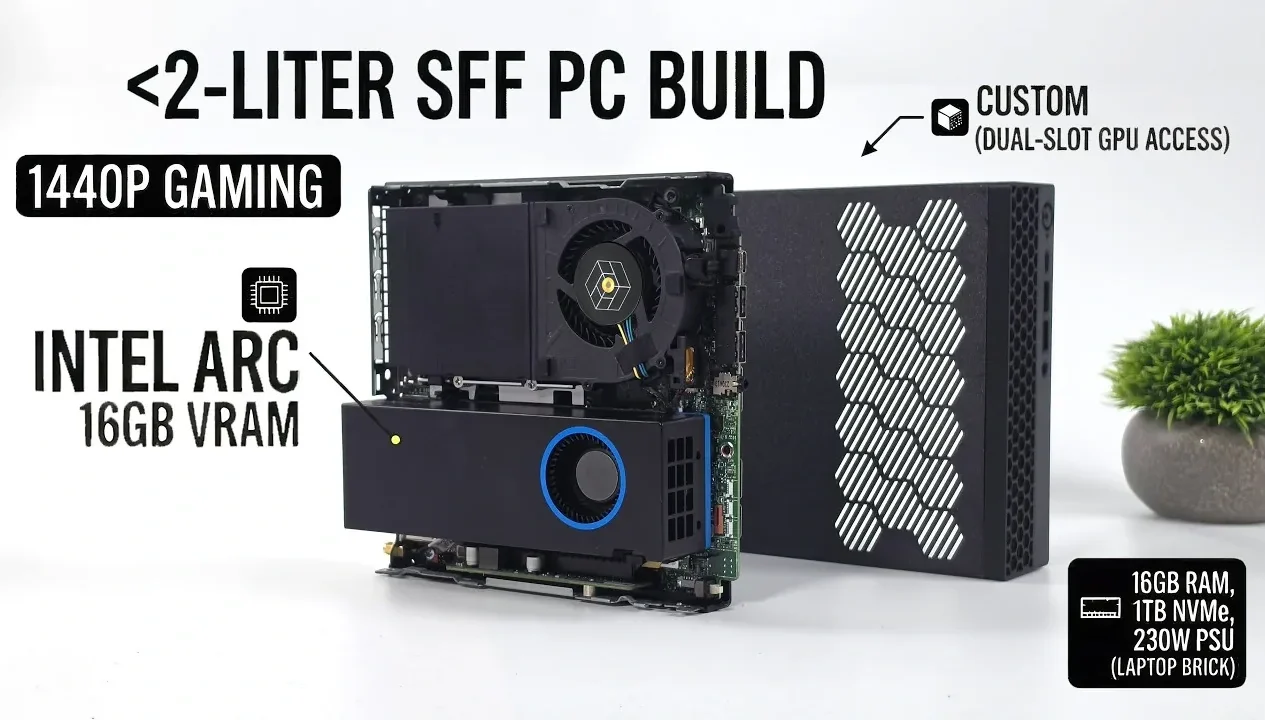
ETA Prime demonstrates how a 2-liter gaming PC can balance compact size with capable performance by showcasing a build based on the Lenovo M90Q Gen 3. This system features an Intel Core i5-12500T processor and an Intel Arc Pro B50 GPU, enhanced by modifications like a 3D-printed case extension and a 230W power supply upgrade. These changes allow for the inclusion of a dual-slot GPU while maintaining efficient thermal and power management. Additional adjustments, such as allowing Resizable BAR and optimizing BIOS settings, further illustrate how small form factor systems can meet the demands of modern gaming.
Dive into the details of how this build achieves consistent 1440p performance in games like Cyberpunk 2077 and Forza Horizon 5. Learn about the hardware modifications that support stability during intensive use and uncover the firmware adjustments that enhance GPU functionality. This deep dive also examines practical considerations for assembling compact gaming systems and offers insights for optimizing similar setups.
Core Components: The Foundation of the Build
TL;DR Key Takeaways :
- The Lenovo M90Q Gen 3 serves as the foundation for a 2-liter small form factor (SFF) gaming PC, delivering 1440p gaming performance through strategic hardware upgrades and BIOS optimizations.
- Key components include an Intel Core i5-12500T processor for efficient performance and an Intel Arc Pro B50 GPU with 16GB VRAM, allowing robust gaming and professional workloads.
- Innovative modifications, such as a 3D-printed case extension and a 230W power supply upgrade, ensure compatibility and stable performance for the dual-slot GPU and other components.
- Optimizations like Resizable BAR and CPU TDP adjustments enhance gaming performance, achieving impressive results in titles like “Cyberpunk 2077” (up to 180 FPS) and “Forza Horizon 5” (98 FPS on ultra settings).
- Efficient cooling and power management maintain safe operating temperatures and reliable performance, redefining the potential of compact gaming PCs without compromising capability.
At the heart of this compact powerhouse lies the Lenovo M90Q Gen 3, a small form factor PC designed with versatility and performance in mind. It features a PCIe 4.0 x8 slot, which, while physically compatible with PCIe Gen 2 cards, requires careful attention to minor port differences during installation to ensure proper functionality.
The system is powered by an Intel Core i5-12500T processor, a 6-core, 12-thread CPU engineered for low power consumption. This processor strikes a balance between performance and efficiency, making it ideal for compact builds where thermal and power constraints are critical considerations.
For graphics, the Intel Arc Pro B50 GPU takes center stage. This low-profile, dual-slot card is equipped with 16GB of VRAM, offering robust performance for both gaming and professional workloads. Together, these components form the backbone of a system that delivers performance far beyond its size.
Modifications: Making It All Fit
Building a high-performance system in such a small enclosure required innovative modifications. To accommodate the dual-slot GPU, the original case was extended using a 3D-printed add-on. This extension maintained the system’s compact footprint while providing the necessary space for the upgraded graphics card. Additionally, internal brackets were removed to ensure proper installation and airflow.
The stock power supply was replaced with a 230W Lenovo adapter to meet the increased power demands of the upgraded components. This higher-wattage unit ensures stable and reliable performance, even during resource-intensive gaming sessions.

Unlock more potential in gaming PC by reading previous articles we have written.
- Minisforum G1 Pro SFF Gaming PC Review : Ryzen 9 & RTX 5060
- MSI Claw A8 Review: Can It Handle Borderlands 4 on the Go?
- Worlds Smallest DIY Steam Machine : Ryzen 7840U for Steady 1080p Play
- Quiet Budget Gaming PC Build for 1440p AAA Gaming
- $1400 Gaming PC vs $1400 Handheld : Gaming Performance Compared
- Best Value 1440p Gaming PC With Used Components in 2026
- How to build a super small 4060 gaming PC
- Best Budget Gaming PC 2026 : Ryzen 5 5600 & DDR4 Value
- How to Build a Budget 4K Gaming PC for Smooth Gameplay
- How to Build a $300 Gaming PC for Smooth 1080p Performance
Optimizations for Peak Performance
Unlocking the full potential of this compact system required several key optimizations:
- Resizable BAR: A BIOS update enabled this feature, allowing the CPU to access the GPU’s memory more efficiently. This optimization significantly improved gaming performance, particularly in memory-intensive titles.
- Power Management: Using the ThrottleStop tool, the CPU’s thermal design power (TDP) was adjusted to 45W. This adjustment enhanced overall performance while maintaining thermal stability, making sure the system could handle demanding tasks without overheating.
These optimizations were crucial in making sure the system could deliver consistent performance across a variety of workloads.
Gaming Performance: Small Size, Big Results
Despite its diminutive size, this system delivers impressive gaming performance at 1440p resolution. Here’s how it performs in popular titles:
- Red Dead Redemption 2: Runs smoothly at medium settings, achieving over 80 FPS.
- Forza Horizon 5: Delivers approximately 98 FPS on ultra settings, providing a seamless and visually stunning experience.
- Cyberpunk 2077: Reaches up to 180 FPS at high settings with XESS frame generation enabled, showcasing the GPU’s advanced capabilities.
- Spider-Man 2 and Mortal Kombat 1: Offers fluid gameplay with enhanced visuals, thanks to XESS optimizations and efficient hardware utilization.
In synthetic benchmarks, the system scored 8,280 in Geekbench 6 (multi-core) and nearly 8,000 in 3DMark Time Spy, further highlighting its ability to handle demanding gaming and productivity tasks.
Cooling and Power: Staying Cool Under Pressure
Thermal management is a critical aspect of compact builds and this system excels in maintaining safe operating temperatures. Lenovo’s performance cooling mode was enabled to optimize airflow and heat dissipation. During gaming sessions, the CPU averaged 67°C, with peaks reaching 81°C under heavy loads, well within safe limits for sustained performance.
The upgraded 230W power supply provided ample headroom, making sure stable operation even during peak usage. This combination of efficient cooling and reliable power delivery ensures the system remains consistent and dependable under pressure.
Practical Considerations
To maximize the system’s capabilities, a few practical considerations must be addressed:
- Cable Compatibility: Achieving 1440p at 120Hz requires the use of high-quality cables to avoid bandwidth limitations and ensure optimal performance.
- BIOS Optimizations: Features like Resizable BAR are essential for maximizing GPU performance, emphasizing the importance of keeping firmware up to date.
- Future Upgrades: While the system is highly capable in its current configuration, users may consider additional upgrades, such as faster storage or enhanced cooling solutions, to further enhance performance.
Addressing these considerations ensures the system operates at its best, delivering a seamless and enjoyable gaming experience.
Redefining Compact Gaming
This 2-liter gaming PC is a testament to the potential of small form factor systems. By using advanced technologies like XESS frame generation, Resizable BAR and efficient cooling solutions, it delivers high-resolution gaming performance that rivals much larger systems. Whether you’re a gamer seeking portability or a tech enthusiast exploring the limits of compact computing, this build proves that size doesn’t have to compromise capability. With thoughtful design and smart upgrades, this system redefines what’s possible in the world of compact gaming PCs.
Media Credit: ETA PRIME
Disclosure: Some of our articles include affiliate links. If you buy something through one of these links, Geeky Gadgets may earn an affiliate commission. Learn about our Disclosure Policy.
