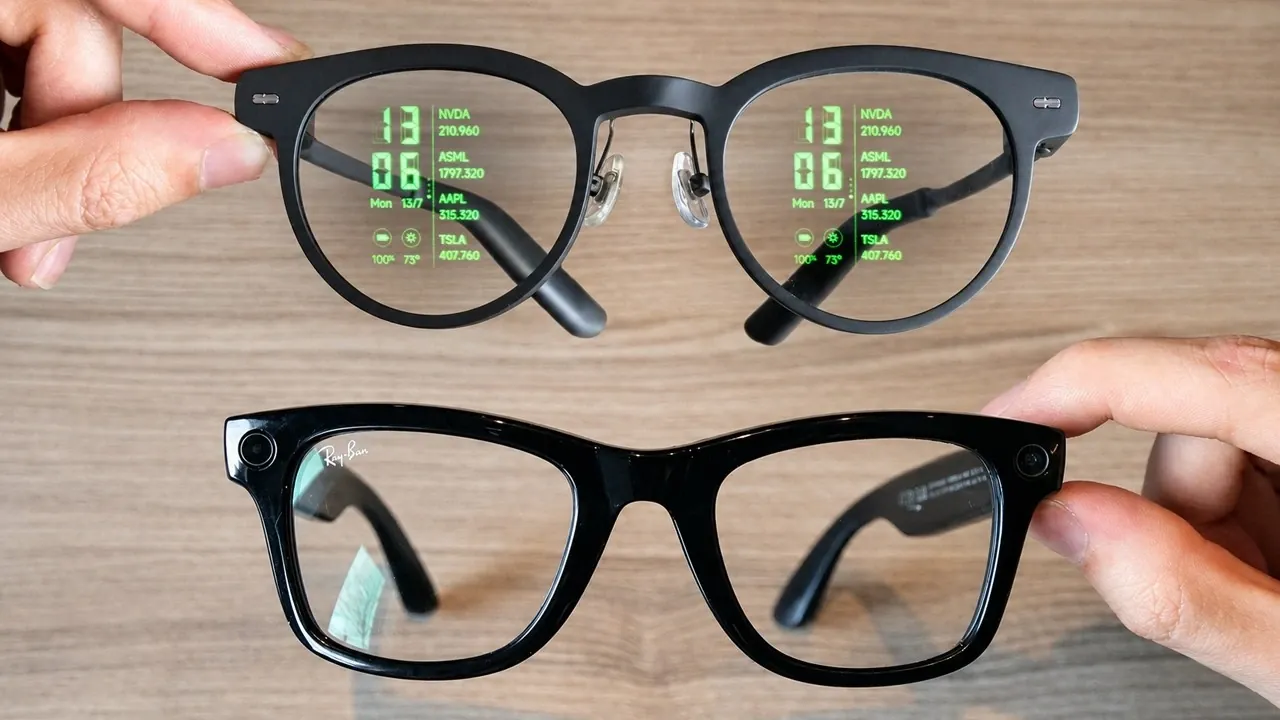
Smart glasses are no longer just futuristic concepts; they are practical devices that cater to diverse user needs. In his detailed analysis, Nathie explores two standout contenders in this space: the MemoMind One and the Ray-Ban Meta Gen 2. The MemoMind One emphasizes privacy-focused design by omitting a camera, making it a strong choice for users concerned about data security. Its heads-up display (HUD) delivers real-time information like navigation and live translations directly into your field of vision. Meanwhile, the Ray-Ban Meta Gen 2 takes a different route, prioritizing camera functionality and audio-based interaction to provide hands-free assistance for tasks like object recognition and voice-controlled navigation.
Dive into this breakdown to understand how these devices compare across key areas. You’ll gain insight into the design trade-offs between minimalism and style, explore how each model integrates AI for productivity or interactivity, and discover which device better supports accessibility needs for hearing or visual impairments. Whether you’re drawn to the MemoMind One’s focus on discreet functionality or the Ray-Ban Meta Gen 2’s multimedia versatility, this guide will help you identify the smart glasses that best align with your lifestyle.
MemoMind One vs Ray-Ban Meta Gen 2
TL;DR Key Takeaways :
- The MemoMind One prioritizes privacy, heads-up displays (HUD), and AI-driven contextual memory, while the Ray-Ban Meta Gen 2 focuses on camera functionality, audio interaction and visual AI.
- The MemoMind One features a minimalistic, camera-free design for discretion and comfort, whereas the Ray-Ban Meta Gen 2 offers a traditional eyewear aesthetic with a visible camera and more frame options.
- MemoMind One excels in HUD technology for real-time visual data, while the Ray-Ban Meta Gen 2 relies on audio-based interaction for hands-free functionality.
- Accessibility features differ: MemoMind One supports hearing-impaired users with captions and live translations, while Ray-Ban Meta Gen 2 aids visually impaired users with camera-based AI like object recognition.
- The MemoMind One offers a longer 15-hour battery life but lacks a charging case, while the Ray-Ban Meta Gen 2 provides 8 hours of battery life with a charging case for extended use.
Design and Comfort
The design of smart glasses significantly influences their integration into daily routines. The MemoMind One adopts a minimalistic design, prioritizing discretion by excluding a camera. This results in a lighter frame that enhances comfort, complemented by adjustable nose pads for a customizable fit. However, its limited frame styles may not appeal to users seeking more variety in aesthetics.
In contrast, the Ray-Ban Meta Gen 2 leans toward a traditional eyewear aesthetic, featuring a visible camera and fixed nose rests. It offers a broader selection of frame and lens options, including transition lenses that adapt to changing light conditions. For users who value style and variety, the Ray-Ban Meta Gen 2 provides more options to suit individual preferences.
Display and User Experience
The MemoMind One excels in its use of heads-up display (HUD) technology, delivering real-time information directly within your field of vision. This includes features such as live translations, navigation, captions and teleprompters, making it an excellent choice for users who require quick and seamless access to visual data.
On the other hand, the Ray-Ban Meta Gen 2 takes a different approach by omitting a display entirely. Instead, it relies on audio-based interaction, allowing users to engage with AI, make calls and receive translations through voice commands. This hands-free, audio-driven functionality caters to individuals who prefer auditory over visual interfaces.

Advance your skills in smart glasses by reading more of our detailed content.
- Apple Glasses Leak: The Features That Could Kill Meta’s Ray-Bans
- Samsung’s New Smart Glasses Are Aiming Straight for Meta’s Crown
- Google’s Gemini Smart Glasses Make Meta Ray-Bans Look Outdated
- Samsung Integrates the Galaxy Ecosystem Into Everyday Eyewear
- The Hidden Genius Behind Apple’s Upcoming Smart Glasses
- MemoMind One Smart Glasses Drop Cameras for Dual HUD Tech
- Samsung AI Smart Glasses Prepare for a Fall 2026 Release
- How to Stream YouTube on Your Meta Ray-Ban Display Glasses
- Samsung Unveils Galaxy Smart Glasses with 9-Hour Battery
- Are the Rokid AI Glasses Actually Better Than the Even G2?
AI Integration and Interaction
AI plays a pivotal role in enhancing the functionality of both devices, but their implementations differ. The MemoMind One features contextual memory AI, which remembers past interactions to create personalized plans and suggestions. However, accessing the full range of these features requires a subscription, which may influence its appeal for some users.
The Ray-Ban Meta Gen 2 incorporates a voice assistant enhanced by its camera for visual context. This enables real-time assistance, such as object identification and navigation guidance. Depending on your priorities, you may find the MemoMind One’s productivity-focused AI more appealing or prefer the Ray-Ban Meta Gen 2’s camera-enhanced interactivity for everyday tasks.
Privacy vs Camera Functionality
Privacy is a critical factor when choosing smart glasses. The MemoMind One prioritizes privacy by excluding a camera, making it a safer option for users concerned about surveillance or data misuse. This design choice, however, limits its ability to provide visual context for AI-driven features.
In contrast, the Ray-Ban Meta Gen 2 includes a camera capable of capturing photos, recording videos and live streaming. While it features an LED indicator to signal when recording is active, privacy concerns may still arise, particularly in sensitive environments. If camera functionality is a priority, the Ray-Ban Meta Gen 2 offers greater versatility, whereas the MemoMind One is better suited for privacy-conscious users.
Accessibility Features
Accessibility is another area where these devices diverge. The MemoMind One is particularly beneficial for users with hearing impairments, offering features such as captions and live translation capabilities. However, it is less suitable for individuals with visual impairments due to its lack of camera-based functionalities.
The Ray-Ban Meta Gen 2, on the other hand, supports users with visual impairments through its camera-based AI features, including object recognition and real-time guidance. However, it does not provide robust solutions for hearing impairments. Your choice will depend on which accessibility features align more closely with your specific needs.
Audio and Media Performance
Audio quality is a key differentiator between these two models. The MemoMind One focuses on AI interaction, which results in lower audio quality for music and calls. This makes it less ideal for users who prioritize media playback.
The Ray-Ban Meta Gen 2, by contrast, delivers superior audio performance, making it a better option for enjoying music and other media. Its touchpad controls add convenience, allowing users to adjust settings with ease. If audio quality and media playback are important to you, the Ray-Ban Meta Gen 2 is the stronger contender.
Battery Life and Charging
Battery life and charging options can significantly impact the usability of smart glasses. The MemoMind One offers an impressive 15-hour battery life, but it lacks a charging case, requiring users to rely on cable charging.
The Ray-Ban Meta Gen 2 provides a shorter battery life of 8 hours but compensates with a charging case that offers an additional 48 hours of power. This feature makes it more convenient for extended use, especially for users who are frequently on the go. Depending on your daily routine, you may prefer the MemoMind One’s longer single-charge life or the Ray-Ban Meta Gen 2’s portable charging solution.
Price Comparison
Price often plays a decisive role in choosing between devices. The MemoMind One is priced at $399, slightly higher than the Ray-Ban Meta Gen 2, which starts at $379. While the price difference is minimal, your decision may ultimately depend on which features you value most.
Who Are These Smart Glasses For?
Selecting between the MemoMind One and Ray-Ban Meta Gen 2 depends on your individual priorities and lifestyle:
- MemoMind One: Best suited for users who prioritize privacy, heads-up displays and contextual AI for productivity and accessibility.
- Ray-Ban Meta Gen 2: Ideal for those who value camera functionality, audio-driven interaction and visual AI capabilities.
By carefully evaluating the strengths and limitations of each model, you can make an informed decision that aligns with your specific needs. Whether you prioritize privacy or advanced multimedia features, both the MemoMind One and Ray-Ban Meta Gen 2 represent compelling options in the ever-evolving world of smart glasses.
Media Credit: Nathie
Disclosure: Some of our articles include affiliate links. If you buy something through one of these links, Geeky Gadgets may earn an affiliate commission. Learn about our Disclosure Policy.
