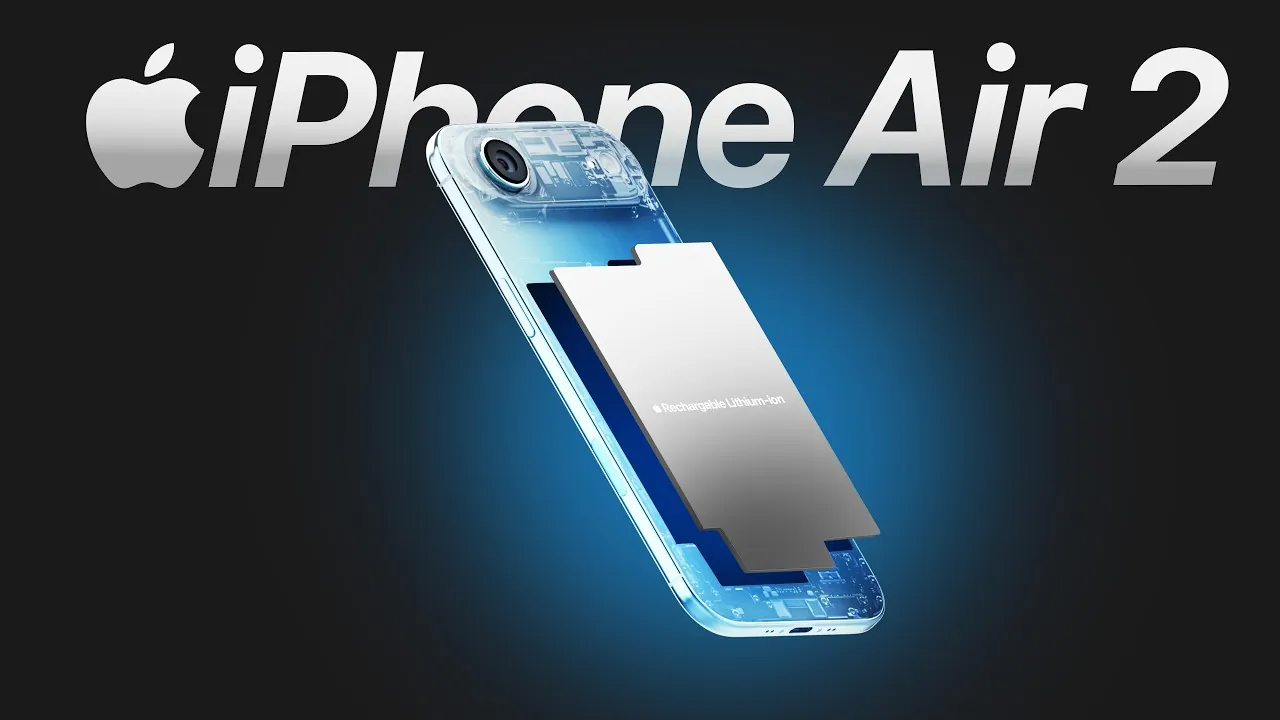
The iPhone Air 2 is poised to set a new benchmark in smartphone innovation by addressing critical user needs through advancements in battery life, display technology, and thermal management. By integrating silicon-carbon batteries, thinner OLED panels, and state-of-the-art cooling systems, Apple aims to deliver a device that combines power, efficiency, and aesthetics. These enhancements not only reflect Apple’s commitment to innovation but also promise a smartphone experience that is both practical and innovative. The video below from ZONEofTECH gives us more details on what to expect from the iPhone Air 2.

Breakthroughs in Battery Technology
Central to the iPhone Air 2’s advancements is the adoption of silicon-carbon battery technology, a significant leap forward in energy storage. These batteries offer 40-60% higher energy density compared to traditional lithium-ion batteries, resulting in extended usage times and reduced dependency on frequent charging. For users, this means a smartphone that can keep up with demanding schedules, whether for work, entertainment, or travel.
Additionally, silicon-carbon batteries enable faster charging, reducing downtime and enhancing convenience. To maximize the benefits of this technology, Apple has incorporated thinner OLED panels, which free up internal space for larger batteries without increasing the device’s overall thickness. This combination directly addresses one of the most persistent frustrations for smartphone users: limited battery life.
Enhanced Display Technology
The iPhone Air 2 is expected to feature COE (Color Filter on Encapsulation) technology, a breakthrough that enhances display brightness while reducing panel thickness. This innovation not only contributes to the device’s sleek profile but also improves energy efficiency, as brighter displays consume less power. For users, this translates to vivid colors, sharper visuals, and improved visibility in various lighting conditions, including direct sunlight.
There is also speculation that Apple may incorporate display technology from its anticipated iPhone Fold. If true, this could elevate the iPhone Air 2’s display capabilities even further, offering a seamless blend of aesthetics and functionality. Such advancements would set new standards for smartphone visuals, making sure an immersive and engaging user experience.
Advanced Thermal Management
Managing heat effectively is a critical challenge for a device as slim and powerful as the iPhone Air 2. With the inclusion of high-energy-density batteries and advanced displays, Apple is likely to implement innovative thermal management solutions to ensure efficient heat dissipation. These systems are designed to maintain consistent performance during demanding tasks without compromising the phone’s sleek design.
For users, effective thermal management means a smartphone that remains reliable and responsive, even during prolonged use or resource-intensive activities such as gaming or video editing. Additionally, better heat management contributes to the device’s longevity, making sure that it performs optimally over time.
Camera Innovations
The iPhone Air 2 is expected to deliver significant upgrades to its camera system, catering to both casual users and photography enthusiasts. The addition of a secondary ultra-wide lens expands creative possibilities, allowing users to capture expansive landscapes, group shots, or unique perspectives with ease. This feature enhances versatility, making the camera suitable for a wide range of scenarios.
Furthermore, Apple is likely to integrate AI-powered digital zoom, which could provide sharper and more detailed images without relying on bulky hardware. This technology uses advanced algorithms to enhance image quality, making sure that users can achieve professional-grade results even in challenging conditions. These enhancements reflect Apple’s dedication to providing a superior photography experience, solidifying its position as a leader in smartphone camera innovation.
Challenges in Scaling New Technologies
While the iPhone Air 2’s features are new, scaling these technologies for mass production presents significant challenges. For instance, silicon-carbon batteries are still relatively new, and making sure their reliability at high production volumes requires rigorous testing and quality control. Similarly, integrating thinner OLED panels and advanced thermal management systems into a cohesive design demands precision engineering and meticulous attention to detail.
Apple’s cautious approach to adopting these technologies underscores its commitment to delivering a product that meets its high standards for quality and performance. For users, this means a device that not only incorporates innovative features but also maintains the reliability and durability expected from the brand.
Design and Future Outlook
Despite the inclusion of advanced technologies, the iPhone Air 2 is expected to retain its signature slim and elegant design, a hallmark of Apple’s engineering philosophy. This balance between innovation and aesthetics highlights Apple’s ability to push the boundaries of smartphone technology without compromising usability or form.
As the iPhone Air 2 approaches its release, further refinements are likely to enhance its performance and user experience. For users, this represents an exciting evolution in smartphone technology, where extended battery life, superior displays, and reliable performance converge in a single, cohesive device. The iPhone Air 2 is not just a smartphone; it is a testament to the possibilities of modern engineering, offering a glimpse into the future of mobile technology.
Check out more relevant guides from our extensive collection on Silicon-carbon battery technology that you might find useful.
- Samsung Galaxy S26 Series: Features, Design, and More
- Samsung Galaxy S26 Edge: Redefining Style and Performance
- Samsung Galaxy S26 Ultra: Features, Specs, and Release Details
- iPhone 18 Pro: What Apple Isn’t Telling You Yet
- iPhone 17 Pro: MIND-BLOWING Leaks!
Source & Image Credit: ZONEofTECH
Disclosure: Some of our articles include affiliate links. If you buy something through one of these links, Geeky Gadgets may earn an affiliate commission. Learn about our Disclosure Policy.
