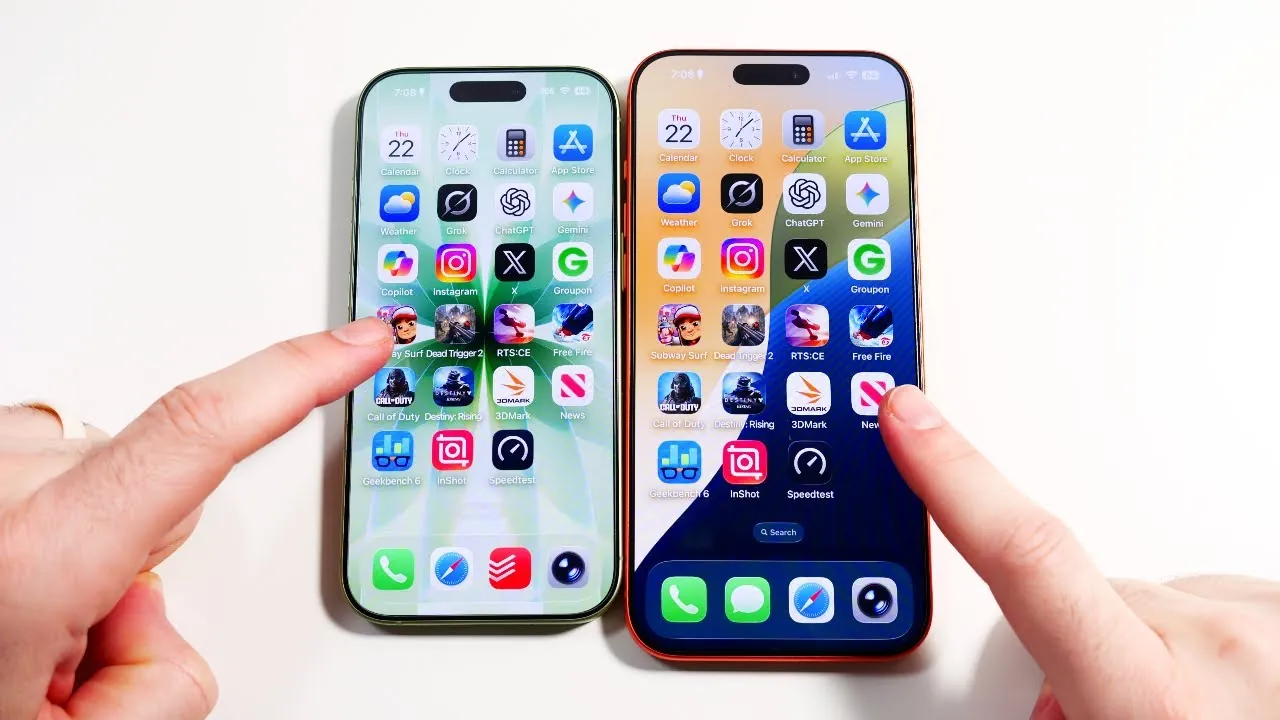
Apple’s iPhone 17 and iPhone 17 Pro Max represent the pinnacle of the company’s smartphone technology, offering innovative features tailored to different user needs. While both devices deliver exceptional performance, they are designed to cater to distinct audiences. The iPhone 17 provides near-Pro capabilities at a more accessible price, making it an attractive option for everyday users. Meanwhile, the Pro Max is engineered for those who demand top-tier performance, particularly for gaming, multitasking, and resource-intensive applications. This detailed video from Nick Ackerman explores the similarities and differences between these two models, helping you determine which one aligns best with your priorities.

Performance Overview: A19 Chip and Display Technology
Both the iPhone 17 and iPhone 17 Pro Max are powered by Apple’s advanced A19 chip, making sure smooth and efficient performance. However, the Pro Max features an upgraded A19 Pro variant, which provides a slight performance boost. Both chips operate at a clock speed of 4.26 GHz, allowing seamless app navigation and fast response times. Additionally, both models are equipped with a 120Hz display, delivering fluid visuals and highly responsive touch interactions.
The Pro Max’s A19 Pro chip stands out in demanding scenarios, such as video editing or gaming, where its enhanced processing power and superior thermal efficiency allow it to sustain peak performance for longer periods. This makes the Pro Max particularly well-suited for users who frequently engage in heavy-duty tasks. While the iPhone 17 performs admirably in most situations, it may not match the Pro Max’s sustained performance under prolonged stress.
RAM and Multitasking: How Much Memory Do You Need?
The iPhone 17 comes with 8GB of RAM, while the Pro Max is equipped with 12GB. This difference becomes evident during multitasking and when running resource-intensive applications. Both devices handle app switching and background processes efficiently, but the Pro Max’s additional memory ensures smoother performance under heavy workloads.
For example, tasks such as video editing, running multiple apps simultaneously, or playing high-end games benefit significantly from the Pro Max’s extra RAM. While the iPhone 17 is capable of handling these tasks, it may experience occasional slowdowns when pushed to its limits. For users who prioritize multitasking or frequently use demanding applications, the Pro Max offers a clear advantage.
Gaming Performance: Frame Rates and Heat Management
If gaming is a priority, the iPhone 17 Pro Max is the superior choice. Its enhanced thermal efficiency and higher RAM capacity allow it to maintain better frame rates during graphically demanding games. In the Wildlife Extreme benchmark, the iPhone 17 scored 4703 (28 FPS), while the Pro Max achieved 5709 (34 FPS). These results translate to smoother gameplay and fewer performance hiccups during extended gaming sessions.
The Pro Max also features an improved cooling system, which prevents thermal throttling and ensures consistent performance under heavy loads. This makes it ideal for gamers who require reliable performance during long sessions. While the iPhone 17 handles casual gaming well, it may experience slight performance drops during prolonged or intensive gaming scenarios.
Synthetic Benchmarks vs. Real-World Performance
Synthetic benchmarks provide a clear comparison of the performance gap between the two models. In Geekbench 6 multi-core tests, the iPhone 17 scored 3690, while the Pro Max reached 3806. While these numbers highlight the Pro Max’s advantage, the difference is relatively minor for everyday tasks.
In real-world usage, both devices excel in app launch speeds, responsiveness, and general performance. However, the Pro Max occasionally outpaces the iPhone 17 in resource-heavy applications like video rendering or editing. For most users, this difference will be negligible, but power users may appreciate the Pro Max’s ability to handle demanding tasks with greater efficiency.
Connectivity and Audio: Small but Notable Differences
Both the iPhone 17 and iPhone 17 Pro Max support the latest Wi-Fi and 5G standards, making sure fast and reliable connectivity for browsing, streaming, and downloads. Regardless of which model you choose, you can expect consistent network performance.
When it comes to audio, the Pro Max holds a slight edge. Its speakers deliver louder and clearer sound, making it better suited for media playback, gaming, and hands-free calls. While the iPhone 17’s audio quality is excellent, the Pro Max’s enhanced speaker system provides a more immersive listening experience, which may appeal to users who frequently consume multimedia content.
Choosing the Right iPhone for Your Needs
The iPhone 17 and iPhone 17 Pro Max are both exceptional devices, but they cater to different audiences. The iPhone 17 offers outstanding value, delivering near-Pro performance at a more accessible price point. It is an excellent choice for users who prioritize everyday functionality, casual gaming, and occasional multitasking without requiring the absolute best performance.
On the other hand, the Pro Max is designed for power users who demand top-tier performance. Its superior RAM, enhanced thermal efficiency, and gaming capabilities make it ideal for gamers, video editors, and professionals who rely on their devices for intensive workloads. If you need a smartphone that can handle demanding tasks with ease, the Pro Max is the better option. For everyone else, the iPhone 17 strikes an excellent balance between performance and affordability, making it a compelling choice for most users.
Check out more relevant guides from our extensive collection on iPhone 17 vs iPhone 17 Pro Max that you might find useful.
- iPhone 17 Pro vs. Pro Max: Key Differences Explained
- Which is Better? OnePlus 15 vs iPhone 17 Pro Max
- iPhone 17 Pro Max vs Galaxy S25 Ultra: Full Comparison
- Peak Android: Galaxy Fold 7 vs. iPhone 17 Pro Max
- iPhone 17 Pro Max vs. iPhone 15 Pro Max: Full Comparison
Source & Image Credit: Nick Ackerman
Disclosure: Some of our articles include affiliate links. If you buy something through one of these links, Geeky Gadgets may earn an affiliate commission. Learn about our Disclosure Policy.
