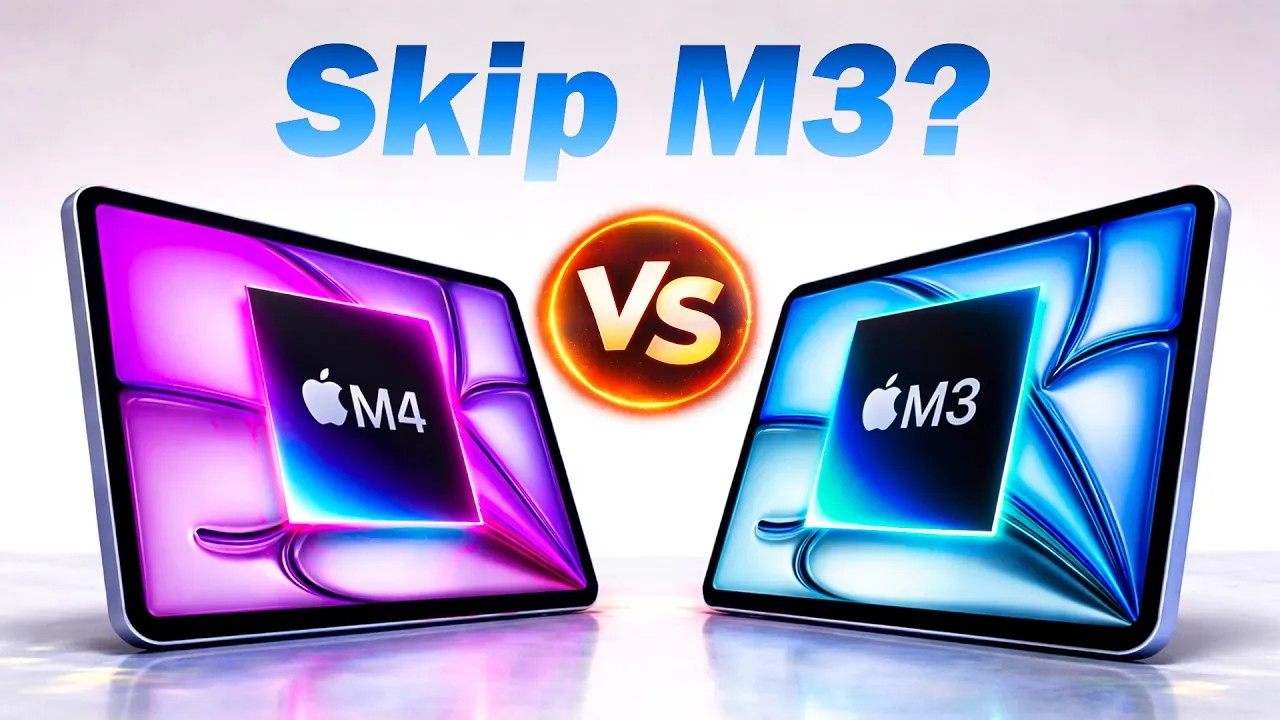
The iPad Air M4 introduces a range of notable advancements in performance, connectivity, and multitasking, distinguishing itself from its predecessor, the M3. While the design and display remain largely consistent with the previous generation, the M4’s upgrades cater to users seeking enhanced speed, efficiency, and productivity. However, the absence of OLED or mini-LED display technology may leave some users questioning whether the upgrade is worth the investment. The video below from Matt Talks Tech gives us more details about the new iPad Air.

Performance Upgrades: The M4 Chip in Action
At the heart of the iPad Air M4 is the powerful M4 chip, which delivers a substantial boost in processing capabilities. Featuring an 8-core CPU with three performance cores and five efficiency cores, alongside a 9-core GPU, the M4 chip offers a 22% faster CPU and a 23% faster GPU compared to the M3. These improvements translate into smoother app performance, faster load times, and enhanced graphics rendering, making the device ideal for demanding tasks such as video editing, gaming, and 3D modeling.
The M4 also introduces an increase in RAM, offering 12GB across all storage configurations, up from 8GB in the M3. This enhancement significantly improves multitasking capabilities, allowing you to run multiple apps simultaneously without experiencing slowdowns. Whether you’re managing large datasets, editing high-resolution videos, or switching between resource-intensive applications, the M4 ensures a seamless, lag-free experience that caters to both casual users and professionals.
Connectivity: Faster, Smarter, and More Reliable
The iPad Air M4 brings innovative connectivity features that elevate its usability in both personal and professional settings. With support for Wi-Fi 7, the device delivers wireless speeds up to 2.4 times faster than Wi-Fi 6E. This improvement ensures quicker downloads, smoother streaming, and more stable connections, even in crowded network environments. For users who rely on cloud-based workflows or high-definition streaming, this upgrade is particularly beneficial.
In addition to Wi-Fi 7, the M4 features Bluetooth 5.3, which enhances energy efficiency and ensures more reliable connections to peripherals such as keyboards, headphones, and styluses. For those who depend on cellular connectivity, the new C1X chip improves 5G performance, offering faster speeds and better coverage in supported areas. These connectivity upgrades make the iPad Air M4 a versatile device for both work and entertainment.
Display and Design: Familiar Yet Functional
The iPad Air M4 retains the same design and display specifications as the M3, offering 11-inch and 13-inch screen options with resolutions of 2360×1640 and 2732×2048, respectively. The display includes features like P3 wide color and True Tone technology, which ensure accurate color reproduction and adaptive brightness. These features make the device suitable for creative tasks such as photo editing, graphic design, and video playback.
However, the display is limited to a 60Hz refresh rate and lacks advanced technologies like OLED or mini-LED. These omissions may disappoint users seeking deeper contrast ratios, smoother scrolling, or more vibrant visuals, especially when compared to Apple’s Pro models. Additionally, the device continues to rely on Touch ID for authentication. While Touch ID remains reliable and secure, it may feel outdated compared to the more advanced Face ID technology found in higher-end Apple devices.
Pricing and Value: A Balanced Proposition
Despite its hardware upgrades, the iPad Air M4 maintains the same pricing structure as the M3, making it an attractive option for users upgrading from older models like the M1 or earlier. The improved performance, increased RAM, and enhanced connectivity justify the investment for those prioritizing multitasking, speed, and future-proofing their device.
For users already owning an M2 or M3 model, the upgrade may feel less compelling unless specific features like Wi-Fi 7 or additional RAM are critical to their workflow. Additionally, for those focused on display advancements, the lack of ProMotion or OLED technology might be a significant drawback. However, for users with older devices or those new to the iPad Air lineup, the M4 offers a compelling balance of power, functionality, and value.
Limitations: What’s Missing?
While the iPad Air M4 excels in performance and connectivity, it does come with a few notable limitations. The absence of OLED or mini-LED displays means users won’t experience the deeper blacks, higher contrast ratios, or more vibrant colors found in premium models. Additionally, the 60Hz refresh rate may feel restrictive for users accustomed to smoother scrolling and animations on ProMotion-enabled devices.
For those upgrading from an M2 or M3 model, the improvements in performance and connectivity may not justify the cost unless features like Wi-Fi 7 or increased RAM are essential to their daily tasks. The continued reliance on Touch ID over Face ID also highlights the device’s mid-tier positioning within Apple’s product lineup. While Touch ID remains functional and secure, it lacks the convenience and modern appeal of Face ID.
Is the iPad Air M4 Worth It?
The iPad Air M4 delivers meaningful upgrades in performance, connectivity, and multitasking, making it an excellent choice for users with older devices or those seeking a versatile tablet for productivity and entertainment. The M4 chip, Wi-Fi 7 support, and increased RAM ensure a future-proof experience that can handle a wide range of tasks, from creative projects to professional workflows.
However, the lack of display advancements and reliance on Touch ID may deter some buyers, particularly those seeking innovative screen technology or more modern authentication methods. For users with an M2 or M3 model, the decision to upgrade depends on whether the performance gains align with their specific needs. Overall, the iPad Air M4 strikes a balance between power and value, solidifying its position as a capable and versatile device in Apple’s lineup.
Here are more guides from our previous articles and guides related to iPad Air that you may find helpful.
- Apple’s M4 iPad Air: A Subtle Revolution in Tablet Tech
- 2026 iPad Air Rumors: M4 Chip and OLED Display
- Apple’s OLED Rollout: How It Impacts the M4 iPad Air
- Rumor: The NEW iPad Air with M4 and OLED Display is Coming!LAY
- M4 iPad Air (2026): Bad News for the Display?
Source & Image Credit: Matt Talks Tech
Disclosure: Some of our articles include affiliate links. If you buy something through one of these links, Geeky Gadgets may earn an affiliate commission. Learn about our Disclosure Policy.
