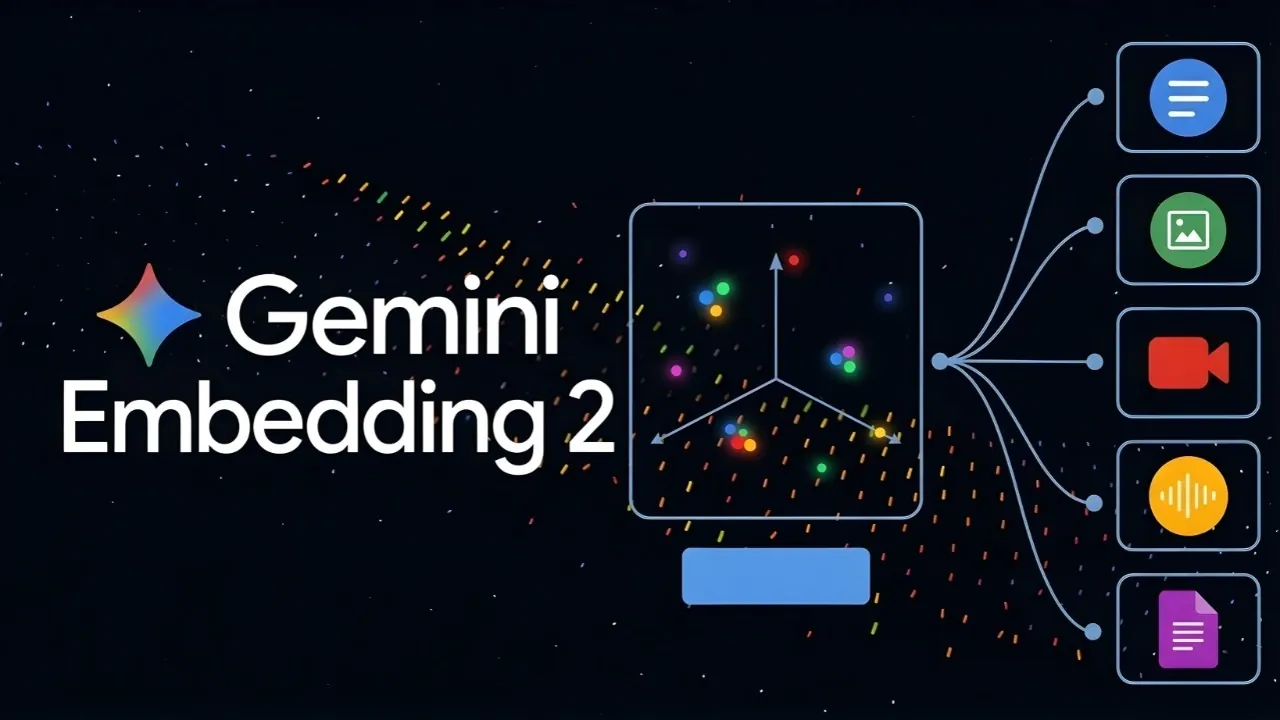
Google’s Gemini Embedding 2 processes multimodal data by embedding inputs like text, images and audio into a shared semantic space. This approach eliminates the need for separate transformations while preserving the unique contextual details of each data type. Prompt Engineering examines how the model handles tasks such as sentiment analysis, where it captures nuanced elements like tone and background context from audio inputs, making sure accurate and meaningful representations.
Discover how Gemini Embedding 2 enhances retrieval-augmented generation (RAG) by improving the relevance of retrieved data. You’ll also explore its cross-modality search capabilities, which connect text, images and audio within a unified framework. Finally, the practical overview covers Matryoshka representation learning, a feature that helps balance performance and efficiency based on specific project requirements.
Gemini Embedding 2 Explained
TL;DR Key Takeaways :
- Gemini Embedding 2 unifies the processing of text, images, audio, video and documents into a single semantic space, preserving contextual integrity and eliminating the need for intermediate transformations.
- It excels in retaining context across modalities, making it ideal for nuanced tasks like sentiment analysis, retrieval-augmented generation (RAG), and cross-modality search and retrieval.
- Key technical features include Matryoshka representation learning for dynamic dimensionality adjustment, support for large input sizes and multilingual processing in over 100 languages.
- Practical applications include multimodal search engines, document classification and clustering and cross-referencing systems, enhancing efficiency and user experience.
- While still in the preview stage, Gemini Embedding 2 offers significant potential for advanced multimodal applications, though its higher cost and early-stage status may pose challenges for some users.
Gemini Embedding 2 is engineered to handle multiple data modalities simultaneously, setting it apart from earlier models. Whether working with text, images, or audio, the model embeds these inputs into a shared semantic space. This approach simplifies workflows and enhances the accuracy of downstream tasks by preserving the semantic intent and contextual nuances of the original data.
For example, when analyzing an audio clip, the model captures not only the spoken words but also the tone and background context. This level of detail is particularly valuable for applications like sentiment analysis, where subtle cues can significantly influence outcomes. By maintaining these nuances, Gemini Embedding 2 ensures that the embedded representations remain both accurate and meaningful.
Preserving Context Across Modalities
A defining feature of Gemini Embedding 2 is its ability to retain context across different data types. This capability is especially critical for nuanced inputs like audio or video, where elements such as tone, intent and background information are integral to understanding. By preserving these details, the model ensures that embedded representations remain relevant and coherent.
This feature is particularly beneficial for tasks like retrieval-augmented generation (RAG), where the quality of retrieved data directly impacts the final output. For instance, when generating responses based on retrieved documents, maintaining contextual fidelity ensures that the responses are accurate and aligned with the original intent of the data.

Expand your understanding of Google Gemini 3 with additional resources from our extensive library of articles.
- Gemini 3.1 Pro: Thinking Levels and Benchmark Gains Explained
- Gemini 3.5 Leak Details, Early Tests Show Mixed Performance
- Gemini 3.5 vs GPT-5 vs Claude : Early Scores & Speed Insights
- Gemini 3.1 Pro vs Gemini 3 Pro: Benchmark Score Gains Explained
- Google’s Secret Gemini 3 Pro GA Models Leaked
- Gemini 3’s Agentic Vision: Think, Act, Observe Loop Explained
- Gemini 3.5 vs GPT-5.1 High: Coding, Design, and Test Results
- Google Gemini 3.5 Leak : Fierce Falcon vs Ghost Falcon
- Gemini 3.5 Models Tested on Alamarina and Google AI Studio
- Google Gemini 3.0 Pro : The Most Versatile AI Model Yet?
Key Applications
Gemini Embedding 2 supports a wide range of use cases, making it a versatile tool for developers and researchers. Its primary applications include:
- Retrieval-Augmented Generation (RAG): Enhances generative models by retrieving relevant data from extensive datasets, improving the accuracy and relevance of responses.
- Sentiment Analysis: Analyzes text or audio to determine emotional tone and sentiment, which is particularly useful for customer feedback analysis or social media monitoring.
- Document Classification and Clustering: Automatically categorizes and organizes documents based on their content, streamlining data management and retrieval processes.
- Cross-Modality Search and Retrieval: Enables searches across different data types, such as finding images related to a text query or identifying audio clips based on textual descriptions.
Technical Features
Gemini Embedding 2 introduces several advanced features that enhance its flexibility and performance:
- Matryoshka Representation Learning: Dynamically adjusts embedding dimensionality, allowing users to balance computational cost, accuracy and speed based on specific requirements.
- Token and Input Limits: Supports up to 8,000 tokens for text, six images per request, 120 seconds of video and native audio processing, accommodating a wide variety of input sizes and formats.
- Multilingual Support: Processes inputs in over 100 languages, making it ideal for global applications and multilingual datasets.
Practical Use Cases
The capabilities of Gemini Embedding 2 open up numerous practical applications. Here are some ways it can be used effectively:
- Multimodal Search Engines: Combine text, images and audio to deliver comprehensive and contextually relevant search results, improving user experience.
- Document Clustering and Classification: Automatically tag and organize large collections of documents, enhancing retrieval efficiency and reducing manual effort.
- Cross-Referencing Systems: Link related documents or media to provide more thorough and interconnected responses to user queries, improving information accessibility.
Architecture and Integration
Gemini Embedding 2 integrates seamlessly with modern data storage and processing tools. Embeddings are stored in vector databases such as DuckDB, allowing efficient retrieval and analysis. Additionally, the model supports Firebase for authentication and API usage tracking, simplifying project management and scalability.
The subscription-based usage model includes API call limits tailored to different tiers, allowing users to scale their usage according to project requirements. This flexibility ensures that both small-scale and large-scale projects can benefit from the model’s capabilities without unnecessary overhead.
Limitations to Consider
While Gemini Embedding 2 offers advanced features, it is important to be aware of its limitations:
- Preview Stage: The model is currently in a preview phase, meaning it is not yet production-ready and may undergo further refinements before its full release.
- Cost: Its pricing is higher compared to earlier models and some alternatives, which may pose challenges for budget-conscious projects or smaller organizations.
Why Gemini Embedding 2 Matters
Gemini Embedding 2 introduces a unified approach to processing multimodal data, offering significant potential for improving retrieval, classification and clustering tasks. Its ability to process multiple modalities within a single semantic space, combined with features like Matryoshka representation learning and multilingual support, makes it a powerful tool for developers and researchers.
Although still in its early stages, the model’s capabilities suggest a promising future for advanced cross-modality applications. Whether you are building multimodal search engines, enhancing generative AI systems, or streamlining document management, Gemini Embedding 2 provides a robust foundation for innovation and efficiency.
Media Credit: Prompt Engineering
Disclosure: Some of our articles include affiliate links. If you buy something through one of these links, Geeky Gadgets may earn an affiliate commission. Learn about our Disclosure Policy.
